
包被有MHC-I肿瘤表位的溶瘤腺病毒可增强抗肿瘤免疫力并提高对黑色素瘤的疗效。
Oncolytic adenoviruses coated with MHC-I tumor epitopes increase the antitumor immunity and efficacy against melanoma.
作者信息
Capasso Cristian, Hirvinen Mari, Garofalo Mariangela, Romaniuk Dmitrii, Kuryk Lukasz, Sarvela Teea, Vitale Andrea, Antopolsky Maxim, Magarkar Aniket, Viitala Tapani, Suutari Teemu, Bunker Alex, Yliperttula Marjo, Urtti Arto, Cerullo Vincenzo
机构信息
Laboratory of Immunovirotherapy, Division of Pharmaceutical Biosciences and Center for Drug Research, University of Helsinki , Viikinkaari 5 , Helsinki, Finland.
Laboratory of Immunovirotherapy, Division of Pharmaceutical Biosciences and Center for Drug Research, University of Helsinki, Viikinkaari 5, Helsinki, Finland; Department of Molecular Medicine and Medical Biotechnology, University of Naples "Federico II", Via Pansini, Naples, Italy.
出版信息
Oncoimmunology. 2015 Oct 29;5(4):e1105429. doi: 10.1080/2162402X.2015.1105429. eCollection 2016 Apr.
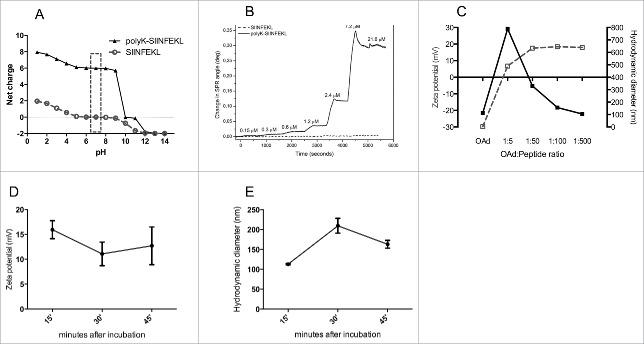
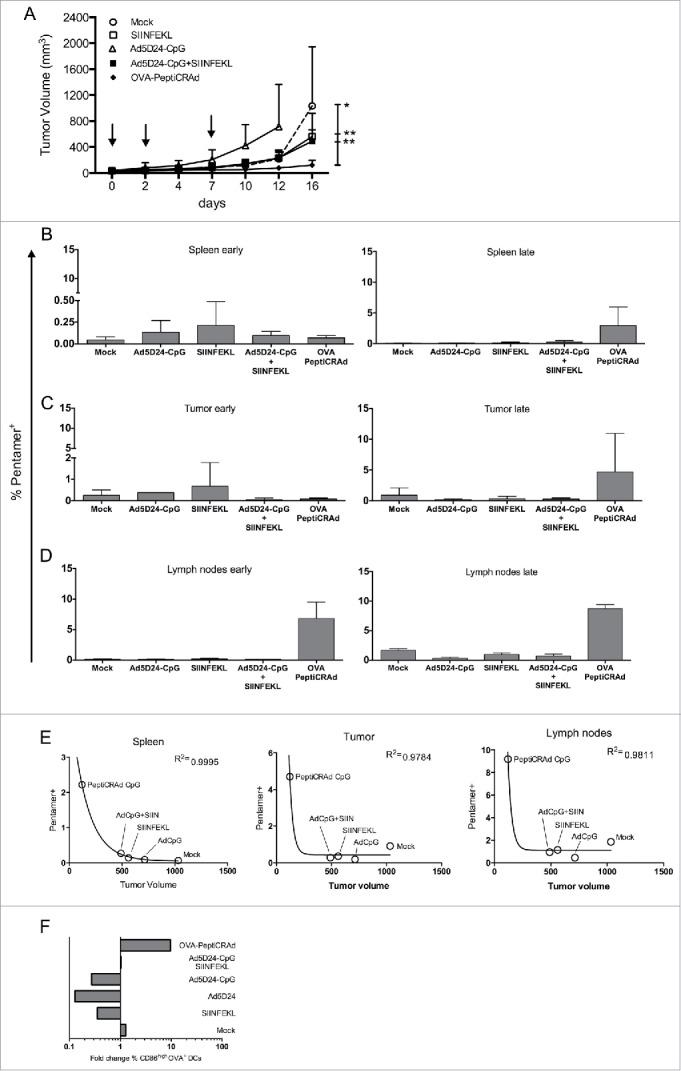
The stimulation of the immune system using oncolytic adenoviruses (OAds) has attracted significant interest and several studies suggested that OAds immunogenicity might be important for their efficacy. Therefore, we developed a versatile and rapid system to adsorb tumor-specific major histocompatibility complex class I (MHC-I) peptides onto the viral surface to drive the immune response toward the tumor epitopes. By studying the model epitope SIINFEKL, we demonstrated that the peptide-coated OAd (PeptiCRAd) retains its infectivity and the cross presentation of the modified-exogenous epitope on MHC-I is not hindered. We then showed that the SIINFEKL-targeting PeptiCRAd achieves a superior antitumor efficacy and increases the percentage of antitumor CD8 T cells and mature epitope-specific dendritic cells . PeptiCRAds loaded with clinically relevant tumor epitopes derived from tyrosinase-related protein 2 (TRP-2) and human gp100 could reduce the growth of primary-treated tumors and secondary-untreated melanomas, promoting the expansion of antigen-specific T-cell populations. Finally, we tested PeptiCRAd in humanized mice bearing human melanomas. In this model, a PeptiCRAd targeting the human melanoma-associated antigen A1 (MAGE-A1) and expressing granulocyte and macrophage colony-stimulating factor (GM-CSF) was able to eradicate established tumors and increased the human MAGE-A1-specific CD8 T cell population. Herein, we show that the immunogenicity of OAds plays a key role in their efficacy and it can be exploited to direct the immune response system toward exogenous tumor epitopes. This versatile and rapid system overcomes the immunodominance of the virus and elicits a tumor-specific immune response, making PeptiCRAd a promising approach for clinical testing.
使用溶瘤腺病毒(OAds)刺激免疫系统已引起了广泛关注,多项研究表明,OAds的免疫原性可能对其疗效至关重要。因此,我们开发了一种通用且快速的系统,可将肿瘤特异性主要组织相容性复合体I类(MHC-I)肽吸附到病毒表面,以驱动针对肿瘤表位的免疫反应。通过研究模型表位SIINFEKL,我们证明了肽包被的OAd(PeptiCRAd)保留了其感染性,且修饰后的外源性表位在MHC-I上的交叉呈递未受阻碍。然后我们表明,靶向SIINFEKL的PeptiCRAd具有卓越的抗肿瘤疗效,并增加了抗肿瘤CD8 T细胞和成熟表位特异性树突状细胞的百分比。负载源自酪氨酸酶相关蛋白2(TRP-2)和人gp100的临床相关肿瘤表位的PeptiCRAds可减少原发性治疗肿瘤和继发性未治疗黑色素瘤的生长,促进抗原特异性T细胞群体的扩增。最后,我们在携带人黑色素瘤的人源化小鼠中测试了PeptiCRAd。在该模型中,靶向人黑色素瘤相关抗原A1(MAGE-A1)并表达粒细胞和巨噬细胞集落刺激因子(GM-CSF)的PeptiCRAd能够根除已形成的肿瘤,并增加人MAGE-A1特异性CD8 T细胞群体。在此,我们表明OAds的免疫原性在其疗效中起关键作用,并且可利用它来引导免疫反应系统针对外源性肿瘤表位。这种通用且快速的系统克服了病毒的免疫显性,并引发肿瘤特异性免疫反应,使PeptiCRAd成为一种有前景的临床试验方法。





 Zotero 插件