
醋酸盐介导微生物群-脑-胰岛β细胞轴以促进代谢综合征。
Acetate mediates a microbiome-brain-β-cell axis to promote metabolic syndrome.
作者信息
Perry Rachel J, Peng Liang, Barry Natasha A, Cline Gary W, Zhang Dongyan, Cardone Rebecca L, Petersen Kitt Falk, Kibbey Richard G, Goodman Andrew L, Shulman Gerald I
机构信息
Department of Internal Medicine, Yale University School of Medicine, New Haven, Connecticut 06520, USA.
Department of Microbial Pathogenesis, Yale University School of Medicine, New Haven, Connecticut 06510, USA.
出版信息
Nature. 2016 Jun 9;534(7606):213-7. doi: 10.1038/nature18309.
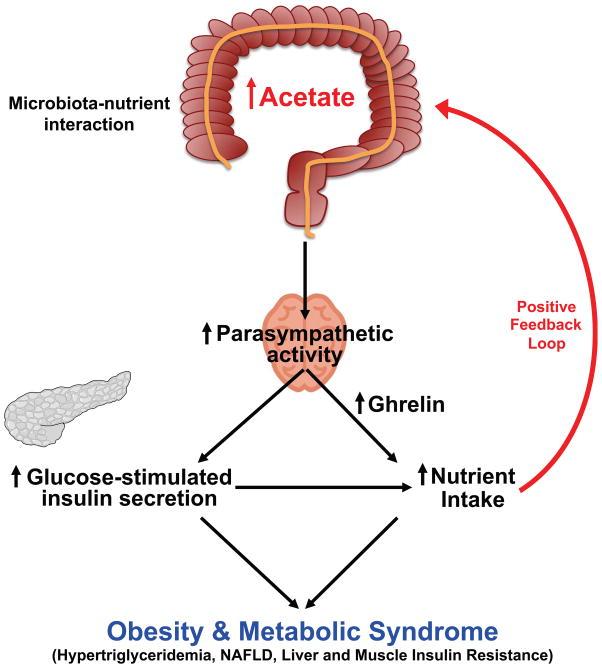
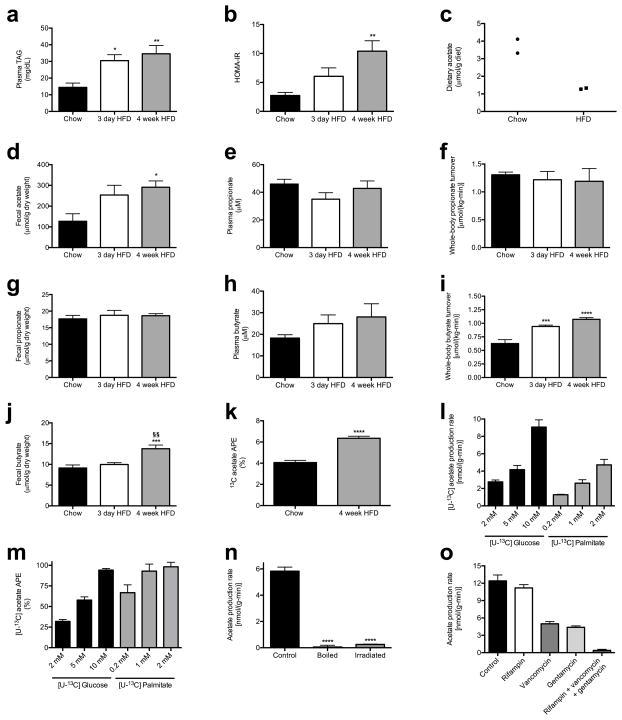
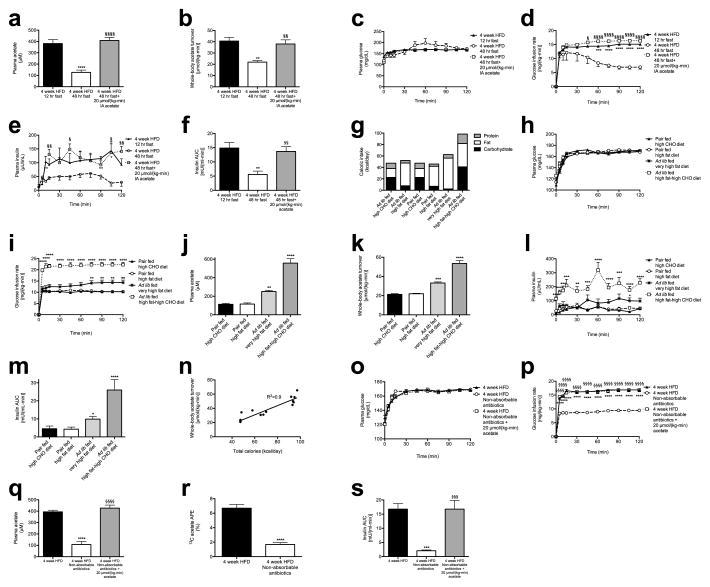
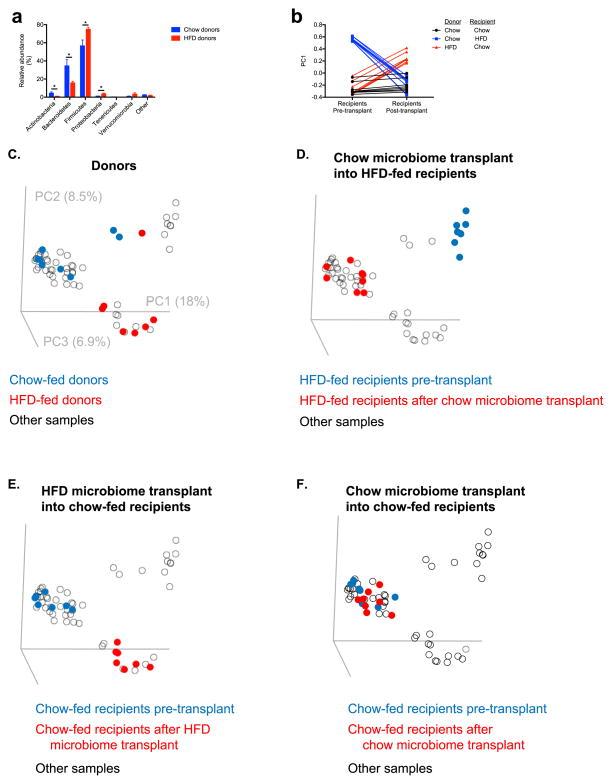
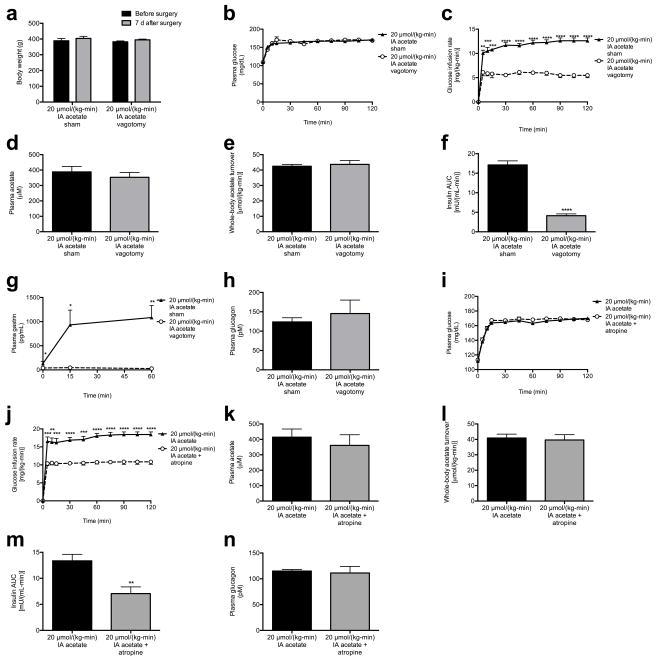
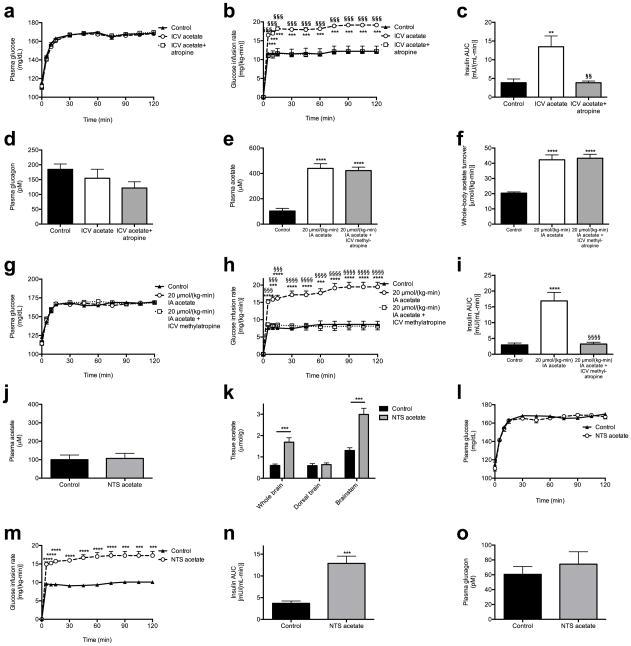
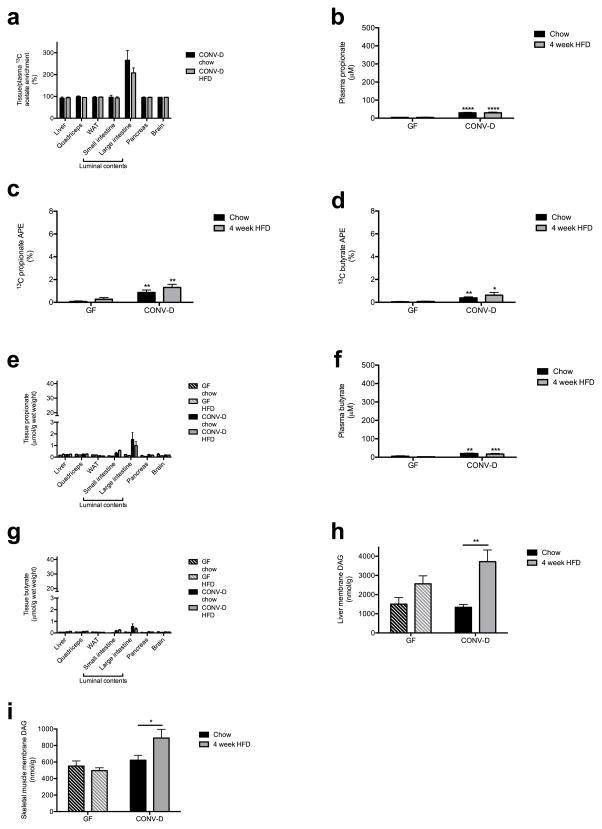
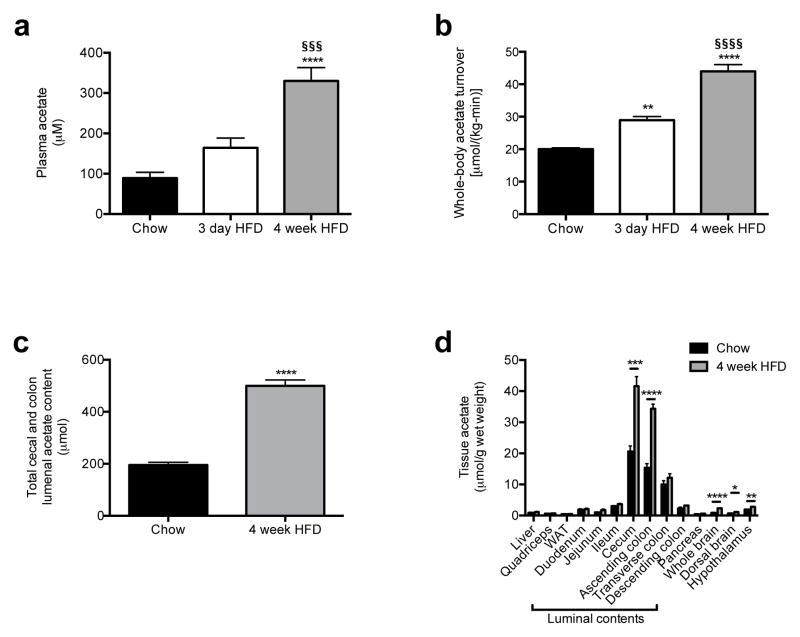
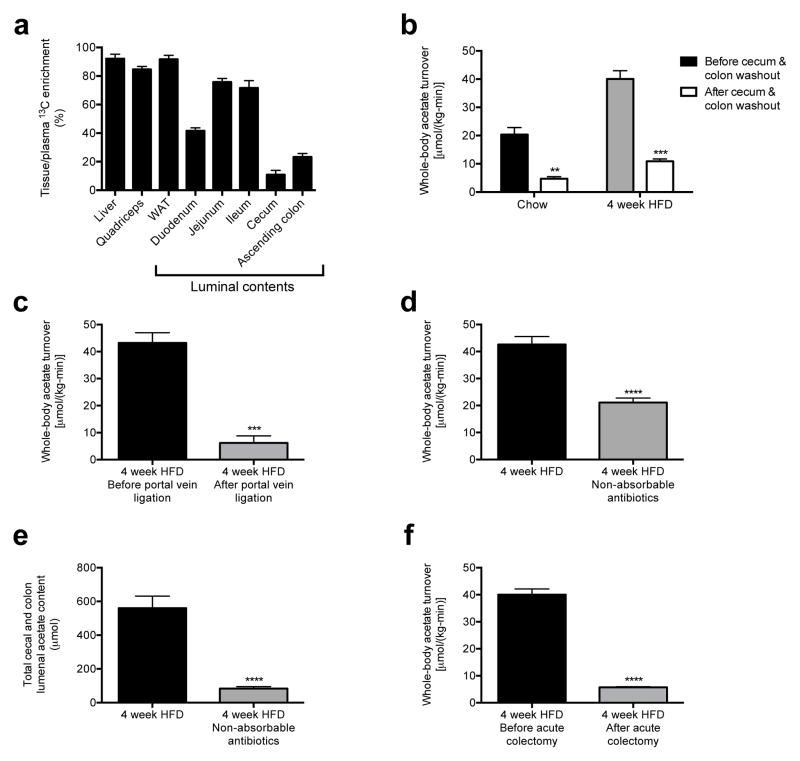
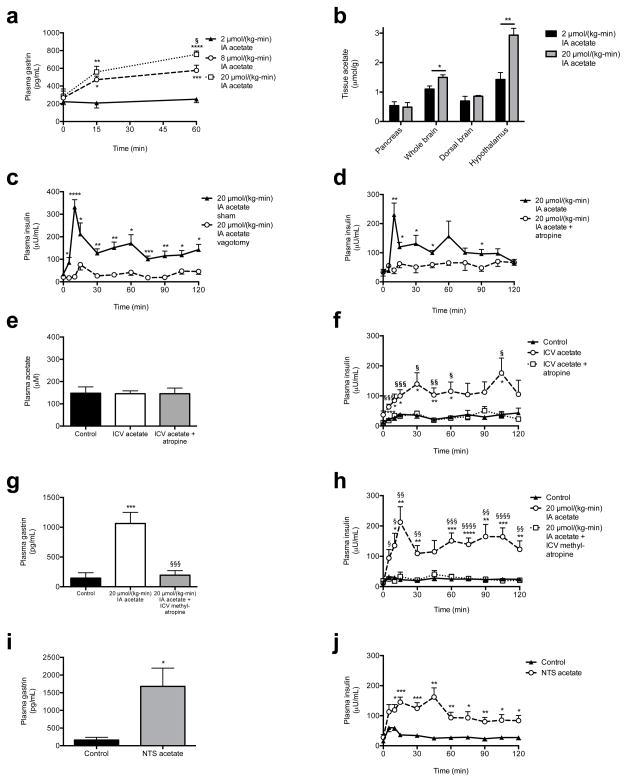
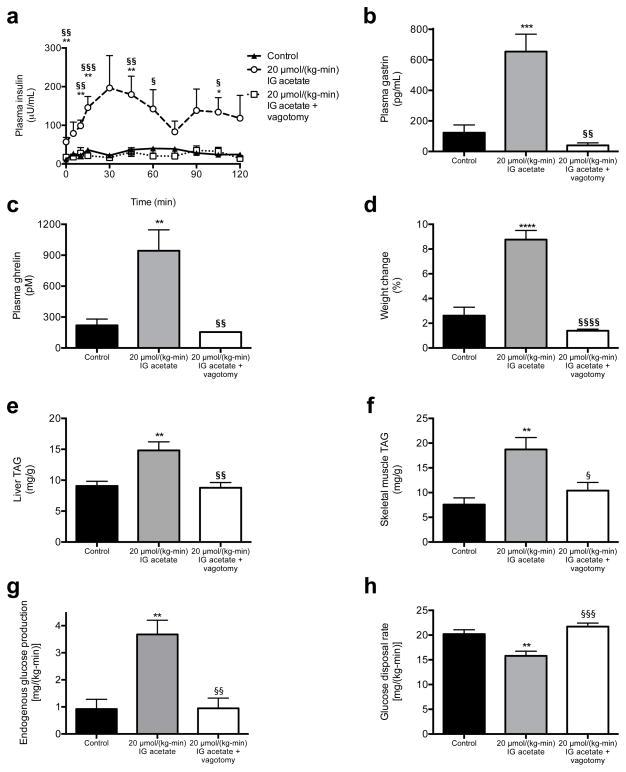
Obesity, insulin resistance and the metabolic syndrome are associated with changes to the gut microbiota; however, the mechanism by which modifications to the gut microbiota might lead to these conditions is unknown. Here we show that increased production of acetate by an altered gut microbiota in rodents leads to activation of the parasympathetic nervous system, which, in turn, promotes increased glucose-stimulated insulin secretion, increased ghrelin secretion, hyperphagia, obesity and related sequelae. Together, these findings identify increased acetate production resulting from a nutrient-gut microbiota interaction and subsequent parasympathetic activation as possible therapeutic targets for obesity.
肥胖、胰岛素抵抗和代谢综合征与肠道微生物群的变化有关;然而,肠道微生物群的改变可能导致这些病症的机制尚不清楚。在这里,我们表明,啮齿动物肠道微生物群改变导致乙酸盐产生增加,进而导致副交感神经系统激活,这反过来又促进葡萄糖刺激的胰岛素分泌增加、胃饥饿素分泌增加、食欲亢进、肥胖及相关后遗症。总之,这些发现确定了营养物质与肠道微生物群相互作用导致的乙酸盐产生增加以及随后的副交感神经激活是肥胖可能的治疗靶点。





 Zotero 插件