
恶性疟原虫和伯氏疟原虫甘油-3-磷酸酰基转移酶的特性研究,该酶参与疟原虫顶质体中II型脂肪酸合成途径的脂肪酸利用过程。
Characterization of the Plasmodium falciparum and P. berghei glycerol 3-phosphate acyltransferase involved in FASII fatty acid utilization in the malaria parasite apicoplast.
作者信息
Shears Melanie J, MacRae James I, Mollard Vanessa, Goodman Christopher D, Sturm Angelika, Orchard Lindsey M, Llinás Manuel, McConville Malcolm J, Botté Cyrille Y, McFadden Geoffrey I
机构信息
School of BioSciences, University of Melbourne, VIC 3010, Australia.
Department of Molecular Microbiology and Immunology, Johns Hopkins University Bloomberg School of Public Health, Baltimore, MD, 21205, United States.
出版信息
Cell Microbiol. 2017 Jan;19(1). doi: 10.1111/cmi.12633. Epub 2016 Aug 1.
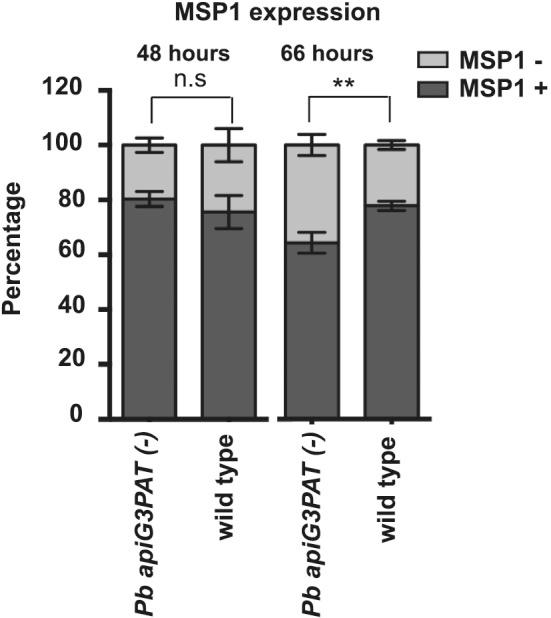
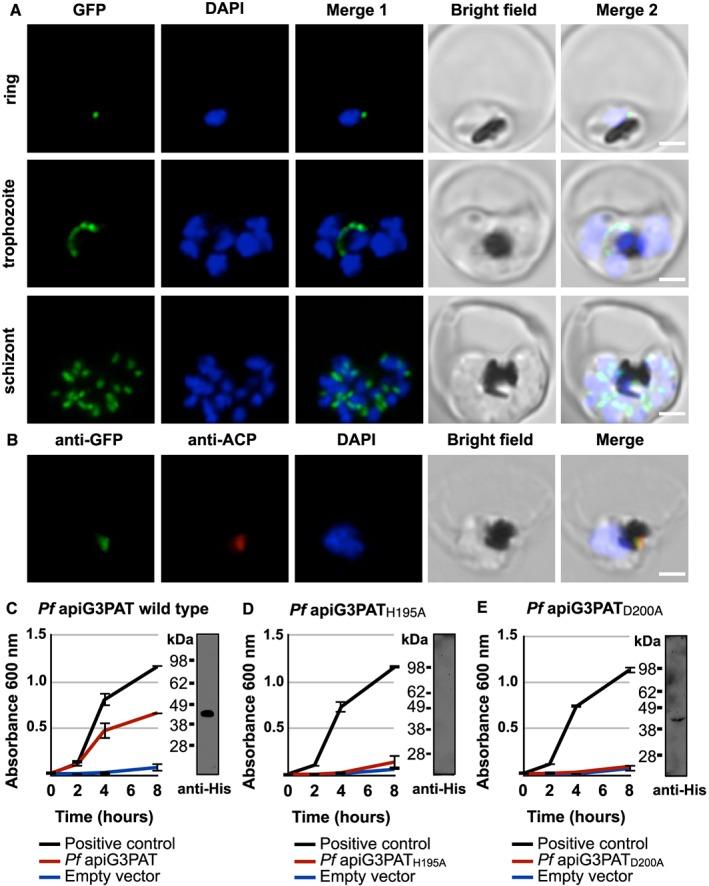
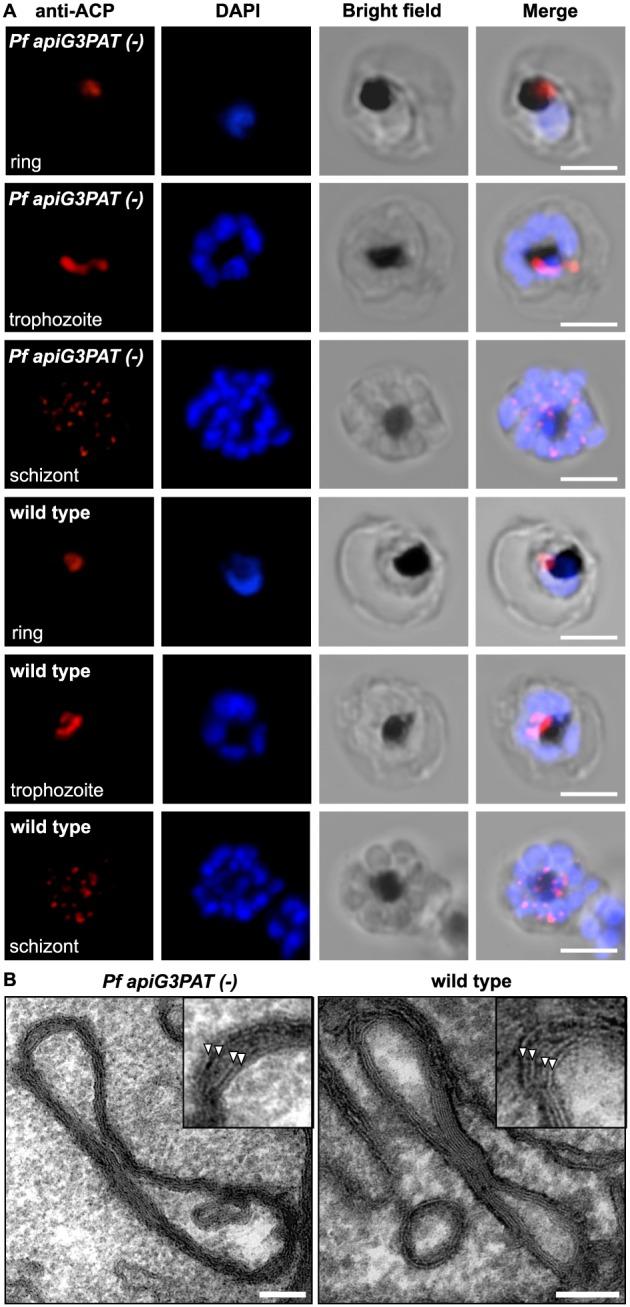
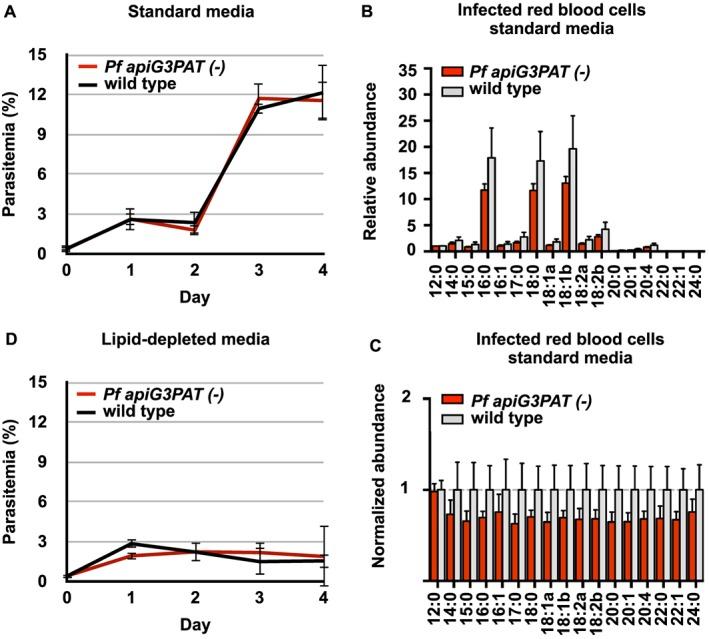
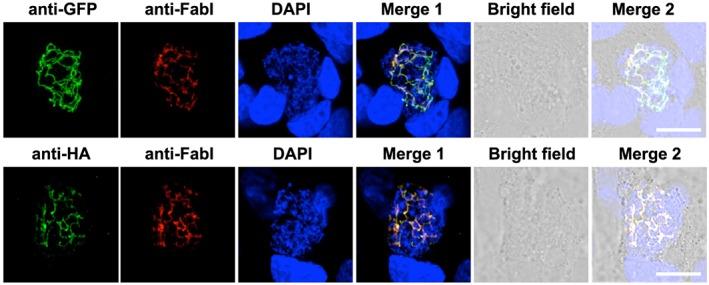
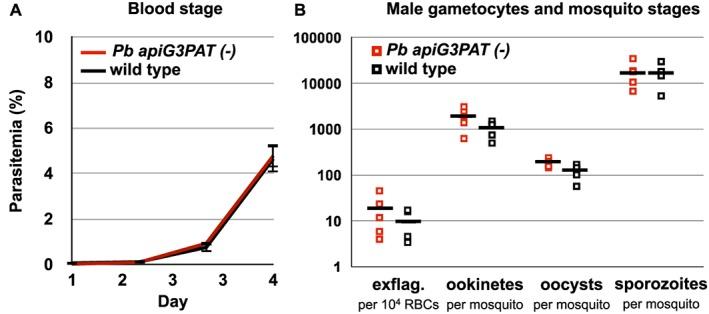
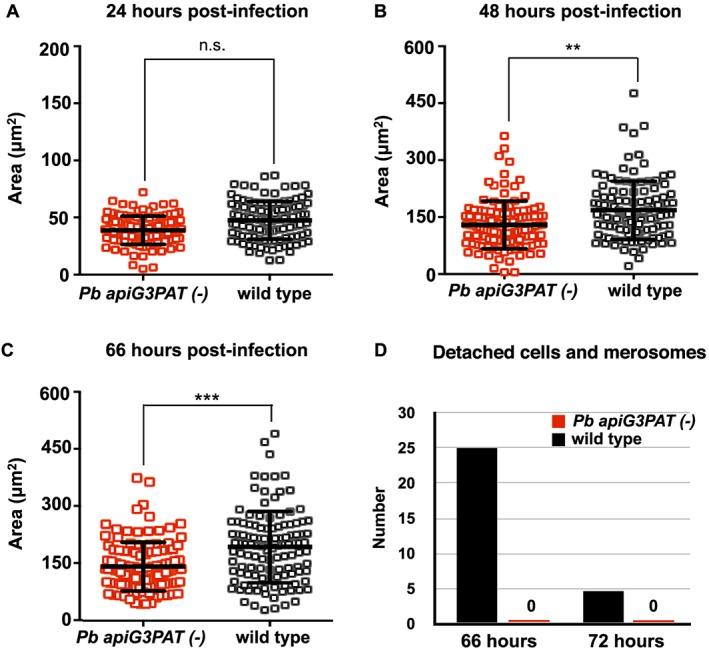
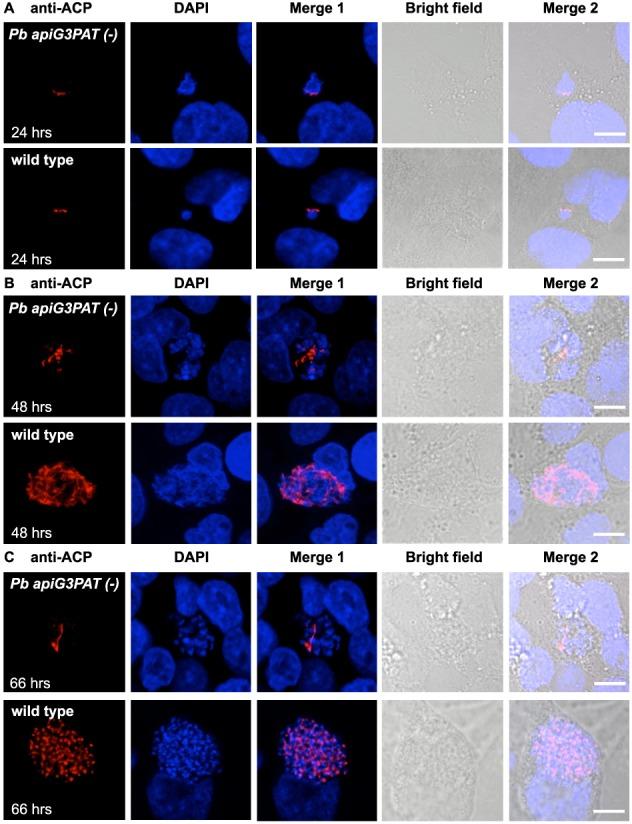
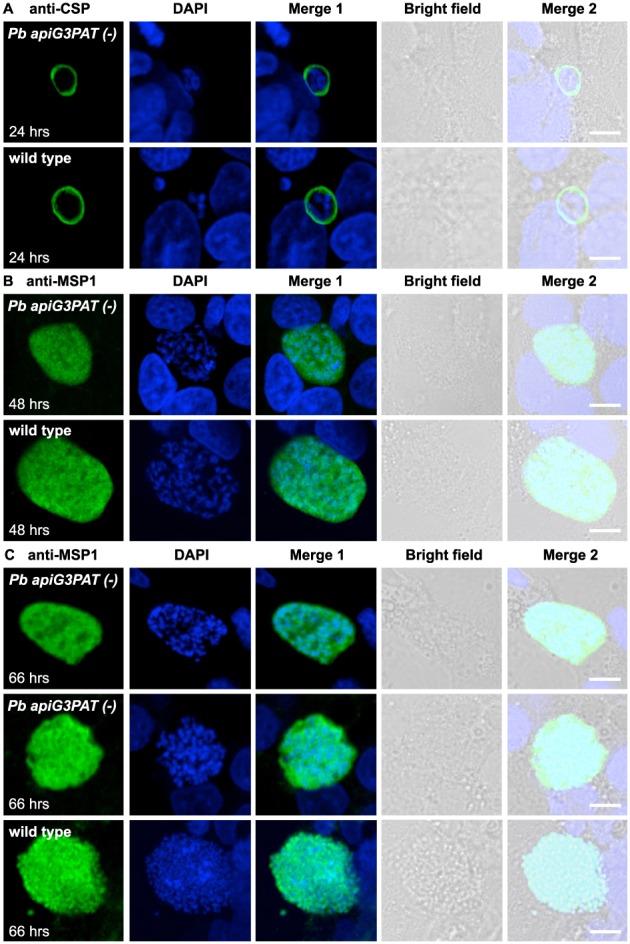
Malaria parasites can synthesize fatty acids via a type II fatty acid synthesis (FASII) pathway located in their apicoplast. The FASII pathway has been pursued as an anti-malarial drug target, but surprisingly little is known about its role in lipid metabolism. Here we characterize the apicoplast glycerol 3-phosphate acyltransferase that acts immediately downstream of FASII in human (Plasmodium falciparum) and rodent (Plasmodium berghei) malaria parasites and investigate how this enzyme contributes to incorporating FASII fatty acids into precursors for membrane lipid synthesis. Apicoplast targeting of the P. falciparum and P. berghei enzymes are confirmed by fusion of the N-terminal targeting sequence to GFP and 3' tagging of the full length protein. Activity of the P. falciparum enzyme is demonstrated by complementation in mutant bacteria, and critical residues in the putative active site identified by site-directed mutagenesis. Genetic disruption of the P. falciparum enzyme demonstrates it is dispensable in blood stage parasites, even in conditions known to induce FASII activity. Disruption of the P. berghei enzyme demonstrates it is dispensable in blood and mosquito stage parasites, and only essential for development in the late liver stage, consistent with the requirement for FASII in rodent malaria models. However, the P. berghei mutant liver stage phenotype is found to only partially phenocopy loss of FASII, suggesting newly made fatty acids can take multiple pathways out of the apicoplast and so giving new insight into the role of FASII and apicoplast glycerol 3-phosphate acyltransferase in malaria parasites.
疟原虫可通过位于其顶质体中的II型脂肪酸合成(FASII)途径合成脂肪酸。FASII途径一直是抗疟药物的靶点,但令人惊讶的是,人们对其在脂质代谢中的作用知之甚少。在此,我们对人类(恶性疟原虫)和啮齿动物(伯氏疟原虫)疟原虫中FASII下游的顶质体甘油3-磷酸酰基转移酶进行了表征,并研究了该酶如何将FASII脂肪酸整合到膜脂合成的前体中。通过将N端靶向序列与绿色荧光蛋白(GFP)融合以及对全长蛋白进行3'标记,证实了恶性疟原虫和伯氏疟原虫酶的顶质体靶向性。通过在突变细菌中的互补作用证明了恶性疟原虫酶的活性,并通过定点诱变确定了假定活性位点中的关键残基。对恶性疟原虫酶的基因破坏表明,即使在已知诱导FASII活性的条件下,它在血液阶段的寄生虫中也是可有可无的。对伯氏疟原虫酶的破坏表明,它在血液和蚊子阶段的寄生虫中是可有可无的,仅在晚期肝阶段的发育中是必需的,这与啮齿动物疟疾模型中对FASII的需求一致。然而,发现伯氏疟原虫突变体肝阶段的表型仅部分模拟FASII的缺失,这表明新合成的脂肪酸可以通过多种途径离开顶质体,从而为FASII和顶质体甘油3-磷酸酰基转移酶在疟原虫中的作用提供了新的见解。
 Zotero 插件