
老年人白细胞端粒长度的纵向下降及其与性别和遗传风险的关联。
Longitudinal decline of leukocyte telomere length in old age and the association with sex and genetic risk.
作者信息
Berglund Kari, Reynolds Chandra A, Ploner Alexander, Gerritsen Lotte, Hovatta Iiris, Pedersen Nancy L, Hägg Sara
机构信息
Department of Medical Epidemiology and Biostatistics, Karolinska Institutet, 171 77 Stockholm, Sweden.
Department of Psychology, University of California-Riverside, Riverside, CA 92521, USA.
出版信息
Aging (Albany NY). 2016 Jul;8(7):1398-415. doi: 10.18632/aging.100995.
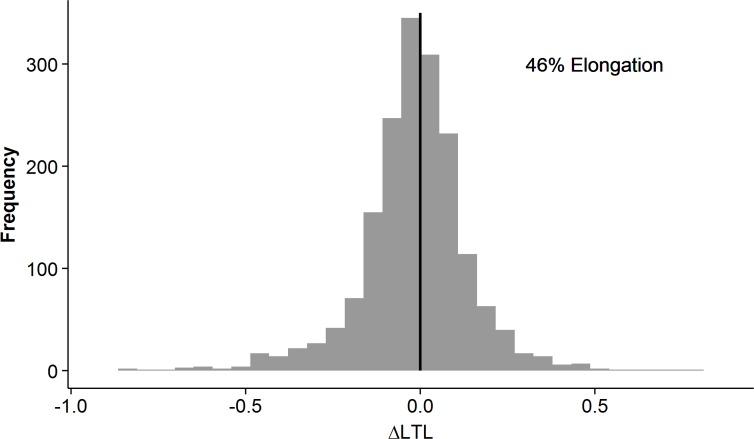
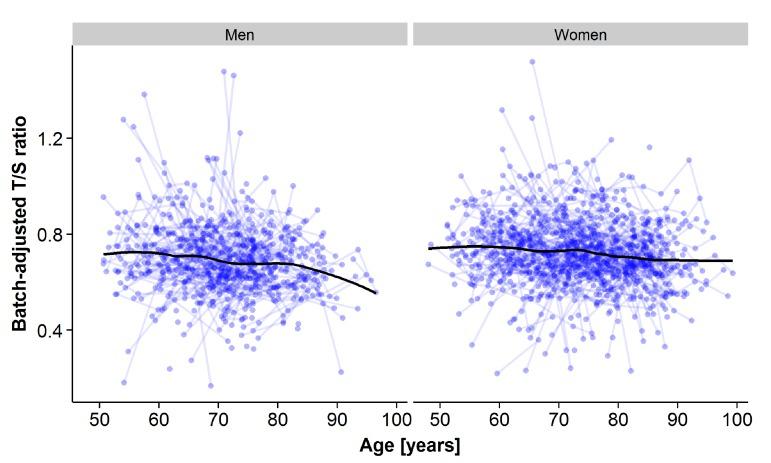
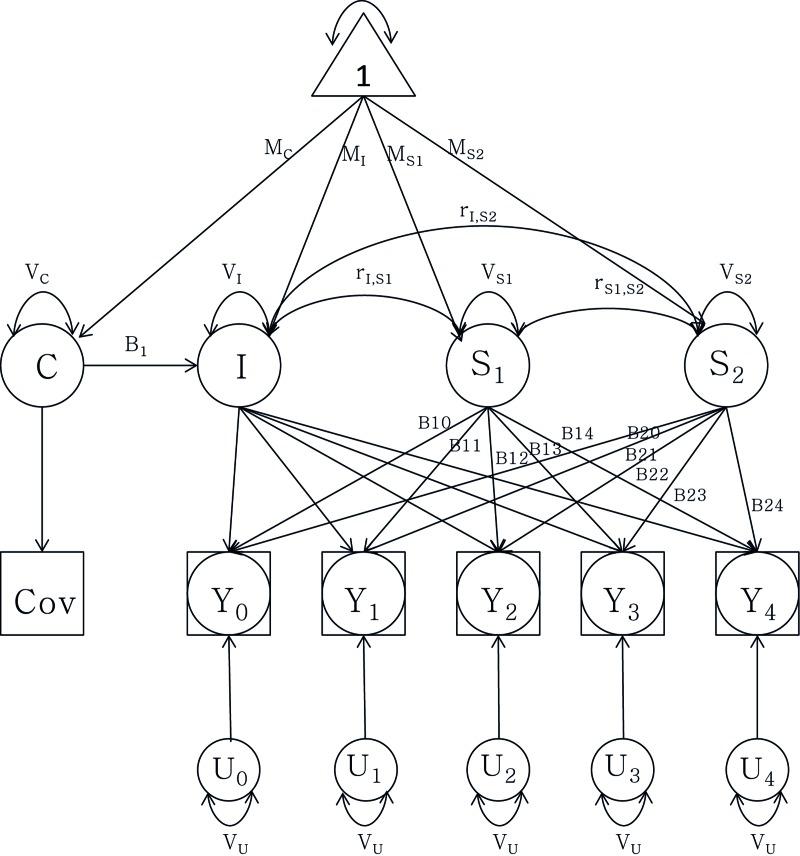
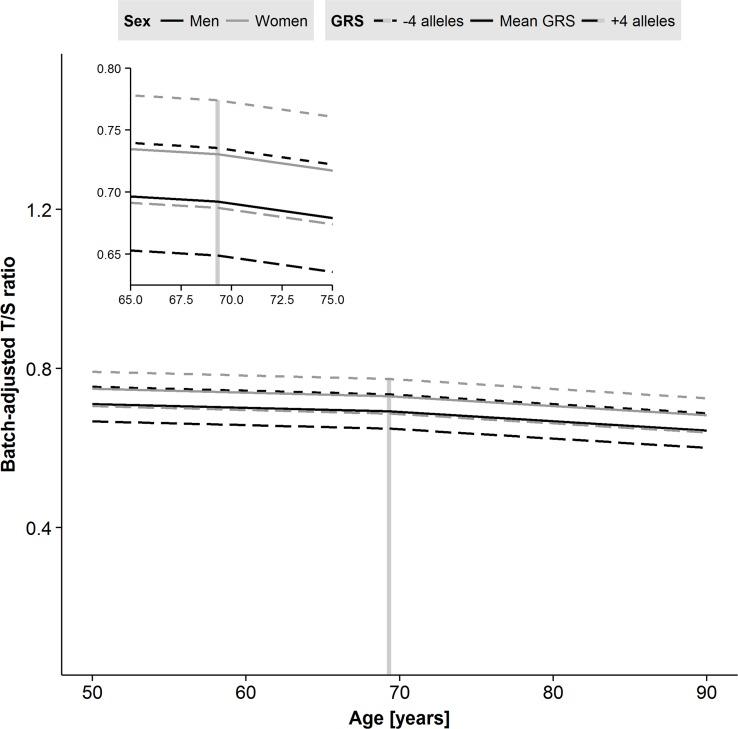
Telomeres are DNA-protein structures at the ends of chromosomes. Leukocyte telomere length (LTL) shortening has been associated with advanced age. However, most studies use cross-sectional data, hence, the aim of our study was to model longitudinal trajectories of LTL attrition across 20 years at old age. Assessments of LTL were done by qPCR in SATSA (Swedish Adoption/Twin Study of Aging; N=636 individuals). Cross-sectional and longitudinal associations with age were estimated, the latter using latent growth curve analysis. A genetic risk score (GRS) for LTL was further assessed and included in the models. We confirmed an inverse cross-sectional association of LTL with age (B=-0.0022 T/S-ratio; 95% CI: -0.0035, -0.0009, p-value=0.0008). Longitudinal LTL analyses adjusted for sex (1598 samples; ≤5 measurements) suggested modest average decline until 69 years of age but accelerating decline after 69 years, with significant inter-individual variation. Women had on average ~6% T/S-ratio units longer LTL at baseline, and inclusion of the GRS improved the model where four risk alleles was equivalent to the effect size difference between the sexes. In this cohort of old individuals, baseline LTL varied with age, sex and genetic background. The rate of change of LTL accelerated with age and varied considerably between individuals.
端粒是染色体末端的DNA - 蛋白质结构。白细胞端粒长度(LTL)缩短与高龄有关。然而,大多数研究使用的是横断面数据,因此,我们研究的目的是对老年人20年间LTL损耗的纵向轨迹进行建模。通过定量聚合酶链反应(qPCR)在瑞典收养/双生子衰老研究(SATSA;N = 636人)中对LTL进行评估。估计了与年龄的横断面和纵向关联,后者使用潜在增长曲线分析。进一步评估了LTL的遗传风险评分(GRS)并将其纳入模型。我们证实了LTL与年龄的反向横断面关联(B = -0.0022 T/S比率;95%置信区间:-0.0035,-0.0009,p值 = 0.0008)。对性别进行调整后的纵向LTL分析(1598个样本;≤5次测量)表明,直到69岁时平均下降幅度较小,但69岁后下降加速,个体间存在显著差异。女性在基线时的LTL平均比男性长约6% T/S比率单位,纳入GRS改善了模型,其中四个风险等位基因相当于性别之间的效应大小差异。在这个老年人群队列中,基线LTL随年龄、性别和遗传背景而变化。LTL的变化率随年龄加速,个体间差异很大。
 Zotero 插件