
加巴喷丁用于全髋关节置换术后疼痛管理:一项随机对照试验的荟萃分析。
The use of gabapentin in the management of postoperative pain after total hip arthroplasty: a meta-analysis of randomised controlled trials.
作者信息
Han Chao, Li Xiao-Dan, Jiang Hong-Qiang, Ma Jian-Xiong, Ma Xin-Long
机构信息
Department of Orthopedics, Tianjin Hospital, No. 406 Jiefang South Road, Hexi District, Tianjin City, 300211, People's Republic of China.
Department of Anesthesiology, Tianjin First Central Hospital, No.24 Fukang Road, Nankai District, Tianjin City, 300192, People's Republic of China.
出版信息
J Orthop Surg Res. 2016 Jul 12;11(1):79. doi: 10.1186/s13018-016-0412-z.
BACKGROUND
Pain management after total hip arthroplasty (THA) varies and has been widely studied in recent years. Gabapentin as a third-generation antiepileptic drug that selectively affects the nociceptive process has been used for pain relief after THA. This meta-analysis was conducted to examine the efficacy of gabapentin in THA.
METHODS
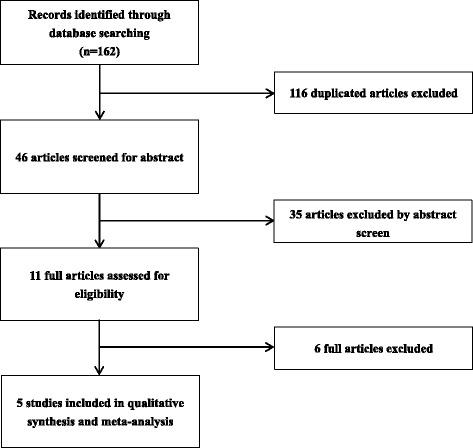
An electronic-based search was conducted using the following databases: PubMed, EMBASE, Ovid MEDLINE, ClinicalTrials.gov, and Cochrane Central Register of Controlled Trials (CENTRAL). Randomised controlled trials (RCTs) involving gabapentin and a placebo for THA were included. The meta-analysis was performed following the Preferred Reporting Items for Systematic Reviews and Meta-Analyses (PRISMA) statement.
RESULTS
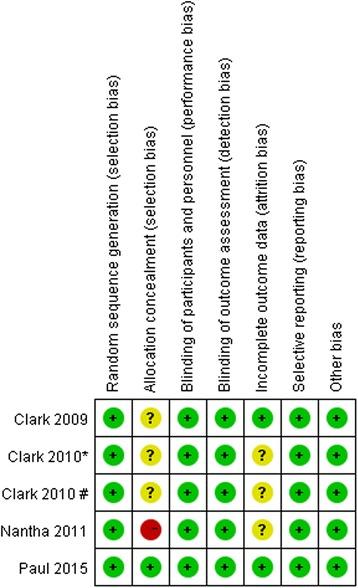
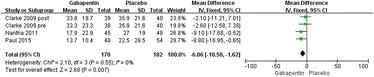
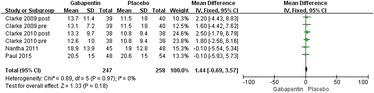
Five trials met the inclusion criteria. The cumulative narcotic consumption and the visual analogue scale (VAS) scores at 24 and 48 h postoperatively were used for postoperative pain assessment. There was a significant decrease in morphine consumption at 24 h (P = 0.00). Compared with the control group, the VAS score (at rest) at 48 h was less in the gabapentin group (P = 0.00).
CONCLUSION
The administration of gabapentin is effective in decreasing postoperative narcotic consumption and the VAS score.
背景
全髋关节置换术(THA)后的疼痛管理方式各异,近年来已得到广泛研究。加巴喷丁作为一种选择性影响伤害感受过程的第三代抗癫痫药物,已被用于THA术后的疼痛缓解。本荟萃分析旨在研究加巴喷丁在THA中的疗效。
方法
使用以下数据库进行基于电子的检索:PubMed、EMBASE、Ovid MEDLINE、ClinicalTrials.gov和Cochrane对照试验中央注册库(CENTRAL)。纳入涉及加巴喷丁和安慰剂用于THA的随机对照试验(RCT)。荟萃分析按照系统评价和荟萃分析的首选报告项目(PRISMA)声明进行。
结果
五项试验符合纳入标准。术后24小时和48小时的累积麻醉剂消耗量以及视觉模拟量表(VAS)评分用于术后疼痛评估。术后24小时吗啡消耗量显著降低(P = 0.00)。与对照组相比,加巴喷丁组术后48小时(静息时)的VAS评分更低(P = 0.00)。
结论
加巴喷丁给药可有效降低术后麻醉剂消耗量和VAS评分。





 Zotero 插件