
高切应力通过血管生成诱导动脉粥样硬化易损斑块形成。
High shear stress induces atherosclerotic vulnerable plaque formation through angiogenesis.
机构信息
Key Laboratory for Biorheological Science and Technology of Ministry of Education, State and Local Joint Engineering Laboratory for Vascular Implants, Bioengineering College of Chongqing University, Chongqing, 400030, China; Taiji Group Co, Ltd, Chongqing, 401147, China.
出版信息
Regen Biomater. 2016 Dec;3(4):257-67. doi: 10.1093/rb/rbw021. Epub 2016 Jun 26.
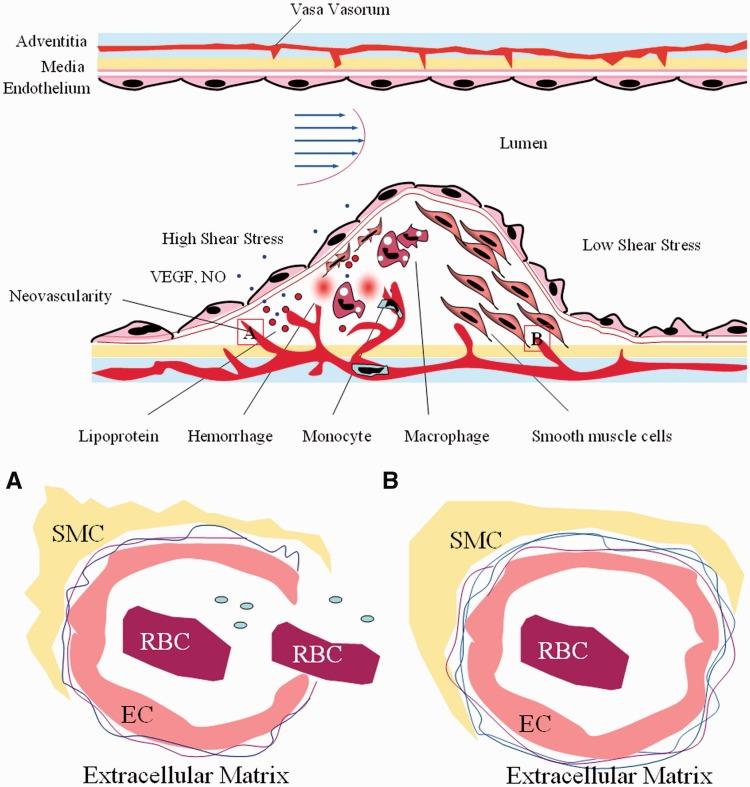
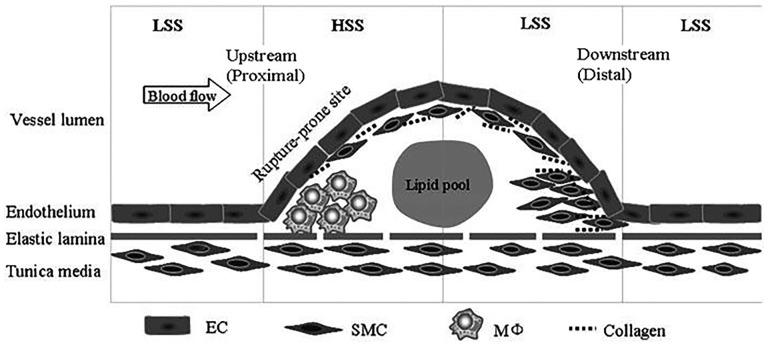
Rupture of atherosclerotic plaques causing thrombosis is the main cause of acute coronary syndrome and ischemic strokes. Inhibition of thrombosis is one of the important tasks developing biomedical materials such as intravascular stents and vascular grafts. Shear stress (SS) influences the formation and development of atherosclerosis. The current review focuses on the vulnerable plaques observed in the high shear stress (HSS) regions, which localizes at the proximal region of the plaque intruding into the lumen. The vascular outward remodelling occurs in the HSS region for vascular compensation and that angiogenesis is a critical factor for HSS which induces atherosclerotic vulnerable plaque formation. These results greatly challenge the established belief that low shear stress is important for expansive remodelling, which provides a new perspective for preventing the transition of stable plaques to high-risk atherosclerotic lesions.
动脉粥样硬化斑块破裂导致血栓形成是急性冠状动脉综合征和缺血性中风的主要原因。抑制血栓形成是开发血管内支架和血管移植物等生物医学材料的重要任务之一。剪切力 (SS) 影响动脉粥样硬化的形成和发展。本综述重点介绍了在高剪切应力 (HSS) 区域观察到的易损斑块,这些斑块定位于斑块的近端区域,侵入管腔。血管向外重塑发生在 HSS 区域,以进行血管代偿,而血管生成是 HSS 的一个关键因素,它诱导易损斑块形成。这些结果极大地挑战了低剪切力对扩张性重塑很重要的既定观念,为预防稳定斑块向高风险动脉粥样硬化病变的转变提供了新的视角。
 Zotero 插件