
希瓦氏菌中由隐秘噬菌体切除调控的冷适应性
Cold adaptation regulated by cryptic prophage excision in Shewanella oneidensis.
作者信息
Zeng Zhenshun, Liu Xiaoxiao, Yao Jianyun, Guo Yunxue, Li Baiyuan, Li Yangmei, Jiao Nianzhi, Wang Xiaoxue
机构信息
Key Laboratory of Tropical Marine Bio-resources and Ecology, Guangdong Key Laboratory of Marine Materia Medica, RNAM Center for Marine Microbiology, South China Sea Institute of Oceanology, Chinese Academy of Sciences, Guangzhou, China.
University of Chinese Academy of Sciences, Beijing, China.
出版信息
ISME J. 2016 Dec;10(12):2787-2800. doi: 10.1038/ismej.2016.85. Epub 2016 Aug 2.
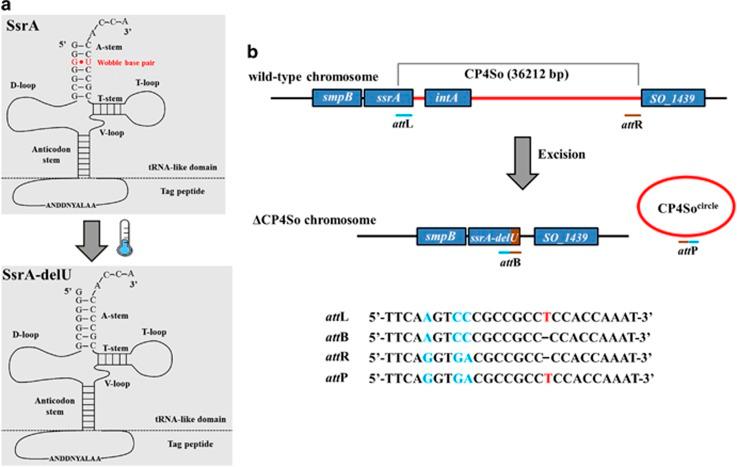
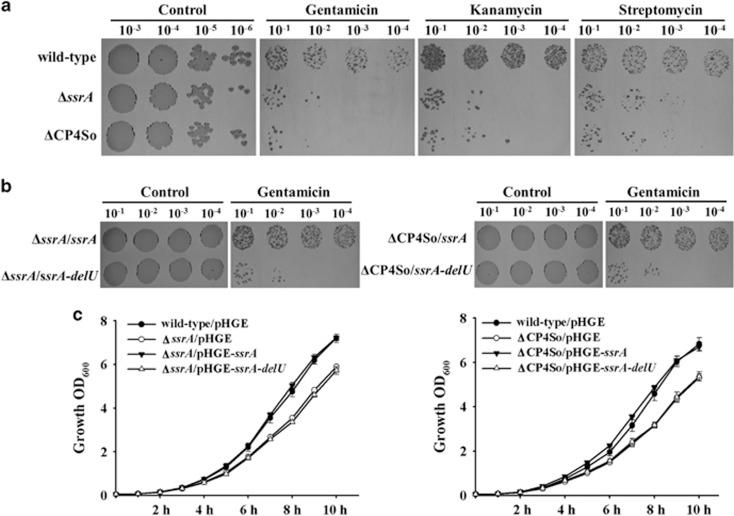
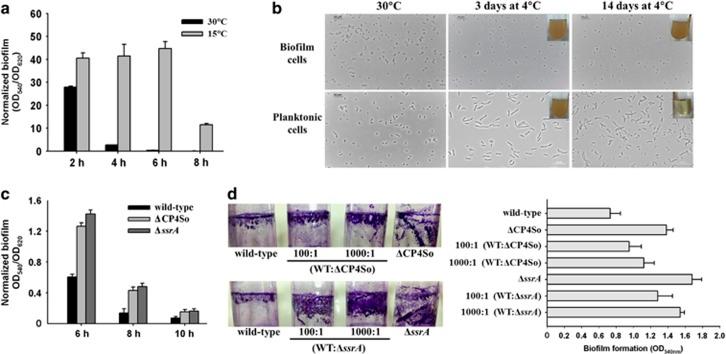
Among the environmental stresses experienced by bacteria, temperature shifts are one of the most important. In this study, we discovered a novel cold adaptation mechanism in Shewanella oneidensis that occurs at the DNA level and is regulated by cryptic prophage excision. Previous studies on bacterial cold tolerance mainly focus on the structural change of cell membrane and changes at the RNA and protein levels. Whether or not genomic change can also contribute to this process has not been explored. Here we employed a whole-genome deep-sequencing method to probe the changes at DNA level in a model psychrotrophic bacteria strain. We found that temperature downshift induced a 10 000-fold increase of the excision of a novel P4-like cryptic prophage. Importantly, although prophage excision only occurred in a relatively small population of bacteria, it was able to facilitate biofilm formation and promote the survival of the entire population. This prophage excision affected cell physiology by disrupting a critical gene encoding transfer-messenger RNA (tmRNA). In addition, we found that the histone-like nucleoid-structuring protein (H-NS) could silence prophage excision via binding to the promoter of the putative excisionase gene at warm temperatures. H-NS level was reduced at cold temperatures, leading to de-repression of prophage excision. Collectively, our results reveal that cryptic prophage excision acts as a regulatory switch to enable the survival of the host at low temperature by controlling the activity of tmRNA and biofilm formation.
在细菌所经历的环境压力中,温度变化是最重要的压力之一。在本研究中,我们在嗜冷栖热袍菌中发现了一种新的冷适应机制,该机制发生在DNA水平,并受隐蔽原噬菌体切除调控。以往关于细菌耐寒性的研究主要集中在细胞膜的结构变化以及RNA和蛋白质水平的变化。基因组变化是否也能促成这一过程尚未得到探索。在这里,我们采用全基因组深度测序方法来探究一种嗜冷模式菌株在DNA水平上的变化。我们发现温度下降诱导一种新的类P4隐蔽原噬菌体的切除增加了10000倍。重要的是,尽管原噬菌体切除只发生在相对少量的细菌群体中,但它能够促进生物膜形成并促进整个群体的存活。这种原噬菌体切除通过破坏一个编码转移信使RNA(tmRNA)的关键基因来影响细胞生理。此外,我们发现类组蛋白核仁结构蛋白(H-NS)在温暖温度下可通过与假定切除酶基因的启动子结合来使原噬菌体切除沉默。在低温下H-NS水平降低,导致原噬菌体切除的去抑制。总的来说,我们的结果表明,隐蔽原噬菌体切除作为一种调控开关,通过控制tmRNA的活性和生物膜形成,使宿主在低温下得以存活。



 Zotero 插件