
弓形虫寄生泡的体内生物素化揭示了对寄生虫生长和发病机制重要的新型致密颗粒蛋白。
In Vivo Biotinylation of the Toxoplasma Parasitophorous Vacuole Reveals Novel Dense Granule Proteins Important for Parasite Growth and Pathogenesis.
作者信息
Nadipuram Santhosh M, Kim Elliot W, Vashisht Ajay A, Lin Andrew H, Bell Hannah N, Coppens Isabelle, Wohlschlegel James A, Bradley Peter J
机构信息
Department of Microbiology, Immunology and Molecular Genetics, University of California, Los Angeles, Los Angeles, California, USA Department of Pediatrics, David Geffen School of Medicine at the University of California, Los Angeles, Los Angeles, California, USA.
Department of Microbiology, Immunology and Molecular Genetics, University of California, Los Angeles, Los Angeles, California, USA.
出版信息
mBio. 2016 Aug 2;7(4):e00808-16. doi: 10.1128/mBio.00808-16.
UNLABELLED
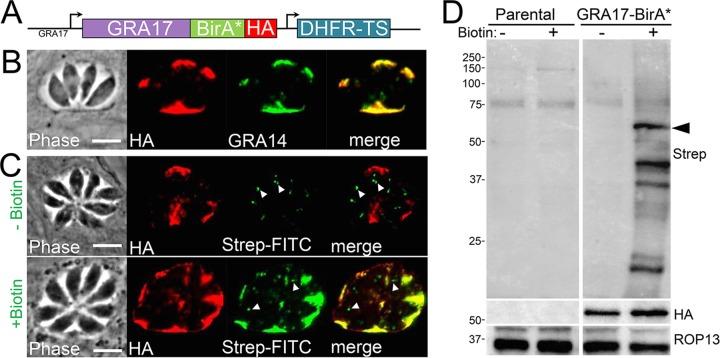
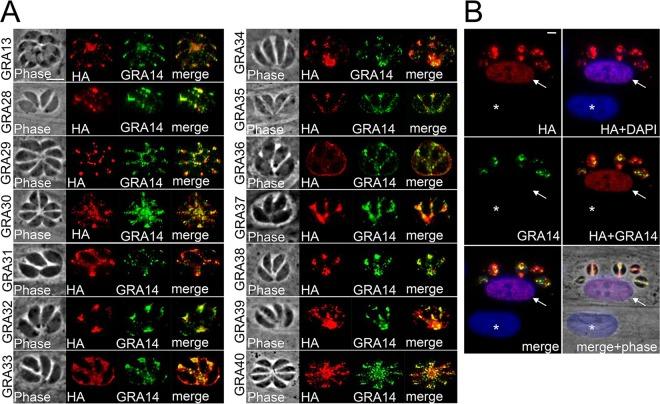
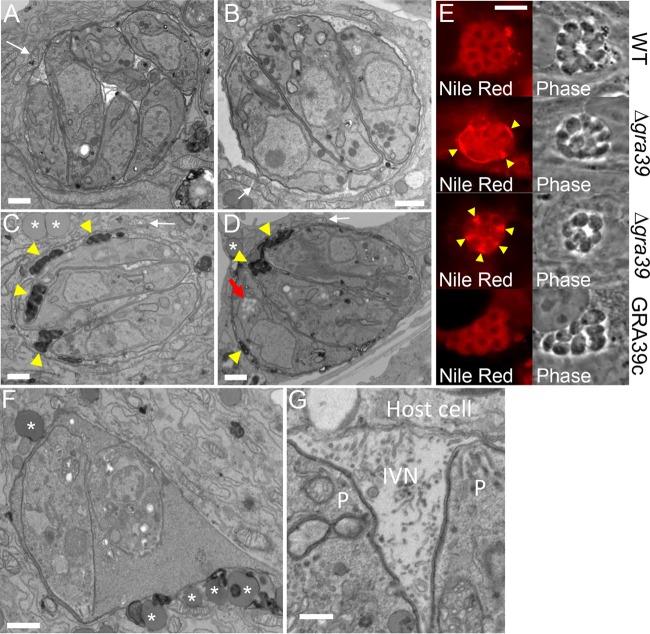
Toxoplasma gondii is an obligate intracellular parasite that invades host cells and replicates within a unique parasitophorous vacuole. To maintain this intracellular niche, the parasite secretes an array of dense granule proteins (GRAs) into the nascent parasitophorous vacuole. These GRAs are believed to play key roles in vacuolar remodeling, nutrient uptake, and immune evasion while the parasite is replicating within the host cell. Despite the central role of GRAs in the Toxoplasma life cycle, only a subset of these proteins have been identified, and many of their roles have not been fully elucidated. In this report, we utilize the promiscuous biotin ligase BirA* to biotinylate GRA proteins secreted into the vacuole and then identify those proteins by affinity purification and mass spectrometry. Using GRA-BirA* fusion proteins as bait, we have identified a large number of known and candidate GRAs and verified localization of 13 novel GRA proteins by endogenous gene tagging. We proceeded to functionally characterize three related GRAs from this group (GRA38, GRA39, and GRA40) by gene knockout. While Δgra38 and Δgra40 parasites showed no altered phenotype, disruption of GRA39 results in slow-growing parasites that contain striking lipid deposits in the parasitophorous vacuole, suggesting a role in lipid regulation that is important for parasite growth. In addition, parasites lacking GRA39 showed dramatically reduced virulence and a lower tissue cyst burden in vivo Together, the findings from this work reveal a partial vacuolar proteome of T. gondii and identify a novel GRA that plays a key role in parasite replication and pathogenesis.
IMPORTANCE
Most intracellular pathogens reside inside a membrane-bound vacuole within their host cell that is extensively modified by the pathogen to optimize intracellular growth and avoid host defenses. In Toxoplasma, this vacuole is modified by a host of secretory GRA proteins, many of which remain unidentified. Here we demonstrate that in vivo biotinylation of proximal and interacting proteins using the promiscuous biotin ligase BirA* is a powerful approach to rapidly identify vacuolar GRA proteins. We further demonstrate that one factor identified by this approach, GRA39, plays an important role in the ability of the parasite to replicate within its host cell and cause disease.
未标记
刚地弓形虫是一种专性细胞内寄生虫,它侵入宿主细胞并在独特的寄生泡内进行复制。为维持这种细胞内生态位,该寄生虫会向新生的寄生泡中分泌一系列致密颗粒蛋白(GRAs)。据信这些GRAs在寄生虫在宿主细胞内复制时,在泡膜重塑、营养摄取和免疫逃避中发挥关键作用。尽管GRAs在弓形虫生命周期中起着核心作用,但目前仅鉴定出其中一部分蛋白,并且它们的许多作用尚未完全阐明。在本报告中,我们利用混杂生物素连接酶BirA对分泌到泡内的GRA蛋白进行生物素化,然后通过亲和纯化和质谱鉴定这些蛋白。以GRA - BirA融合蛋白为诱饵,我们鉴定出大量已知和候选GRAs,并通过内源基因标签验证了13种新型GRA蛋白的定位。我们接着通过基因敲除对该组中的三种相关GRAs(GRA38、GRA39和GRA40)进行功能表征。虽然Δgra38和Δgra40寄生虫未表现出表型改变,但GRA39的缺失导致寄生虫生长缓慢,在寄生泡中含有显著的脂质沉积,这表明其在脂质调节中起作用,而脂质调节对寄生虫生长很重要。此外,缺乏GRA39的寄生虫在体内的毒力显著降低,组织囊肿负担也较低。总之,这项工作的发现揭示了刚地弓形虫的部分泡内蛋白质组,并鉴定出一种在寄生虫复制和发病机制中起关键作用的新型GRA。
重要性
大多数细胞内病原体存在于宿主细胞内的膜结合泡中,病原体对其进行广泛修饰以优化细胞内生长并逃避宿主防御。在弓形虫中,这个泡由许多分泌性GRA蛋白修饰,其中许多蛋白仍未被鉴定。在这里,我们证明使用混杂生物素连接酶BirA*对近端和相互作用蛋白进行体内生物素化是快速鉴定泡内GRA蛋白的有效方法。我们进一步证明通过这种方法鉴定出的一个因子GRA39在寄生虫在宿主细胞内复制和致病的能力中起重要作用。



 Zotero 插件