
HHLA2是B7家族的一员,在人类骨肉瘤中表达,并与转移及较差的生存率相关。
HHLA2, a member of the B7 family, is expressed in human osteosarcoma and is associated with metastases and worse survival.
作者信息
Koirala Pratistha, Roth Michael E, Gill Jonathan, Chinai Jordan M, Ewart Michelle R, Piperdi Sajida, Geller David S, Hoang Bang H, Fatakhova Yekaterina V, Ghorpade Maya, Zang Xingxing, Gorlick Richard
机构信息
Department of Molecular Pharmacology, Albert Einstein College of Medicine, Bronx, NY, USA.
Division of Pediatric Hematology, Oncology, Marrow &Blood Cell Transplantation, Children's Hospital at Montefiore, Albert Einstein College of Medicine, Bronx, NY, USA.
出版信息
Sci Rep. 2016 Aug 17;6:31154. doi: 10.1038/srep31154.
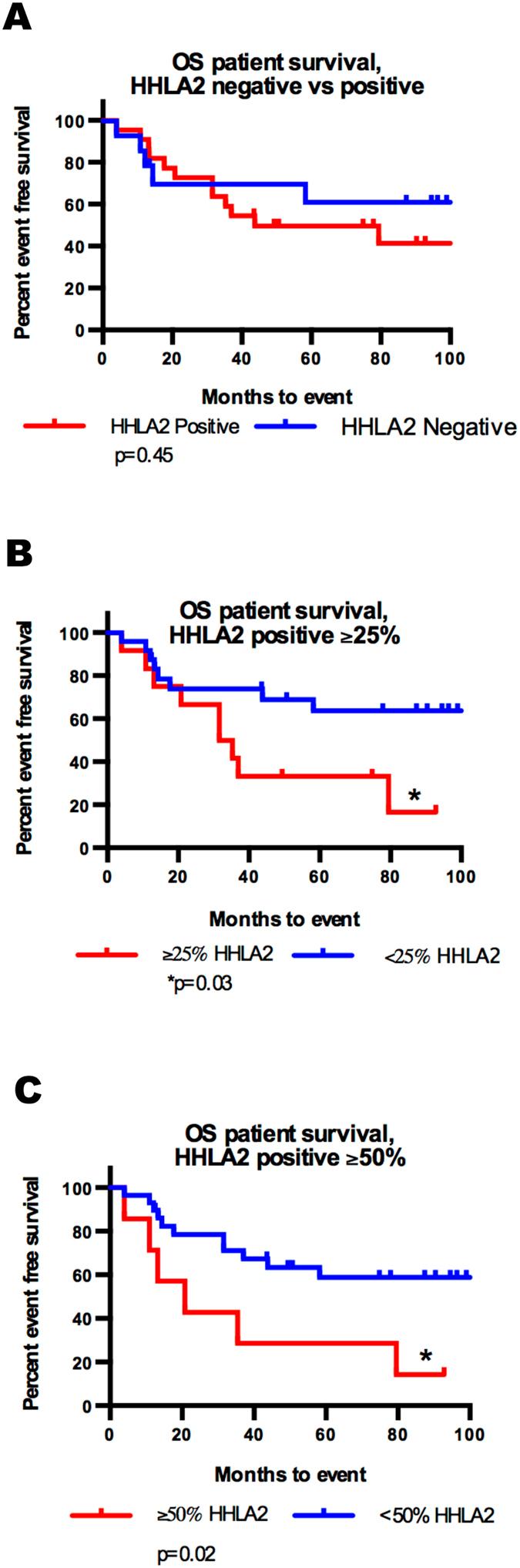
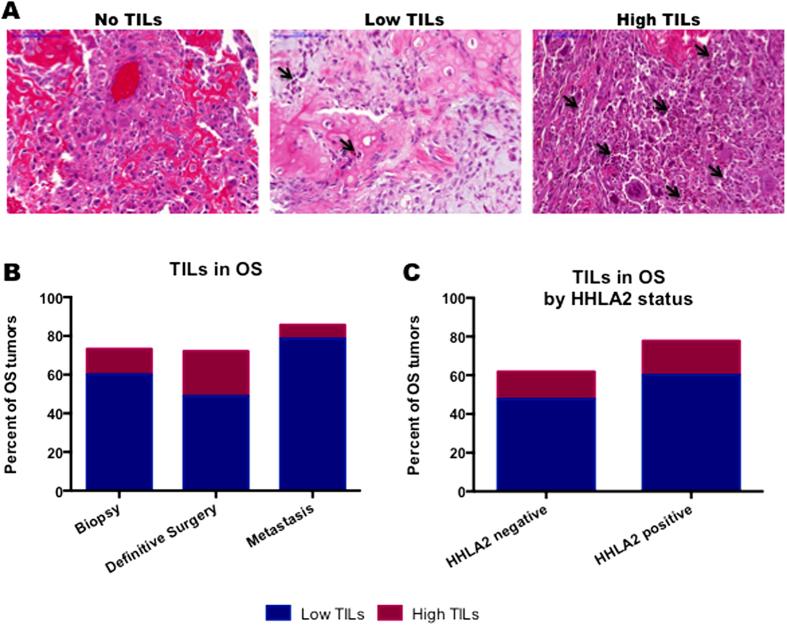
Over the past four decades there have been minimal improvements in outcomes for patients with osteosarcoma. New targets and novel therapies are needed to improve outcomes for these patients. We sought to evaluate the prevalence and clinical significance of the newest immune checkpoint, HHLA2, in osteosarcoma. HHLA2 protein expression was evaluated in primary tumor specimens and metastatic disease using an osteosarcoma tumor microarray (TMA) (n = 62). The association of HHLA2 with the presence of tumor infiltrating lymphocytes (TILs) and five-year-event-free-survival were examined. HHLA2 was expressed in 68% of osteosarcoma tumors. HHLA2 was expressed in almost all metastatic disease specimens and was more prevalent than in primary specimens without known metastases (93% vs 53%, p = 0.02). TILs were present in 75% of all osteosarcoma specimens. Patients whose tumors were ≥25% or ≥50% HHLA2 positive had significantly worse five-year event-free-survival (33% vs 64%, p = 0.03 and 14% vs 59%, p = 0.02). Overall, we have shown that HHLA2 is expressed in the majority of osteosarcoma tumors and its expression is associated with metastatic disease and poorer survival. Along with previously reported findings that HHLA2 is a T cell co-inhibitor, these results suggest that HHLA2 may be a novel immunosuppressive mechanism within the osteosarcoma tumor microenvironment.
在过去的四十年里,骨肉瘤患者的治疗效果几乎没有改善。需要新的靶点和新型疗法来改善这些患者的治疗效果。我们试图评估骨肉瘤中最新的免疫检查点HHLA2的患病率及其临床意义。使用骨肉瘤肿瘤微阵列(TMA)(n = 62)评估原发性肿瘤标本和转移性疾病中HHLA2蛋白的表达情况。研究了HHLA2与肿瘤浸润淋巴细胞(TILs)的存在以及五年无事件生存率之间的关联。68%的骨肉瘤肿瘤表达HHLA2。几乎所有转移性疾病标本中都表达HHLA2,其在无已知转移的原发性标本中更为普遍(93%对53%,p = 0.02)。75%的骨肉瘤标本中存在TILs。肿瘤HHLA2阳性率≥25%或≥50%的患者五年无事件生存率显著更差(33%对64%,p = 0.03;14%对59%,p = 0.02)。总体而言,我们发现大多数骨肉瘤肿瘤中都表达HHLA2,其表达与转移性疾病和较差的生存率相关。连同之前报道的HHLA2是一种T细胞共抑制因子的研究结果,这些结果表明HHLA2可能是骨肉瘤肿瘤微环境中的一种新型免疫抑制机制。

 Zotero 插件