
一夜睡眠剥夺会导致年轻健康男性体内硬脂酰辅酶A去饱和酶的DNA甲基化和血清活性指标发生变化。
One-night sleep deprivation induces changes in the DNA methylation and serum activity indices of stearoyl-CoA desaturase in young healthy men.
作者信息
Skuladottir Gudrun Valgerdur, Nilsson Emil Karl, Mwinyi Jessica, Schiöth Helgi Birgir
机构信息
Department of Physiology, Faculty of Medicine, University of Iceland, Vatnsmyrarvegur 16, IS-101, Reykjavik, Iceland.
Department of Neuroscience, Functional Pharmacology, Uppsala University, Uppsala, Sweden.
出版信息
Lipids Health Dis. 2016 Aug 26;15(1):137. doi: 10.1186/s12944-016-0309-1.
BACKGROUND
Sleep deprivation has been associated with obesity among adults, and accumulating data suggests that stearoyl-CoA desaturase 1 (SCD1) expression has a relevant impact on fatty acid (FA) composition of lipid pools and obesity. The aim of this study was to investigate the effect of one-night total sleep deprivation (TSD) on DNA methylation in the 5'-prime region of SCD1, and whether detected changes in DNA methylation are associated with SCD activity indices (product to precursor FA ratios; 16:1n-7/16:0 and 18:1n-9/18:0) derived from serum phospholipids (PL).
METHODS
Sixteen young, normal-weight, healthy men completed two study sessions, one with one-night TSD and one with one-night normal sleep (NS). Sleep quality and length was assessed by polysomnography, and consisted of electroencephalography, electrooculography, and electromyography. Fasting whole blood samples were collected on the subsequent morning for analysis of DNA methylation and FAs in serum PL. Linear regression analyses were performed to assess the association between changes in DNA methylation and SCD activity indices.
RESULTS
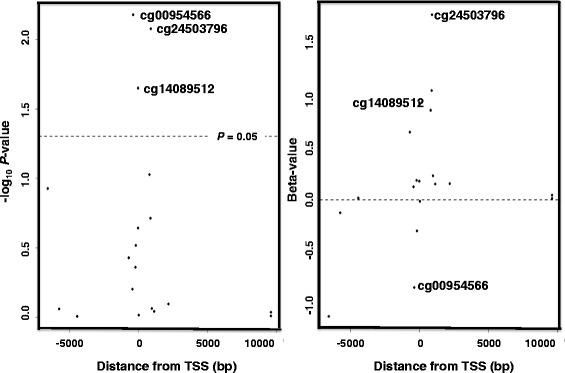
Three CpG sites close to the transcription start site (TSS) of SCD1 (cg00954566, cg24503796, cg14089512) were significantly differentially methylated in dependency of sleep duration (-log10 P-value > 1.3). Both SCD-16 and SCD-18 activity indices were significantly elevated (P < 0.05) following one-night TSD, and significantly associated with DNA methylation changes of the three mentioned probes in the 5' region of SCD1.
CONCLUSION
Our results suggest a relevant link between TSD, hepatic SCD1 expression and de-novo fatty acid synthesis via epigenetically driven regulatory mechanisms.
背景
睡眠剥夺与成年人肥胖有关,越来越多的数据表明,硬脂酰辅酶A去饱和酶1(SCD1)的表达对脂质池的脂肪酸(FA)组成和肥胖有相关影响。本研究的目的是调查一夜完全睡眠剥夺(TSD)对SCD1 5'端区域DNA甲基化的影响,以及检测到的DNA甲基化变化是否与源自血清磷脂(PL)的SCD活性指标(产物与前体FA比率;16:1n-7/16:0和18:1n-9/18:0)相关。
方法
16名年轻、体重正常的健康男性完成了两个研究阶段,一个是一夜TSD,另一个是一夜正常睡眠(NS)。通过多导睡眠图评估睡眠质量和时长,包括脑电图、眼电图和肌电图。在随后的早晨采集空腹全血样本,用于分析血清PL中的DNA甲基化和FA。进行线性回归分析以评估DNA甲基化变化与SCD活性指标之间的关联。
结果
靠近SCD1转录起始位点(TSS)的三个CpG位点(cg00954566、cg24503796、cg14089512)在睡眠时长的依赖性上存在显著差异甲基化(-log10 P值>1.3)。一夜TSD后,SCD-16和SCD-18活性指标均显著升高(P<0.05),并且与SCD1 5'区域上述三个探针的DNA甲基化变化显著相关。
结论
我们的结果表明,TSD、肝脏SCD1表达和通过表观遗传驱动的调节机制进行的从头脂肪酸合成之间存在相关联系。
 Zotero 插件