
白藜芦醇通过抑制顺铂诱导的大鼠模型中死亡受体介导的凋亡途径减轻急性肾损伤。
Resveratrol attenuates acute kidney injury by inhibiting death receptor‑mediated apoptotic pathways in a cisplatin‑induced rat model.
作者信息
Hao Qiufa, Xiao Xiaoyan, Zhen Junhui, Feng Jinbo, Song Chun, Jiang Bei, Hu Zhao
机构信息
Department of Nephrology, Qilu Hospital of Shandong University, Jinan, Shandong 250012, P.R. China.
Department of Pathology, Qilu Hospital of Shandong University, Jinan, Shandong 250012, P.R. China.
出版信息
Mol Med Rep. 2016 Oct;14(4):3683-9. doi: 10.3892/mmr.2016.5714. Epub 2016 Sep 5.
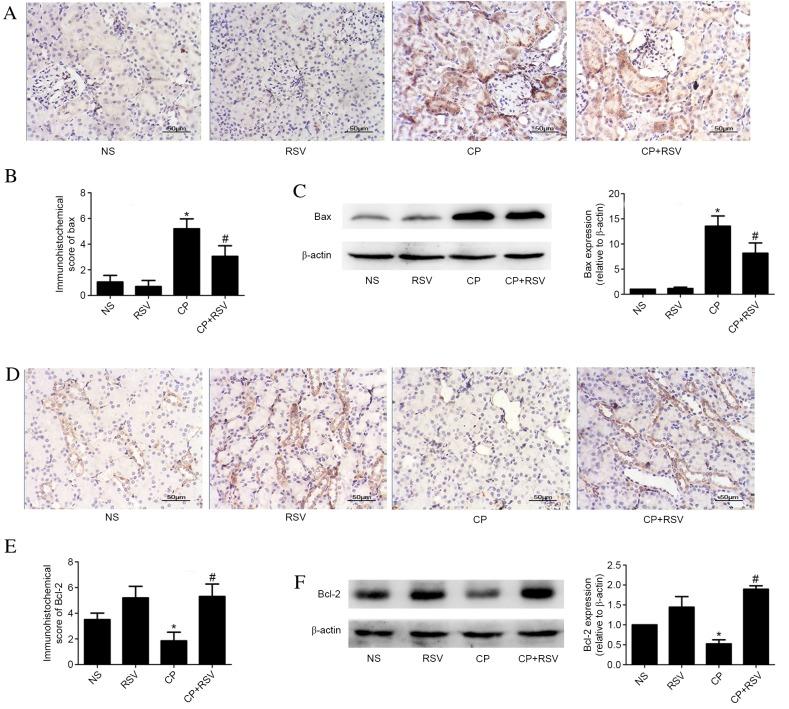
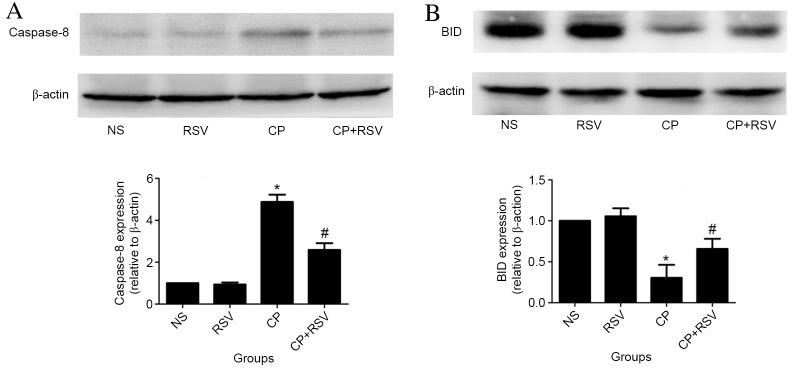
Acute kidney injury is a clinical syndrome characterized by a loss of renal function and acute tubular necrosis. Resveratrol exerts a wide range of pharmacological effects based on its anti‑inflammatory, antioxidant and cytoprotective properties. The present study aimed to evaluate whether resveratrol attenuates acute kidney injury in a cisplatin‑induced rat model and to investigate the potential mechanisms involved. Rats were randomly divided into four treatment groups: control, cisplatin, resveratrol, and cisplatin plus resveratrol. Rats exposed to cisplatin displayed acute kidney injury, identified by analysis of renal function and histopathological observation. Resveratrol significantly ameliorated the increased serum creatinine, blood urea nitrogen, renal index and histopathological damage induced by cisplatin. Furthermore, compared with untreated control animals, cisplatin lead to significantly increased expression of Fas ligand, tumor necrosis factor‑α (TNF‑α), caspase‑8 and Bcl‑2 associated protein X apoptosis regulator (Bax), and decreased expression of anti‑apoptosis regulators, BH3 interacting domain death agonist (BID) and B cell lymphoma 2 apoptosis regulator (Bcl‑2). Administration of resveratrol significantly reversed the cisplatin‑induced alteration in these apoptosis‑associated proteins. In conclusion, these findings suggest that resveratrol attenuates cisplatin‑induced acute kidney injury through inactivation of the death receptor‑mediated apoptotic pathway, and may provide a new therapeutic strategy to ameliorate the process of acute kidney injury.
急性肾损伤是一种以肾功能丧失和急性肾小管坏死为特征的临床综合征。白藜芦醇基于其抗炎、抗氧化和细胞保护特性发挥广泛的药理作用。本研究旨在评估白藜芦醇是否能减轻顺铂诱导的大鼠急性肾损伤模型中的急性肾损伤,并探讨其中潜在的机制。将大鼠随机分为四个治疗组:对照组、顺铂组、白藜芦醇组和顺铂加白藜芦醇组。通过肾功能分析和组织病理学观察发现,暴露于顺铂的大鼠出现了急性肾损伤。白藜芦醇显著改善了顺铂诱导的血清肌酐、血尿素氮、肾指数升高以及组织病理学损伤。此外,与未治疗的对照动物相比,顺铂导致Fas配体、肿瘤坏死因子-α(TNF-α)、半胱天冬酶-8和Bcl-2相关蛋白X凋亡调节因子(Bax)的表达显著增加,而抗凋亡调节因子BH3相互作用结构域死亡激动剂(BID)和B细胞淋巴瘤2凋亡调节因子(Bcl-2)的表达降低。给予白藜芦醇显著逆转了顺铂诱导的这些凋亡相关蛋白的改变。总之,这些发现表明白藜芦醇通过使死亡受体介导的凋亡途径失活来减轻顺铂诱导的急性肾损伤,并可能为改善急性肾损伤的进程提供一种新的治疗策略。


 Zotero 插件