
SIRT3在调节参与人类分娩终末途径的介质中的新作用。
A Novel Role for SIRT3 in Regulating Mediators Involved in the Terminal Pathways of Human Labor and Delivery.
作者信息
Lim Ratana, Barker Gillian, Menon Ramkumar, Lappas Martha
机构信息
Obstetrics, Nutrition and Endocrinology Group, Department of Obstetrics and Gynaecology, University of Melbourne, Victoria, Australia.
Mercy Perinatal Research Centre, Mercy Hospital for Women, Heidelberg, Victoria, Australia.
出版信息
Biol Reprod. 2016 Nov;95(5):95. doi: 10.1095/biolreprod.116.142372. Epub 2016 Sep 14.
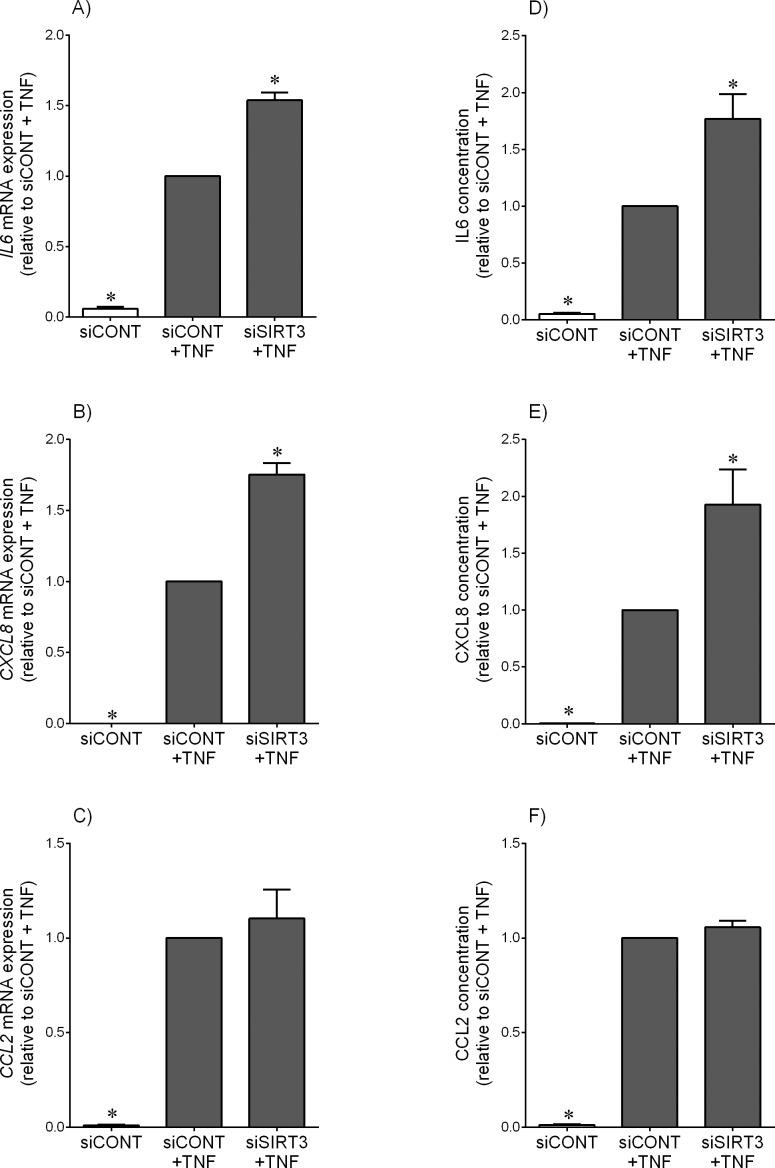
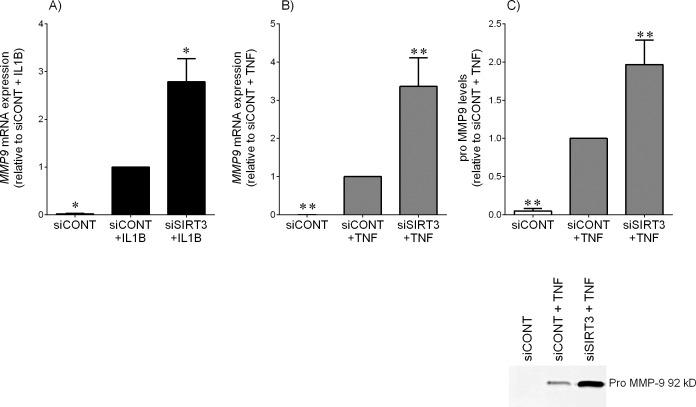
Preterm birth remains the major cause of neonatal mortality and morbidity, mediated largely by an inflammatory process. The sirtuin (SIRT) family of cellular regulators has been implicated as key inhibitors of inflammation. We have previously reported a role for SIRT1, SIRT2, and SIRT6 in regulating inflammation-induced prolabor mediators. In this study, we determined the effect of term labor and pro-inflammatory cytokines on SIRT3, SIRT4, SIRT5, and SIRT7 expression in human myometrium. Functional studies were also used to investigate the effect of small interfering RNA (siRNA) knockdown of SIRTs in regulating inflammation-induced prolabor mediators. Western blot analysis and qRT-PCR were used to determine SIRT3, SIRT4, SIRT5, and SIRT7 mRNA and protein expression in human myometrium. Small interfering RNA knockdown of SIRT3 in myometrial primary cells determined its role in response to inflammatory stimuli IL1B and TNF. SIRT3 mRNA and protein expression levels were significantly lower in term laboring myometrium compared with term nonlaboring myometrium. There was no effect of labor on SIRT4, SIRT5 or SIRT7 protein expression. The pro-inflammatory cytokines IL1B and TNF significantly decreased levels of SIRT3 mRNA and protein expression. SIRT3 knockdown by siRNA significantly augmented IL1B- and TNF-stimulated IL6, CXCL8, and CCL2 mRNA expression and release; PTGS2 mRNA expression and subsequent PGF release; the mRNA expression and secretion of the adhesion molecule ICAM1 and the extracellular matrix remodeling enzyme MMP9; and nuclear factor kappa B1 (NFkappaB1) transcriptional activity. In human myometrium, SIRT3 expression decreases with term labor and regulates the mediators involved in the terminal effector pathways of human labor and delivery through the NFkappaB1 pathway.
早产仍然是新生儿死亡和发病的主要原因,这在很大程度上是由炎症过程介导的。细胞调节因子沉默调节蛋白(SIRT)家族被认为是炎症的关键抑制剂。我们之前报道了SIRT1、SIRT2和SIRT6在调节炎症诱导的促分娩介质中的作用。在本研究中,我们确定了足月分娩和促炎细胞因子对人子宫肌层中SIRT3、SIRT4、SIRT5和SIRT7表达的影响。还使用功能研究来调查小干扰RNA(siRNA)敲低SIRTs对调节炎症诱导的促分娩介质的影响。蛋白质免疫印迹分析和定量逆转录聚合酶链反应用于确定人子宫肌层中SIRT3、SIRT4、SIRT5和SIRT7的mRNA和蛋白质表达。子宫肌层原代细胞中SIRT3的小干扰RNA敲低确定了其在对炎症刺激IL1B和TNF的反应中的作用。与足月未分娩的子宫肌层相比,足月分娩的子宫肌层中SIRT3 mRNA和蛋白质表达水平显著降低。分娩对SIRT4、SIRT5或SIRT7蛋白质表达没有影响。促炎细胞因子IL1B和TNF显著降低SIRT3 mRNA和蛋白质表达水平。通过siRNA敲低SIRT3显著增强了IL1B和TNF刺激的IL6、CXCL8和CCL2 mRNA表达和释放;PTGS2 mRNA表达及随后的PGF释放;黏附分子ICAM1和细胞外基质重塑酶MMP9的mRNA表达和分泌;以及核因子κB1(NFκB1)转录活性。在人子宫肌层中,SIRT3表达随足月分娩而降低,并通过NFκB1途径调节参与人类分娩终末效应途径的介质。




 Zotero 插件