
小窝蛋白-1的过表达通过抑制紧密连接的降解来减轻脑水肿。
Overexpression of caveolin-1 attenuates brain edema by inhibiting tight junction degradation.
作者信息
Choi Kang-Ho, Kim Hyung-Seok, Park Man-Seok, Lee Eun-Bin, Lee Jung-Kil, Kim Joon-Tae, Kim Ja-Hae, Lee Min-Cheol, Lee Hong-Joon, Cho Ki-Hyun
机构信息
Department of Neurology, Chonnam National University Hwasun Hospital, Hwasun, Korea.
Department of Neurology, Chonnam National University Medical School, Gwangju, Korea.
出版信息
Oncotarget. 2016 Oct 18;7(42):67857-67867. doi: 10.18632/oncotarget.12346.
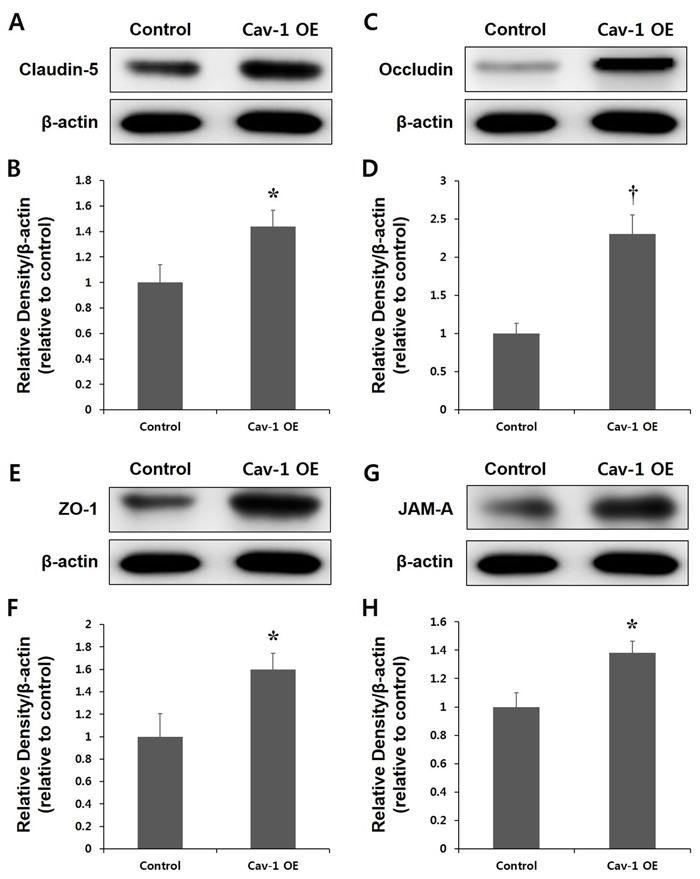
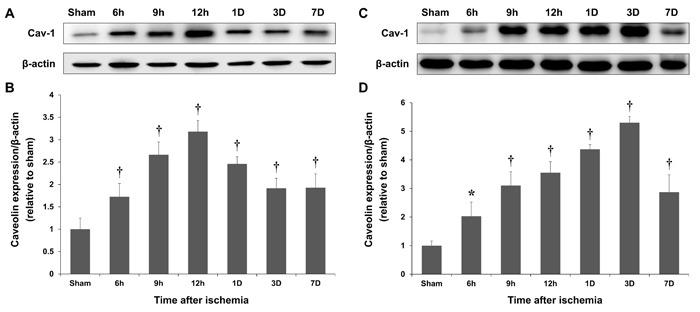
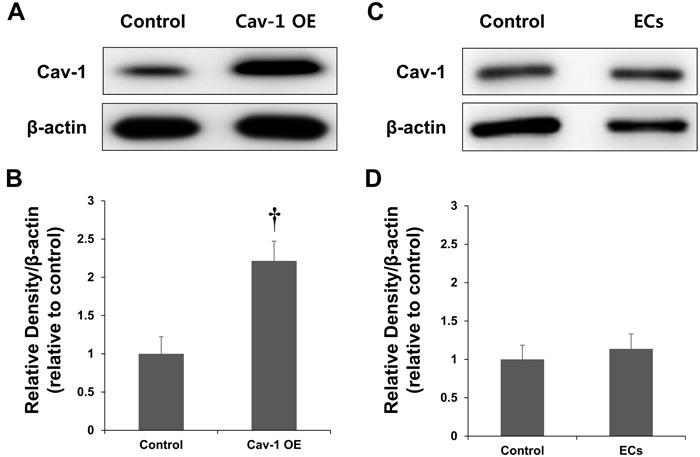
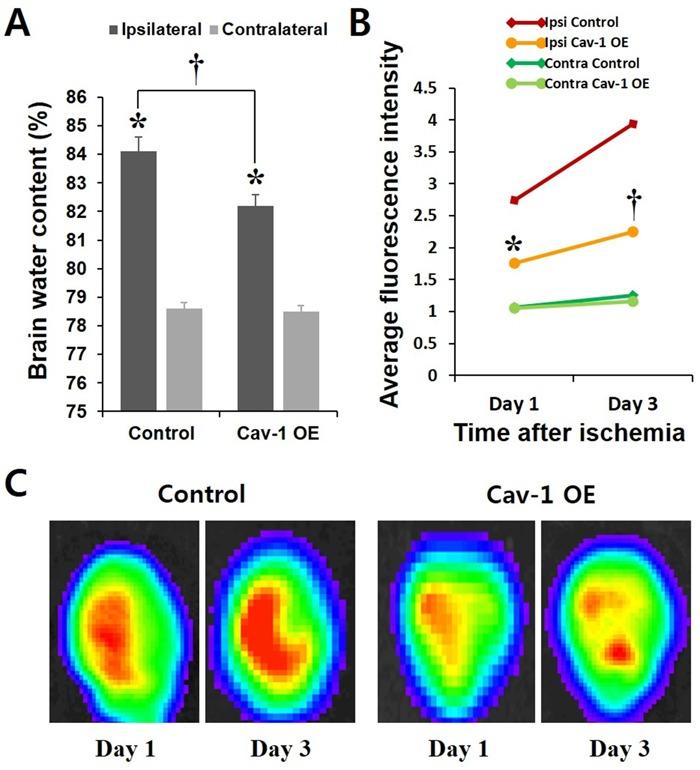
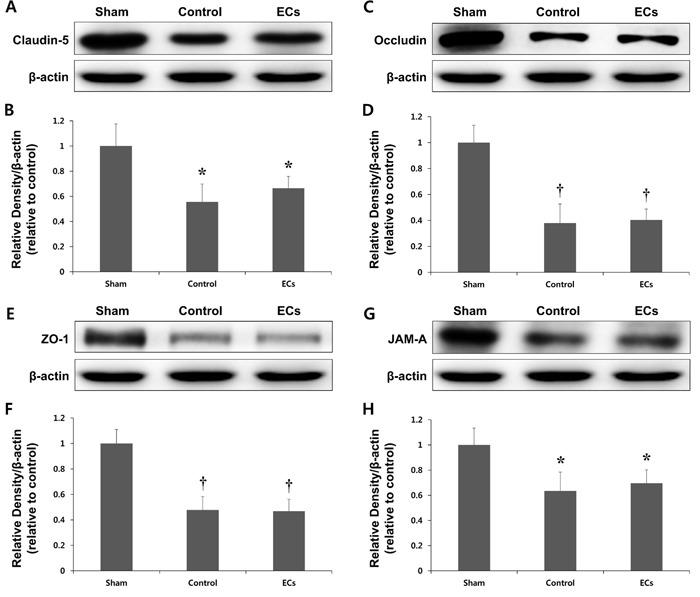
Cerebral edema from the disruption of the blood-brain barrier (BBB) after cerebral ischemia is a major cause of morbidity and mortality as well as a common event in patients with stroke. Caveolins (Cavs) are thought to regulate BBB functions. Here, we report for the first time that Cav-1 overexpression (OE) decreased brain edema from BBB disruption following ischemic insult. Edema volumes and Cav-1 expression levels were measured following photothrombosis and middle cerebral artery occlusion (MCAO). Endothelial cells that were transduced with a Cav-1 lentiviral expression vector were transplanted into rats. BBB permeability was quantified with Evans blue extravasation. Edema volume was determined from measures of the extravasation area, brain water content, and average fluorescence intensity after Cy5.5 injections. Tight junction (TJ) protein expression was measured with immunoblotting. Cav-1 expression levels and vasogenic brain edema correlated strongly after ischemic insult. Cav-1 expression and BBB disruption peaked 3 d after the MCAO. In addition, intravenous administration of endothelial cells expressing Cav-1 effectively increased the Cav-1 levels 3 d after the MCAO ischemic insult. Importantly, Cav-1 OE ameliorated the vasogenic edema by inhibiting the degradation of TJ protein expression in the acute phase of ischemic stroke. These results suggested that Cav-1 OE protected the integrity of the BBB mainly by preventing the degradation of TJ proteins in rats. These findings need to be confirmed in a clinical setting in human subjects.
脑缺血后血脑屏障(BBB)破坏所致的脑水肿是发病和死亡的主要原因,也是中风患者的常见情况。小窝蛋白(Cavs)被认为可调节血脑屏障功能。在此,我们首次报道,Cav-1过表达(OE)可减轻缺血性损伤后血脑屏障破坏引起的脑水肿。在光血栓形成和大脑中动脉闭塞(MCAO)后测量水肿体积和Cav-1表达水平。将用Cav-1慢病毒表达载体转导的内皮细胞移植到大鼠体内。用伊文思蓝外渗法对血脑屏障通透性进行定量。根据外渗面积、脑含水量和注射Cy5.5后的平均荧光强度测量值确定水肿体积。用免疫印迹法测量紧密连接(TJ)蛋白表达。缺血性损伤后,Cav-1表达水平与血管源性脑水肿密切相关。MCAO后3天,Cav-1表达和血脑屏障破坏达到峰值。此外,静脉注射表达Cav-1的内皮细胞可有效提高MCAO缺血性损伤后3天的Cav-1水平。重要的是,Cav-1过表达通过抑制缺血性中风急性期TJ蛋白表达的降解来改善血管源性水肿。这些结果表明,Cav-1过表达主要通过防止大鼠TJ蛋白降解来保护血脑屏障的完整性。这些发现需要在人类受试者的临床环境中得到证实。


 Zotero 插件