
人单核细胞中的肿瘤坏死因子自分泌反馈回路:肿瘤坏死因子受体的促炎和抗炎作用支持选择性肿瘤坏死因子受体1阻断的概念 。
TNF- Autocrine Feedback Loops in Human Monocytes: The Pro- and Anti-Inflammatory Roles of the TNF- Receptors Support the Concept of Selective TNFR1 Blockade .
作者信息
Gane Jennie M, Stockley Robert A, Sapey Elizabeth
机构信息
Department of Clinical and Experimental Medicine, University of Birmingham, Edgbaston, Birmingham, UK.
Lung Investigation Unit, University Hospital Birmingham NHS Foundation Trust, Edgbaston, Birmingham, UK.
出版信息
J Immunol Res. 2016;2016:1079851. doi: 10.1155/2016/1079851. Epub 2016 Sep 22.
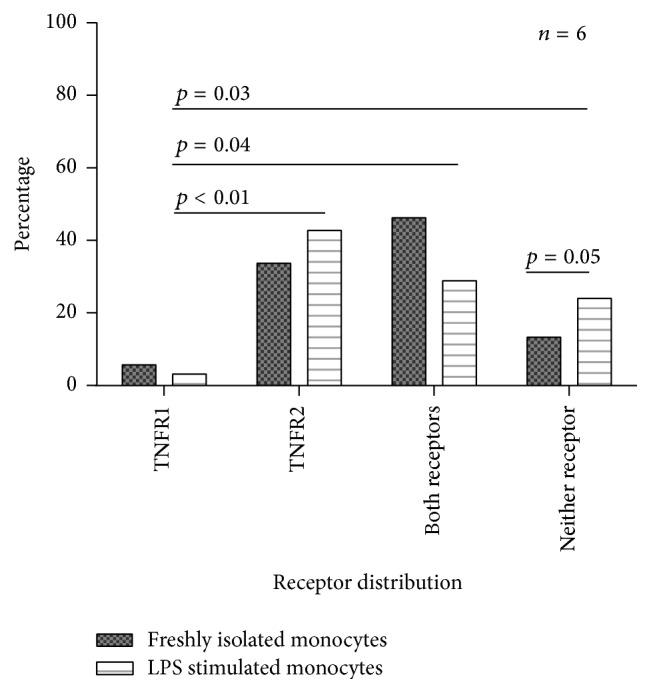
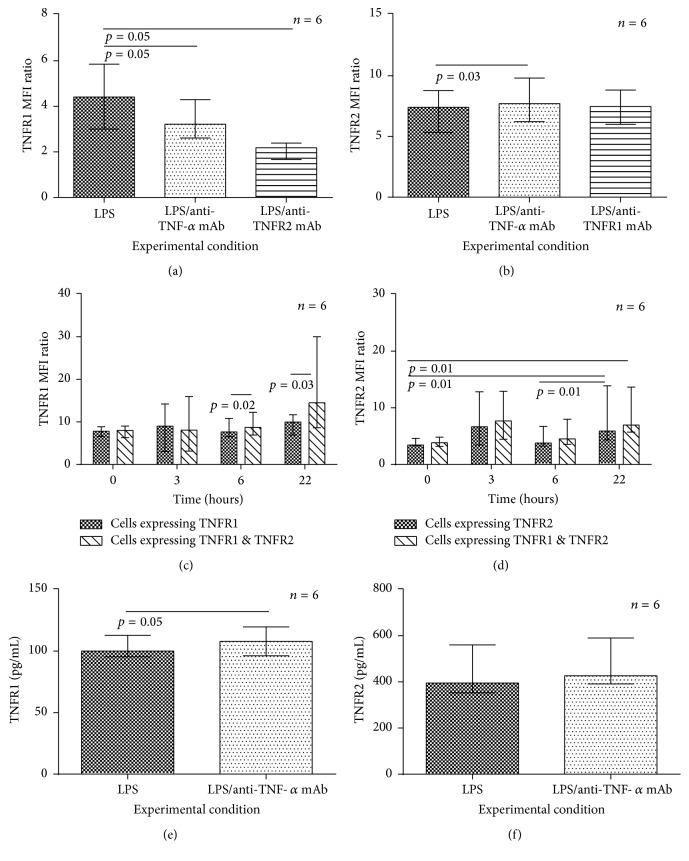
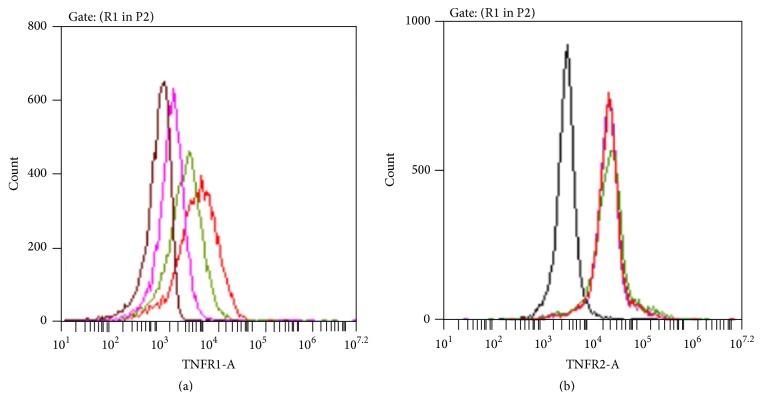
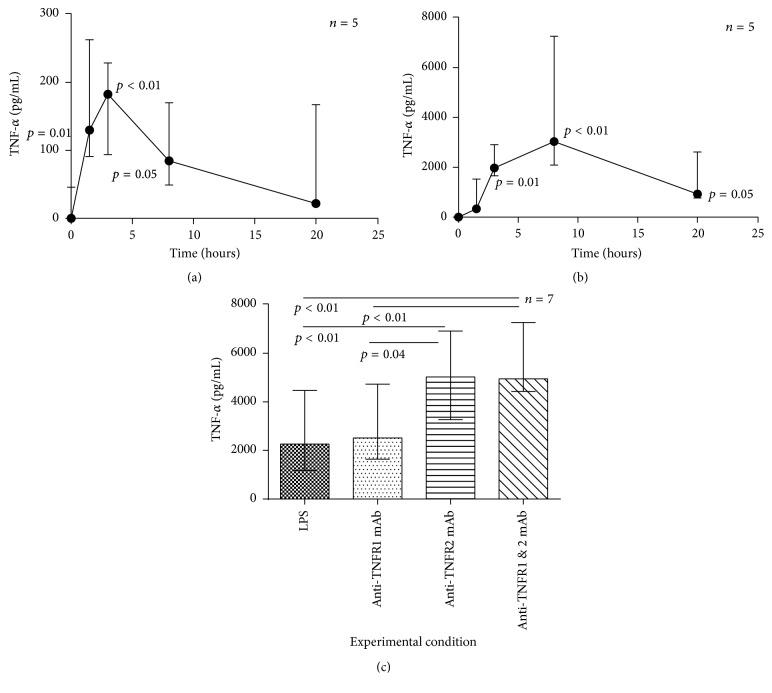
Selective TNFR1 blockade in inflammatory diseases is emerging as a clinical strategy. We studied the roles of the two TNF- receptors, TNFR1 and TNFR2, in human monocytes, the principal producer of TNF- and central to many TNF- driven diseases. We hypothesised that TNF- has pro- and anti-inflammatory effects on monocytes, occurring differentially via TNFR1 and TNFR2. Monocytes were isolated from healthy human subjects and exposed to LPS, plus/minus the addition of blocking antibodies to TNF- or its receptors. Pro- and anti-inflammatory cytokine production was quantified using real-time PCR and ELISAs. Cell surface expression of TNFR1/2 was measured by flow cytometry. We demonstrated that monocytes vary in the expression patterns of TNFR1 and TNFR2. Autocrine binding of TNF- led to sustained upregulation of proinflammatory cytokines via TNFR1. In contrast, autocrine binding via TNFR2 upregulated the -inflammatory cytokine, IL-10, without proinflammatory effect. TNFR2 was responsible for binding soluble TNF- secreted by monocytes, clearing the cytokine from the pericellular environment. TNFR1 blockade did not change the cell surface expression of TNFR2, leaving this receptor free to upregulate IL-10. These novel results support the concept of selective TNFR1 blockade in order that positive anti-inflammatory effects of TNF- can be retained via TNFR2 ligation.
在炎症性疾病中选择性阻断肿瘤坏死因子受体1(TNFR1)正在成为一种临床策略。我们研究了两种肿瘤坏死因子受体TNFR1和TNFR2在人类单核细胞中的作用,单核细胞是肿瘤坏死因子(TNF-)的主要产生者,也是许多由TNF-驱动疾病的核心。我们假设TNF-对单核细胞具有促炎和抗炎作用,通过TNFR1和TNFR2以不同方式发生。从健康人类受试者中分离出单核细胞,并将其暴露于脂多糖(LPS),同时加入/不加入针对TNF-或其受体的阻断抗体。使用实时聚合酶链反应(PCR)和酶联免疫吸附测定(ELISA)对促炎和抗炎细胞因子的产生进行定量。通过流式细胞术测量TNFR1/2的细胞表面表达。我们证明单核细胞在TNFR1和TNFR2的表达模式上存在差异。TNF-的自分泌结合通过TNFR1导致促炎细胞因子持续上调。相比之下,通过TNFR2的自分泌结合上调抗炎细胞因子白细胞介素-10(IL-10),而没有促炎作用。TNFR2负责结合单核细胞分泌的可溶性TNF-,从细胞周围环境中清除该细胞因子。阻断TNFR1并没有改变TNFR2的细胞表面表达,使该受体能够上调IL-10。这些新结果支持选择性阻断TNFR1的概念,以便通过TNFR2的连接保留TNF-的积极抗炎作用。


 Zotero 插件