
mTORC1信号传导和eIF4E/4E-BP1翻译起始因子化学计量影响来自GS-CHOK1细胞的重组蛋白生产力。
mTORC1 signalling and eIF4E/4E-BP1 translation initiation factor stoichiometry influence recombinant protein productivity from GS-CHOK1 cells.
作者信息
Jossé Lyne, Xie Jianling, Proud Christopher G, Smales C Mark
机构信息
Centre for Industrial Biotechnology and School of Biosciences, University of Kent, Canterbury, Kent CT2 7NJ, U.K.
South Australian Health and Medical Research Institute, PO Box 11060, SA5001 Adelaide, Australia.
出版信息
Biochem J. 2016 Dec 15;473(24):4651-4664. doi: 10.1042/BCJ20160845. Epub 2016 Oct 19.
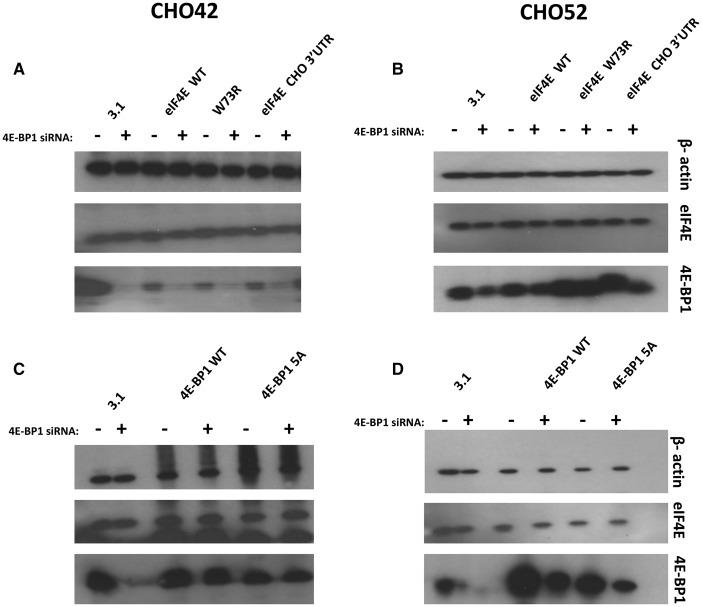
Many protein-based biotherapeutics are produced in cultured Chinese hamster ovary (CHO) cell lines. Recent reports have demonstrated that translation of recombinant mRNAs and global control of the translation machinery via mammalian target of rapamycin (mTOR) signalling are important determinants of the amount and quality of recombinant protein such cells can produce. mTOR complex 1 (mTORC1) is a master regulator of cell growth/division, ribosome biogenesis and protein synthesis, but the relationship between mTORC1 signalling, cell growth and proliferation and recombinant protein yields from mammalian cells, and whether this master regulating signalling pathway can be manipulated to enhance cell biomass and recombinant protein production (rPP) are not well explored. We have investigated mTORC1 signalling and activity throughout batch culture of a panel of sister recombinant glutamine synthetase-CHO cell lines expressing different amounts of a model monoclonal IgG4, to evaluate the links between mTORC1 signalling and cell proliferation, autophagy, recombinant protein expression, global protein synthesis and mRNA translation initiation. We find that the expression of the mTORC1 substrate 4E-binding protein 1 (4E-BP1) fluctuates throughout the course of cell culture and, as expected, that the 4E-BP1 phosphorylation profiles change across the culture. Importantly, we find that the eIF4E/4E-BP1 stoichiometry positively correlates with cell productivity. Furthermore, eIF4E amounts appear to be co-regulated with 4E-BP1 amounts. This may reflect a sensing of either change at the mRNA level as opposed to the protein level or the fact that the phosphorylation status, as well as the amount of 4E-BP1 present, is important in the co-regulation of eIF4E and 4E-BP1.
许多基于蛋白质的生物治疗药物是在培养的中国仓鼠卵巢(CHO)细胞系中生产的。最近的报道表明,重组mRNA的翻译以及通过哺乳动物雷帕霉素靶蛋白(mTOR)信号传导对翻译机制的全局控制是此类细胞能够产生的重组蛋白数量和质量的重要决定因素。mTOR复合物1(mTORC1)是细胞生长/分裂、核糖体生物合成和蛋白质合成的主要调节因子,但mTORC1信号传导、细胞生长和增殖与哺乳动物细胞重组蛋白产量之间的关系,以及这条主要调节信号通路是否可以被操纵以提高细胞生物量和重组蛋白产量(rPP)尚未得到充分探索。我们研究了一组表达不同量模型单克隆IgG4的姐妹重组谷氨酰胺合成酶-CHO细胞系在分批培养过程中的mTORC1信号传导和活性,以评估mTORC1信号传导与细胞增殖、自噬、重组蛋白表达、全局蛋白质合成和mRNA翻译起始之间的联系。我们发现,mTORC1底物4E结合蛋白1(4E-BP1)的表达在细胞培养过程中波动,并且正如预期的那样,4E-BP1的磷酸化谱在整个培养过程中发生变化。重要的是,我们发现eIF4E/4E-BP1化学计量与细胞生产力呈正相关。此外,eIF4E的量似乎与4E-BP1的量共同调节。这可能反映了在mRNA水平而非蛋白质水平上对变化的感知,或者4E-BP1的磷酸化状态以及其存在量在eIF4E和4E-BP1的共同调节中很重要这一事实。


 Zotero 插件