
n-3/n-6多不饱和脂肪酸比例的升高可抑制mTORC1,并预防与APC突变相关的结直肠癌发生。
Elevation of n-3/n-6 PUFAs ratio suppresses mTORC1 and prevents colorectal carcinogenesis associated with APC mutation.
作者信息
Liu Miao, Zhou Ling, Zhang Baiyu, He Minhong, Dong Xiaoying, Lin Xiaojun, Jia Chunhong, Bai Xiaochun, Dai Yifan, Su Yongchun, Zou Zhipeng, Zheng Hang
机构信息
Department of Oncology, Nanfang Hospital, Southern Medical University, Guangzhou 510515, China.
Department of Rheumatology, The Sixth Affiliated Hospital of Sun Yat-Sen University, 510655, China.
出版信息
Oncotarget. 2016 Nov 22;7(47):76944-76954. doi: 10.18632/oncotarget.12759.
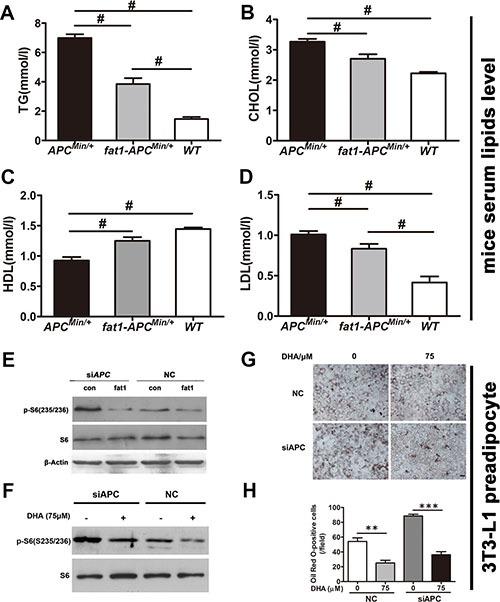
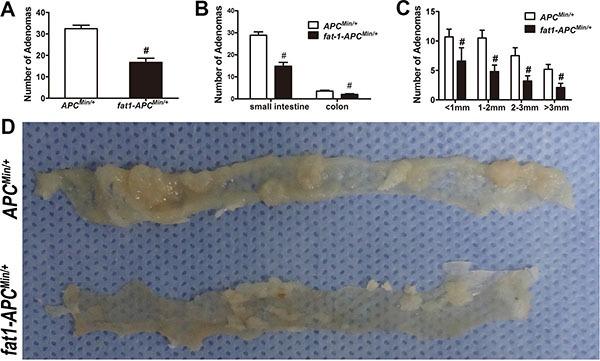
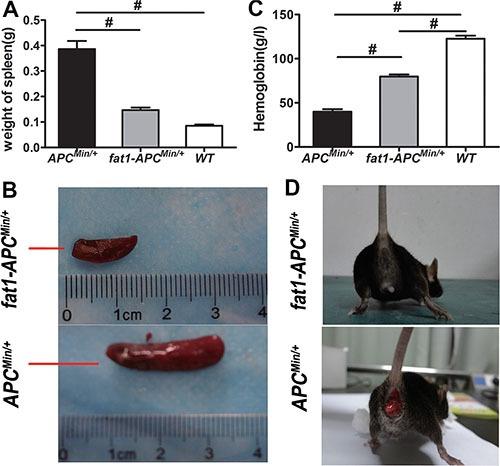
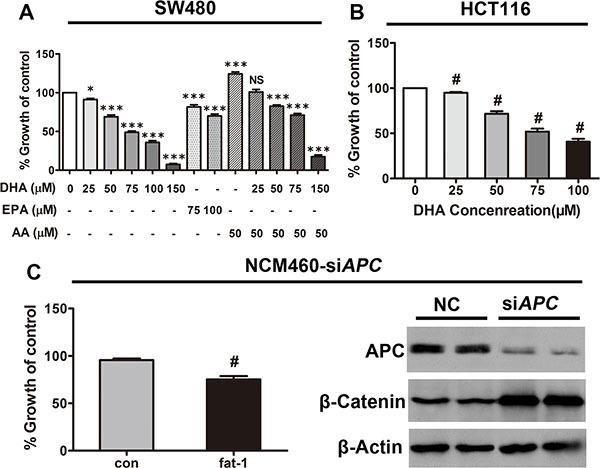
Although epidemiological and preclinical studies have shown the preventative effect of n-3 polyunsaturated fatty acids (PUFAs) on colorectal cancer (CRC), the underlying molecular mechanisms are not clear. In this study, we revealed that elevation of n-3/n-6 PUFAs ratio suppress the mechanistic target of rapamycin complex 1 (mTORC1) and prevent colorectal tumorigenesis. The transgenic expression of fat-1, a desaturase that catalyzes the conversion of n-6 to n-3 PUFAs and produces n-3 PUFAs endogenously, repressed colorectal tumor cell growth and remarkably reduced tumor burden, and alleviated anemia as well as hyperlipidemia in APCMin/+ (adenomatous polyposis coli) mice, a classic CRC model that best simulates most clinical cases. In contrast to arachidonic acid (AA, C20:4 n-6), either Docosahexaenoic acid (DHA, C22:6 n-3), eicosapentaenoic acid (EPA, C20:5 n-3), or a combination of DHA and AA, efficiently inhibited the proliferation of CRC cell lines and promoted apoptosis in these cells. The ectopic expression of fat-1 had similar effects in colon epithelial cells with APC depletion. Mechanistically, elevation of n-3/n-6 ratio suppressed mTORC1 activity in tumors of APCMin/+ mice, CRC cell lines with APC mutation, and in normal colon epithelial cells with APC depletion. In addition, elevation of n-3/n-6 ratio repressed mTORC1 activity and inhibited adipogenic differentiation in preadipocytes with APC knockdown, as well as alleviated hyperlipidemia in APCMin/+ mice. Taken together, our findings have provided novel insights into the potential mechanism by which increase in n-3/n-6 PUFAs ratio represses CRC development, and also a new rationale for utilizing n-3 PUFAs in CRC prevention and treatment.
尽管流行病学和临床前研究已表明n-3多不饱和脂肪酸(PUFAs)对结直肠癌(CRC)具有预防作用,但其潜在的分子机制尚不清楚。在本研究中,我们发现n-3/n-6 PUFAs比例的升高可抑制雷帕霉素复合物1(mTORC1)的机制靶点,并预防结直肠癌的发生。脂肪-1是一种去饱和酶,可催化n-6向n-3 PUFAs的转化并内源性产生n-3 PUFAs,其转基因表达可抑制结直肠肿瘤细胞的生长,并显著降低肿瘤负荷,同时减轻APCMin/+(腺瘤性息肉病大肠杆菌)小鼠的贫血和高脂血症,APCMin/+小鼠是一种经典的结直肠癌模型,最能模拟大多数临床病例。与花生四烯酸(AA,C20:4 n-6)相比,二十二碳六烯酸(DHA,C22:6 n-3)、二十碳五烯酸(EPA,C20:5 n-3)或DHA与AA的组合均能有效抑制结直肠癌细胞系的增殖并促进这些细胞的凋亡。脂肪-1的异位表达在APC缺失的结肠上皮细胞中具有类似的作用。从机制上讲,n-3/n-6比例的升高可抑制APCMin/+小鼠肿瘤、具有APC突变的结直肠癌细胞系以及APC缺失的正常结肠上皮细胞中mTORC1的活性。此外,n-3/n-6比例的升高可抑制APC敲低的前脂肪细胞中mTORC1的活性并抑制脂肪生成分化,同时减轻APCMin/+小鼠的高脂血症。综上所述,我们的研究结果为n-3/n-6 PUFAs比例升高抑制结直肠癌发展的潜在机制提供了新的见解,也为在结直肠癌预防和治疗中使用n-3 PUFAs提供了新的理论依据。


 Zotero 插件