
孕妇肥胖会调节足月妊娠时人胎盘的细胞内脂质周转。
Maternal obesity modulates intracellular lipid turnover in the human term placenta.
作者信息
Hirschmugl B, Desoye G, Catalano P, Klymiuk I, Scharnagl H, Payr S, Kitzinger E, Schliefsteiner C, Lang U, Wadsack C, Hauguel-de Mouzon S
机构信息
Department of Obstetrics and Gynecology, Medical Univeristy of Graz, Auenbruggerplatz 14, Graz, Austria.
Department of Reproductive Biology, MetroHealth Medical Center, Case Western Reserve University Cleveland, Cleveland, OH, USA.
出版信息
Int J Obes (Lond). 2017 Feb;41(2):317-323. doi: 10.1038/ijo.2016.188. Epub 2016 Oct 26.
BACKGROUND
Obesity before pregnancy is associated with impaired metabolic status of the mother and the offspring later in life. These adverse effects have been attributed to epigenetic changes in utero, but little is known about the role of placental metabolism and its contribution to fetal development.
OBJECTIVES
We examined the impact of maternal pre-pregnancy obesity on the expression of genes involved in placental lipid metabolism in lean and obese women.
SUBJECTS/METHODS: Seventy-three lean and obese women with healthy pregnancy were recruited at term elective cesarean delivery. Metabolic parameters were measured on maternal venous blood samples. Expression of 88 genes involved in lipid metabolism was measured in whole placenta tissue. Proteins of genes differently expressed in response to maternal obesity were quantified, correlated with maternal parameters and immunolocalized in placenta sections. Isolated primary trophoblasts were used for in vitro assays.
RESULTS
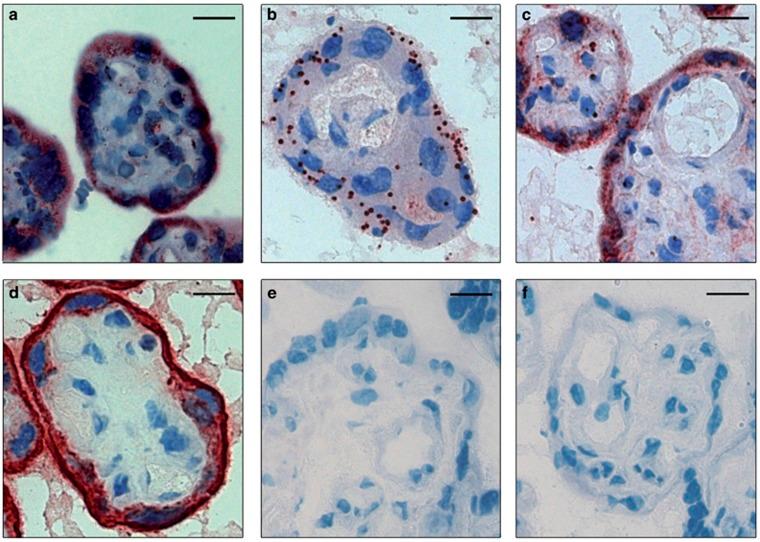
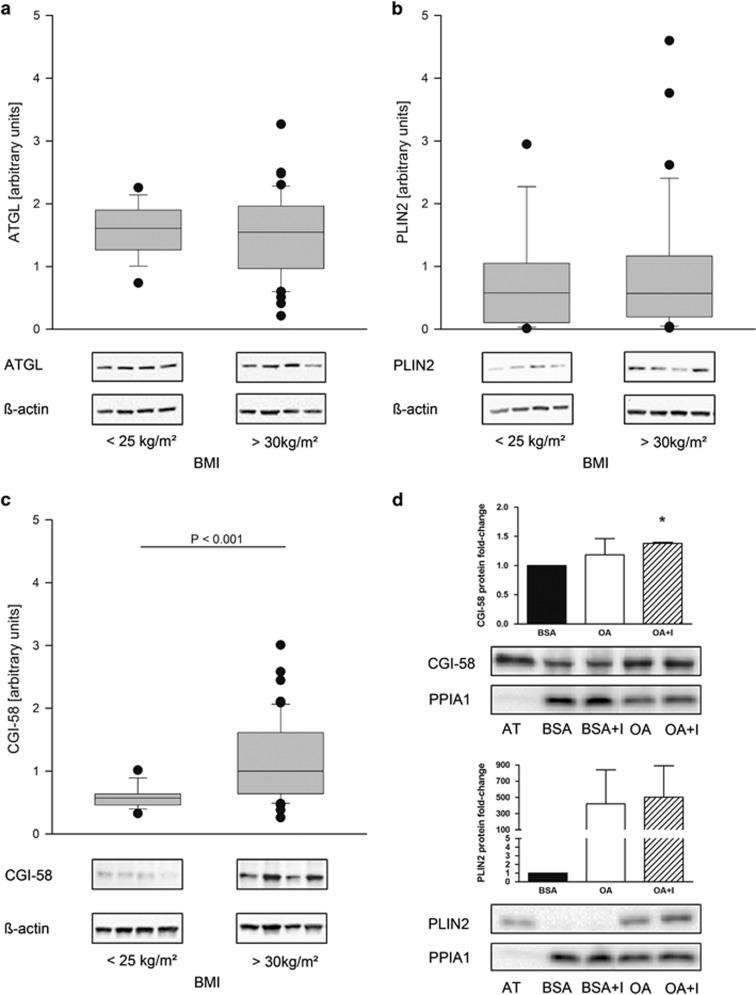
Triglyceride (TG) content was increased in placental tissue of obese (1.10, CI 1.04-1.24 mg g, P<0.05) vs lean (0.84, CI 0.72-1.02 mg g) women. Among target genes examined, six showed positive correlation (P<0.05) with maternal pre-pregnancy BMI, namely ATGL (PNPLA2), FATP1 (SLC27A1), FATP3 (SLC27A3), PLIN2, PPARG and CGI-58 (ABHD5). CGI-58 protein abundance was twofold higher (P<0.001) in placentas of obese vs lean women. CGI-58 protein levels correlated positively with maternal insulin levels and pre-pregnancy body mass index (R=0.63, P<0.001 and R=0.64, P<0.001, respectively). CGI-58 and PLIN2 were primarily located in the syncytiotrophoblast and, were upregulated (1.38- and 500-fold, respectively) upon oleic acid and insulin treatment of cultured trophoblast cells.
CONCLUSION
Pre-gravid obesity significantly modifies the expression of placental genes related to transport and storage of neutral lipids. We propose that the upregulation of CGI-58, a master regulator of TG hydrolysis, contributes to the turnover of intracellular lipids in placenta of obese women, and is tightly regulated by metabolic factors of the mother.
背景
孕前肥胖与母亲及后代日后的代谢状态受损有关。这些不良影响归因于子宫内的表观遗传变化,但胎盘代谢的作用及其对胎儿发育的贡献却知之甚少。
目的
我们研究了孕前肥胖对瘦型和肥胖型孕妇胎盘脂质代谢相关基因表达的影响。
对象/方法:在足月择期剖宫产时招募了73名健康妊娠的瘦型和肥胖型女性。检测母体外周静脉血样本的代谢参数。在整个胎盘组织中检测88个参与脂质代谢的基因的表达。对因母体肥胖而差异表达的基因的蛋白质进行定量,与母体参数进行相关性分析,并在胎盘切片中进行免疫定位。使用分离的原代滋养层细胞进行体外试验。
结果
肥胖型女性(1.10,可信区间1.04 - 1.24mg/g,P<0.05)胎盘组织中的甘油三酯(TG)含量高于瘦型女性(0.84,可信区间0.72 - 1.02mg/g)。在所检测的目标基因中,有6个与孕前母体BMI呈正相关(P<0.05),即脂肪甘油三酯脂酶(ATGL,又称PNPLA2)、脂肪酸转运蛋白1(FATP1,又称SLC27A1)、脂肪酸转运蛋白3(FATP3,又称SLC27A3)、脂滴包被蛋白2(PLIN2)、过氧化物酶体增殖物激活受体γ(PPARG)和比较基因识别-58(CGI-58,又称ABHD5)。肥胖型女性胎盘组织中CGI-58蛋白丰度是瘦型女性的两倍(P<0.001)。CGI-58蛋白水平与母体胰岛素水平和孕前体重指数呈正相关(分别为R = 0.63,P<0.001和R = 0.64,P<0.001)。CGI-58和PLIN2主要位于合体滋养层,在油酸和胰岛素处理培养的滋养层细胞后上调(分别上调1.38倍和500倍)。
结论
孕前肥胖显著改变了与中性脂质转运和储存相关的胎盘基因的表达。我们认为,甘油三酯水解的主要调节因子CGI-58的上调有助于肥胖型女性胎盘细胞内脂质的周转,并受到母体代谢因子的严格调控。

 Zotero 插件