
miR-99a的上调与急性髓系白血病的不良预后相关,并促进髓系白血病细胞的扩增。
Upregulation of miR-99a is associated with poor prognosis of acute myeloid leukemia and promotes myeloid leukemia cell expansion.
作者信息
Si Xiaohui, Zhang Xiaoyun, Hao Xing, Li Yunan, Chen Zizhen, Ding Yahui, Shi Hui, Bai Jie, Gao Yingdai, Cheng Tao, Yang Feng-Chun, Zhou Yuan
机构信息
State Key Laboratory of Experimental Hematology, Institute of Hematology & Blood Diseases Hospital, Chinese Academy of Medical Sciences & Peking Union Medical College, Tianjin, China.
Center for Stem Cell Medicine, Chinese Academy of Medical Sciences, Tianjin, China.
出版信息
Oncotarget. 2016 Nov 22;7(47):78095-78109. doi: 10.18632/oncotarget.12947.
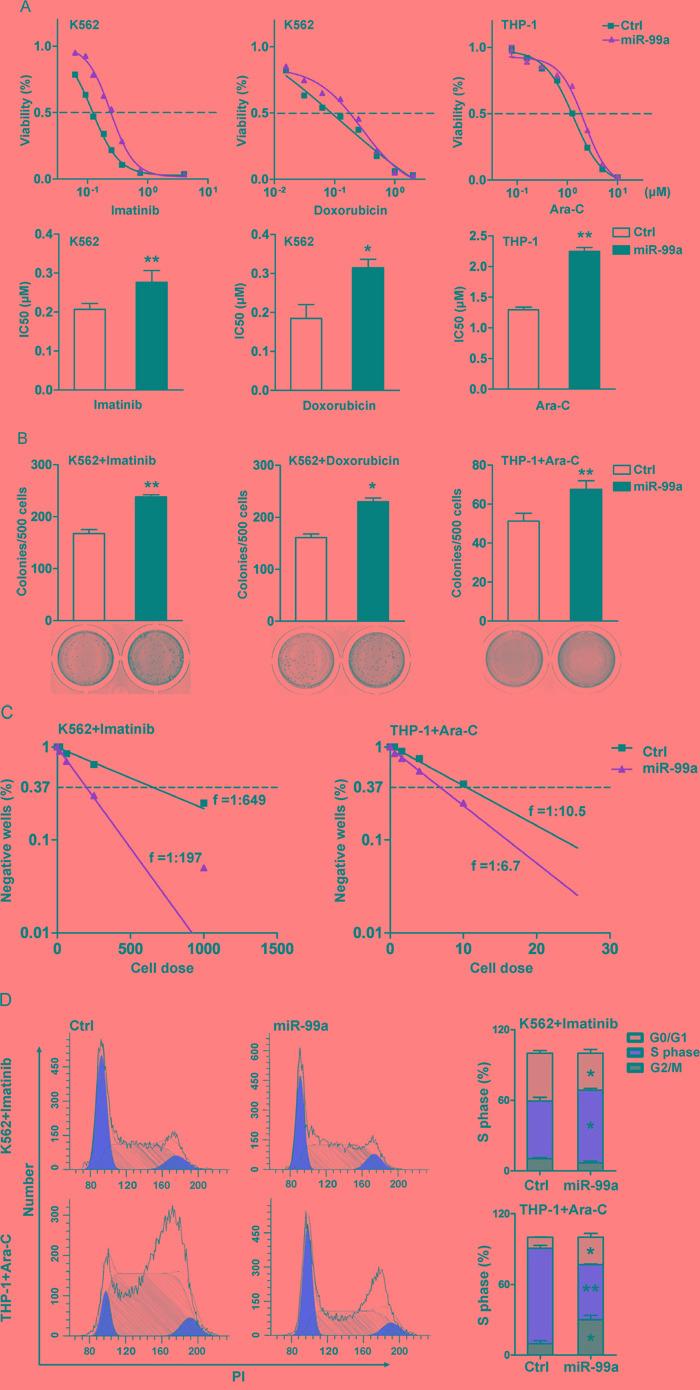
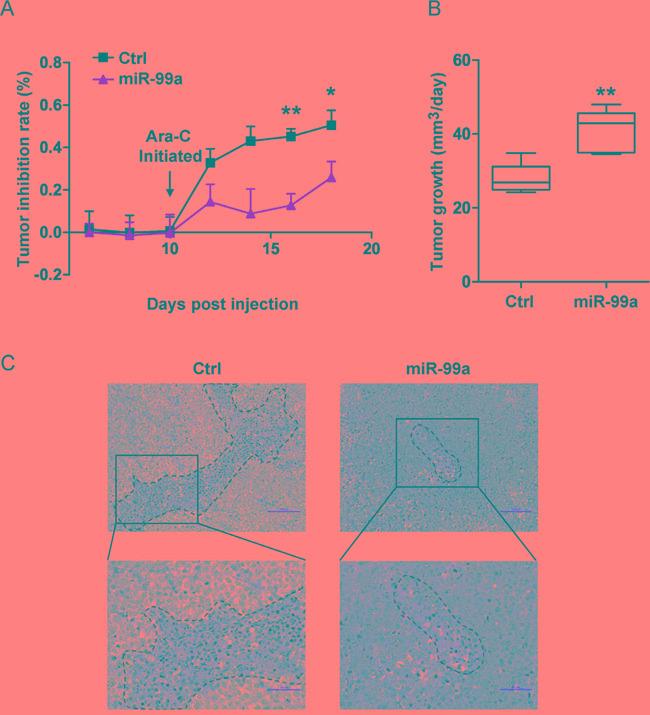
Leukemia stem cells (LSCs) can resist available treatments that results in disease progression and/or relapse. To dissect the microRNA (miRNA) expression signature of relapse in acute myeloid leukemia (AML), miRNA array analysis was performed using enriched LSCs from paired bone marrow samples of an AML patient at different disease stages. We identified that miR-99a was significantly upregulated in the LSCs obtained at relapse compared to the LSCs collected at the time of initial diagnosis. We also found that miR-99a was upregulated in LSCs compared to non-LSCs in a larger cohort of AML patients, and higher expression levels of miR-99a were significantly correlated with worse overall survival and event-free survival in these AML patients. Ectopic expression of miR-99a led to increased colony forming ability and expansion in myeloid leukemia cells after exposure to chemotherapeutic drugs in vitro and in vivo, partially due to overcoming of chemotherapeutic agent-mediated cell cycle arrest. Gene profiling and bioinformatic analyses indicated that ectopic expression of miR-99a significantly upregulated genes that are critical for LSC maintenance, cell cycle, and downstream targets of E2F and MYC. This study suggests that miR-99a has a novel role and potential use as a biomarker in myeloid leukemia progression.
白血病干细胞(LSCs)能够抵抗现有治疗,从而导致疾病进展和/或复发。为了剖析急性髓系白血病(AML)复发时的微小RNA(miRNA)表达特征,我们使用来自一名AML患者不同疾病阶段配对骨髓样本中富集的LSCs进行了miRNA阵列分析。我们发现,与初次诊断时收集的LSCs相比,复发时获得的LSCs中miR-99a显著上调。我们还发现,在更大的AML患者队列中,与非LSCs相比,LSCs中miR-99a上调,并且在这些AML患者中,miR-99a的较高表达水平与较差的总生存期和无事件生存期显著相关。在体外和体内,miR-99a的异位表达导致髓系白血病细胞在接触化疗药物后集落形成能力增强和增殖增加,部分原因是克服了化疗药物介导的细胞周期停滞。基因谱分析和生物信息学分析表明,miR-99a的异位表达显著上调了对LSC维持、细胞周期以及E2F和MYC下游靶点至关重要的基因。这项研究表明,miR-99a在髓系白血病进展中具有新的作用和作为生物标志物的潜在用途。


 Zotero 插件