
细菌基因组工程与合成生物学:对抗病原体
Bacterial genome engineering and synthetic biology: combating pathogens.
作者信息
Krishnamurthy Malathy, Moore Richard T, Rajamani Sathish, Panchal Rekha G
机构信息
Department of Target Discovery and Experimental Microbiology, Division of Molecular and Translational Sciences, U. S. Army Medical Research Institute of Infectious Diseases (USAMRIID), Fort Detrick, Frederick, MD, 21702, USA.
出版信息
BMC Microbiol. 2016 Nov 4;16(1):258. doi: 10.1186/s12866-016-0876-3.
BACKGROUND
The emergence and prevalence of multidrug resistant (MDR) pathogenic bacteria poses a serious threat to human and animal health globally. Nosocomial infections and common ailments such as pneumonia, wound, urinary tract, and bloodstream infections are becoming more challenging to treat due to the rapid spread of MDR pathogenic bacteria. According to recent reports by the World Health Organization (WHO) and Centers for Disease Control and Prevention (CDC), there is an unprecedented increase in the occurrence of MDR infections worldwide. The rise in these infections has generated an economic strain worldwide, prompting the WHO to endorse a global action plan to improve awareness and understanding of antimicrobial resistance. This health crisis necessitates an immediate action to target the underlying mechanisms of drug resistance in bacteria.
RESEARCH
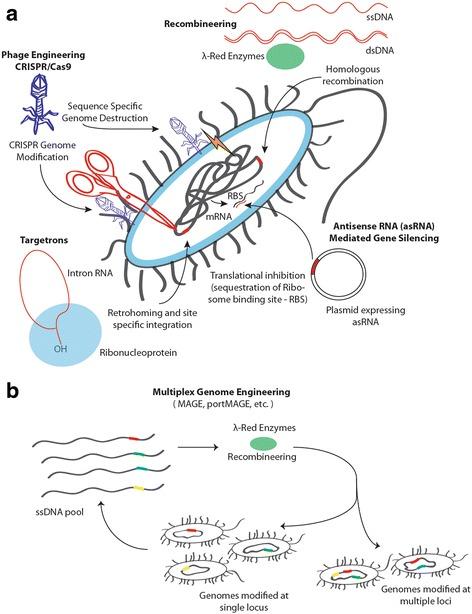
The advent of new bacterial genome engineering and synthetic biology (SB) tools is providing promising diagnostic and treatment plans to monitor and treat widespread recalcitrant bacterial infections. Key advances in genetic engineering approaches can successfully aid in targeting and editing pathogenic bacterial genomes for understanding and mitigating drug resistance mechanisms. In this review, we discuss the application of specific genome engineering and SB methods such as recombineering, clustered regularly interspaced short palindromic repeats (CRISPR), and bacterial cell-cell signaling mechanisms for pathogen targeting. The utility of these tools in developing antibacterial strategies such as novel antibiotic production, phage therapy, diagnostics and vaccine production to name a few, are also highlighted.
CONCLUSIONS
The prevalent use of antibiotics and the spread of MDR bacteria raise the prospect of a post-antibiotic era, which underscores the need for developing novel therapeutics to target MDR pathogens. The development of enabling SB technologies offers promising solutions to deliver safe and effective antibacterial therapies.
背景
多重耐药(MDR)病原菌的出现和流行对全球人类和动物健康构成了严重威胁。由于MDR病原菌的迅速传播,医院感染以及肺炎、伤口、泌尿道和血流感染等常见疾病的治疗变得更具挑战性。根据世界卫生组织(WHO)和美国疾病控制与预防中心(CDC)最近的报告,全球MDR感染的发生率正以前所未有的速度上升。这些感染的增加给全球带来了经济压力,促使WHO批准了一项全球行动计划,以提高对抗菌素耐药性的认识和理解。这场健康危机需要立即采取行动,针对细菌耐药的潜在机制。
研究
新型细菌基因组工程和合成生物学(SB)工具的出现为监测和治疗广泛存在的顽固性细菌感染提供了有前景的诊断和治疗方案。基因工程方法的关键进展能够成功地帮助靶向和编辑病原菌基因组,以了解和减轻耐药机制。在这篇综述中,我们讨论了特定基因组工程和SB方法的应用,如重组工程、成簇规律间隔短回文重复序列(CRISPR)以及用于靶向病原体的细菌细胞间信号传导机制。还强调了这些工具在开发抗菌策略(如新型抗生素生产、噬菌体疗法、诊断和疫苗生产等)中的效用。
结论
抗生素的普遍使用和MDR细菌的传播引发了后抗生素时代的前景,这凸显了开发针对MDR病原体的新型疗法的必要性。使能性SB技术的发展为提供安全有效的抗菌疗法提供了有前景的解决方案。


 Zotero 插件