
白藜芦醇与香豆素:新型抗青枯雷尔氏菌的农业抗菌剂——体内外研究
Resveratrol and Coumarin: Novel Agricultural Antibacterial Agent against Ralstonia solanacearum In Vitro and In Vivo.
作者信息
Chen Juanni, Yu Yanmei, Li Shili, Ding Wei
机构信息
Laboratory of Natural Product Pesticide, College of Plant Protection, Southwest University, Chongqing 400715, China.
出版信息
Molecules. 2016 Nov 9;21(11):1501. doi: 10.3390/molecules21111501.
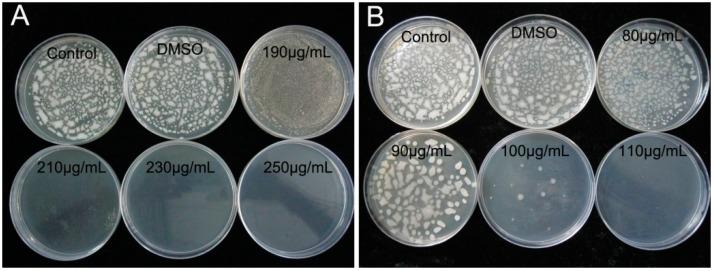
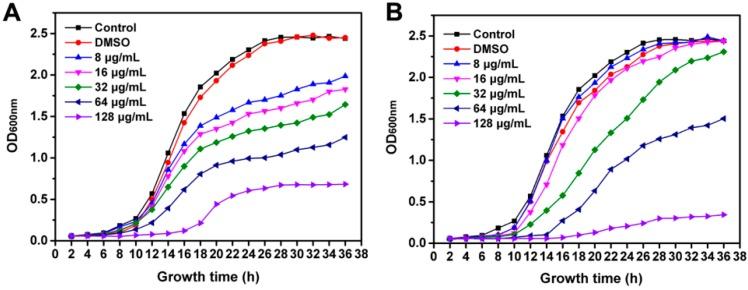
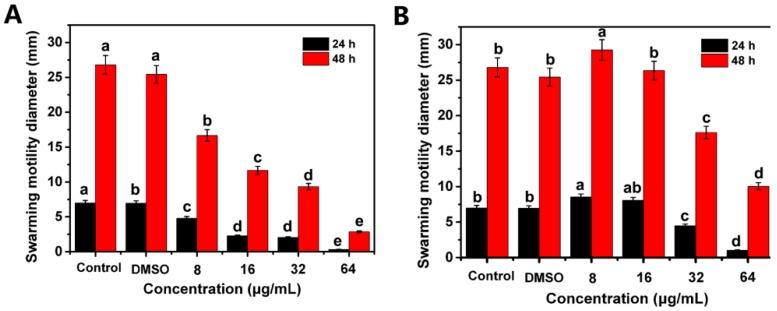
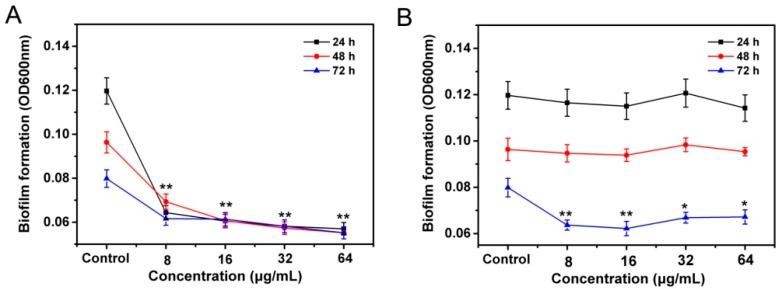
Bacterial wilt is a destructive disease caused by the phytopathogen (), which is widely found in various tobacco-growing areas all over the world. Botanical bactericidal substances have gradually emerged as a hot topic in modern pesticide research. In this study, the antibacterial activities of two phytochemicals (resveratrol and coumarin) against and their in vivo and in vitro efficacy for controlling tobacco bacterial wilt were evaluated. We rule out significant biological effects of both phytochemicals using transmission electron microscope (TEM) and fluorescence microscope, which suppressed the growth of . Furthermore, we demonstrated that the toxicity mechanisms mainly involved damaging bacterial cell membrane and preventing swarming motility and biofilm formation. A further pot experiment demonstrated that coumarin and resveratrol significantly inhibited early adhesion and colonization of in tobacco plants and the corresponding control efficacies were 68% and 85% after incubation for 13 days, respectively. The findings of this study suggest that both resveratrol and coumarin have potential as non-toxic antimicrobial strategies for controlling tobacco bacterial wilt disease.
青枯病是由植物病原体()引起的一种毁灭性病害,在世界各地的不同烟草种植区广泛存在。植物杀菌物质已逐渐成为现代农药研究中的一个热门话题。在本研究中,评估了两种植物化学物质(白藜芦醇和香豆素)对的抗菌活性及其在体内和体外防治烟草青枯病的效果。我们使用透射电子显微镜(TEM)和荧光显微镜排除了这两种植物化学物质的显著生物学效应,它们抑制了的生长。此外,我们证明其毒性机制主要涉及破坏细菌细胞膜以及阻止群体运动和生物膜形成。进一步的盆栽试验表明,香豆素和白藜芦醇显著抑制在烟草植株中的早期附着和定殖,培养13天后相应的防治效果分别为68%和85%。本研究结果表明,白藜芦醇和香豆素都有作为无毒抗菌策略防治烟草青枯病的潜力。





 Zotero 插件