
粒细胞巨噬细胞集落刺激因子受体α在抗原诱导性关节炎和炎症中的表达及其靶向作用
Granulocyte macrophage colony-stimulating factor receptor α expression and its targeting in antigen-induced arthritis and inflammation.
作者信息
Cook Andrew D, Louis Cynthia, Robinson Matthew J, Saleh Reem, Sleeman Matthew A, Hamilton John A
机构信息
Department of Medicine, Royal Melbourne Hospital, University of Melbourne, Parkville, Victoria, 3050, Australia.
Department of Respiratory, Inflammation and Autoimmunity, MedImmune Ltd, Granta Park, Cambridge, CB21 6GH, UK.
出版信息
Arthritis Res Ther. 2016 Dec 1;18(1):287. doi: 10.1186/s13075-016-1185-9.
BACKGROUND
Blockade of granulocyte macrophage colony-stimulating factor (GM-CSF) and its receptor (GM-CSFRα) is being successfully tested in trials in rheumatoid arthritis (RA) with clinical results equivalent to those found with neutralization of the current therapeutic targets, TNF and IL-6. To explore further the role of GM-CSF as a pro-inflammatory cytokine, we examined the effect of anti-GM-CSFRα neutralization on myeloid cell populations in antigen-driven arthritis and inflammation models and also compared its effect with that of anti-TNF and anti-IL-6.
METHODS
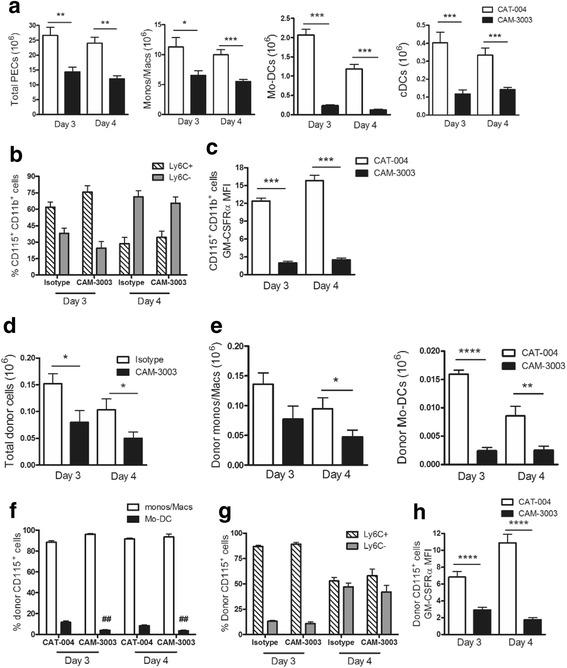
Cell population changes upon neutralization by monoclonal antibodies (mAbs) in the antigen-induced arthritis (AIA) and antigen-induced peritonitis (AIP) models were monitored by flow cytometry and microarray. Adoptive transfer of monocytes into the AIP cavity was used to assess the GM-CSF dependence of the development of macrophages and monocyte-derived dendritic cells (Mo-DCs) at a site of inflammation.
RESULTS
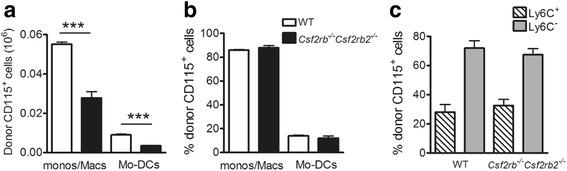
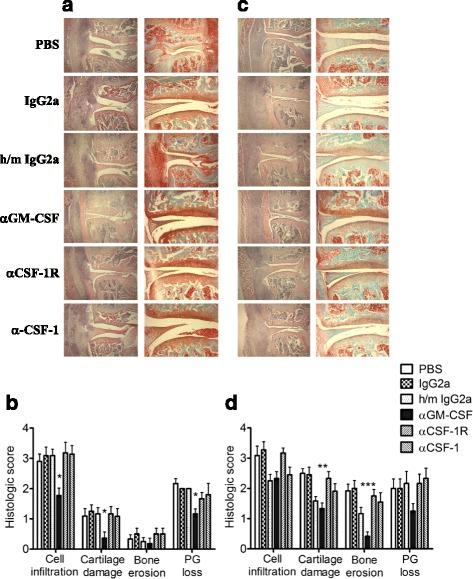
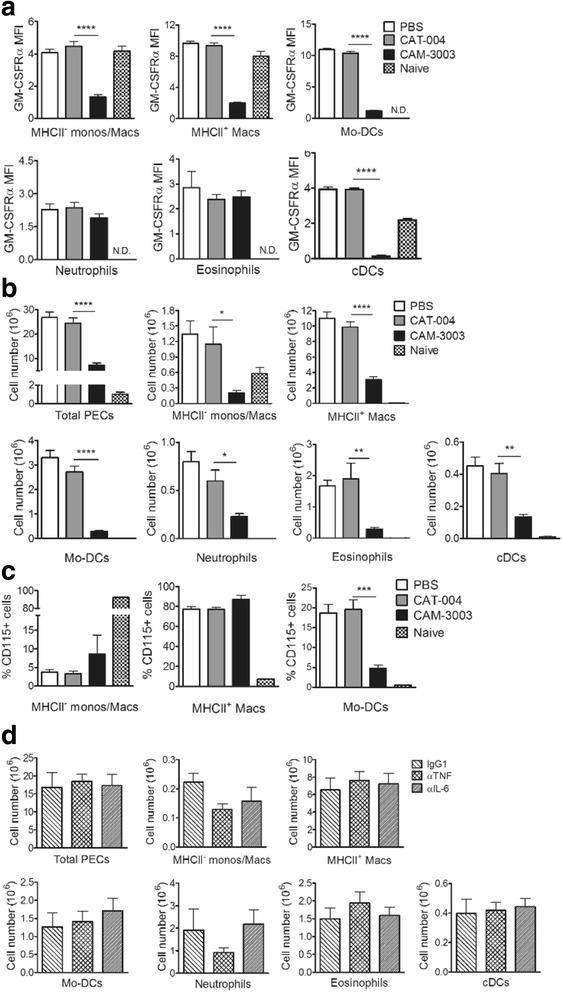
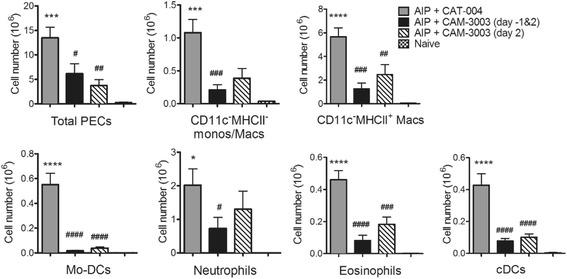
Therapeutic administration of a neutralizing anti-GM-CSF mAb, but not of an anti-colony-stimulating factor (anti-CSF)-1 or an anti-CSF-1R mAb, ameliorated AIA disease. Using the anti-GM-CSFRα mAb, the relative surface expression of different inflammatory myeloid populations was found to be similar in the inflamed tissues in both the AIA and AIP models; however, the GM-CSFRα mAb, but not neutralizing anti-TNF and anti-IL-6 mAbs, preferentially depleted Mo-DCs from these sites. In addition, we were able to show that locally acting GM-CSF upregulated macrophage/Mo-DC numbers via GM-CSFR signalling in donor monocytes.
CONCLUSIONS
Our findings suggest that GM-CSF blockade modulates inflammatory responses differently to TNF and IL-6 blockade and may provide additional insight into how targeting the GM-CSF/GM-CSFRα system is providing efficacy in RA.
背景
粒细胞巨噬细胞集落刺激因子(GM-CSF)及其受体(GM-CSFRα)的阻断正在类风湿关节炎(RA)试验中成功进行测试,临床结果与目前治疗靶点TNF和IL-6中和后的结果相当。为了进一步探索GM-CSF作为促炎细胞因子的作用,我们研究了抗GM-CSFRα中和对抗原驱动性关节炎和炎症模型中髓样细胞群体的影响,并将其与抗TNF和抗IL-6的作用进行了比较。
方法
通过流式细胞术和微阵列监测单克隆抗体(mAb)在抗原诱导性关节炎(AIA)和抗原诱导性腹膜炎(AIP)模型中中和后的细胞群体变化。将单核细胞过继转移到AIP腔中,以评估炎症部位巨噬细胞和单核细胞衍生树突状细胞(Mo-DC)发育对GM-CSF的依赖性。
结果
治疗性给予中和性抗GM-CSF mAb可改善AIA疾病,但给予抗集落刺激因子(抗CSF)-1或抗CSF-1R mAb则无效。使用抗GM-CSFRα mAb发现,在AIA和AIP模型的炎症组织中,不同炎症髓样群体的相对表面表达相似;然而,GM-CSFRα mAb而非中和性抗TNF和抗IL-6 mAb优先从这些部位清除Mo-DC。此外,我们能够证明局部作用的GM-CSF通过供体单核细胞中的GM-CSFR信号上调巨噬细胞/Mo-DC数量。
结论
我们的研究结果表明,GM-CSF阻断对炎症反应的调节与TNF和IL-6阻断不同,可能为靶向GM-CSF/GM-CSFRα系统在RA中发挥疗效提供更多见解。

 Zotero 插件