
端粒和端粒酶在子宫内膜病理学中的意义。
Implications of telomeres and telomerase in endometrial pathology.
作者信息
Hapangama D K, Kamal A, Saretzki G
机构信息
Department of Women's and Children's Health, Institute of Translational Medicine, University of Liverpool, Liverpool, L8 7SS, UK.
Liverpool Women's Hospital NHS Foundation Trust, Crown Street, Liverpool L8 7SS, UK.
出版信息
Hum Reprod Update. 2017 Mar 1;23(2):166-187. doi: 10.1093/humupd/dmw044.
BACKGROUND
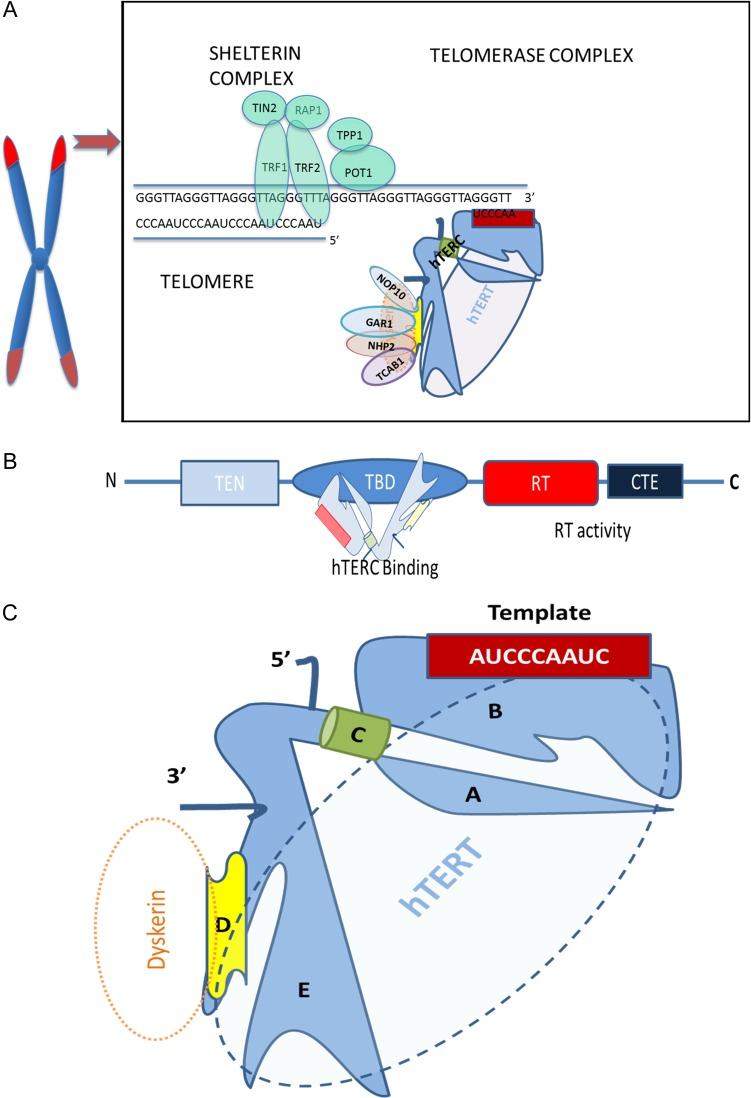
Eukaryotic chromosomal ends are linear and are protected by nucleoprotein complexes known as telomeres. The complex structural anatomy and the diverse functions of telomeres as well as the unique reverse transcriptase enzyme, telomerase that maintains telomeres are under intensive scientific scrutiny. Both are involved in many human diseases including cancer, but also in ageing and chronic disease such as diabetes. Their intricate involvement in many cellular processes and pathways is being dynamically deciphered in many organs including the endometrium. This review summarizes our current knowledge on the topic of telomeres and telomerase and their potential role in providing plausible explanations for endometrial aberrations related to common gynaecological pathologies.
OBJECTIVE AND RATIONALE
This review outlines the recent major findings in telomere and telomerase functions in the context of endometrial biology. It highlights the contemporary discoveries in hormonal regulation, normal endometrial regeneration, stem cells and common gynaecological diseases such as endometriosis, infertility, recurrent reproductive failure and endometrial cancer (EC).
SEARCH METHODS
The authors carried out systematic PubMed (Medline) and Ovid searches using the key words: telomerase, telomeres, telomere length, human telomerase reverse transcriptase, telomeric RNA component, with endometrium, hormonal regulation, endometrial stem/progenitor cells, endometrial regeneration, endometriosis, recurrent miscarriage, infertility, endometrial hyperplasia, EC and uterine cancer. Publications used in this review date from 1995 until 31st June 2016.
OUTCOMES
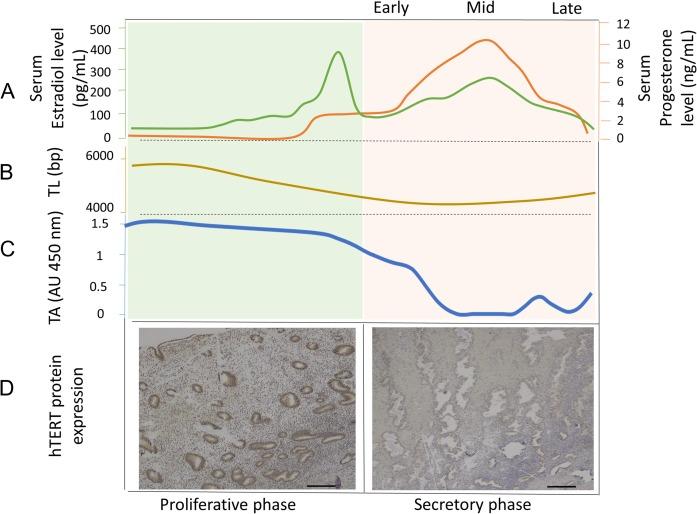
The human endometrium is a unique somatic organ, which displays dynamic telomerase activity (TA) related to the menstrual cycle. Telomerase is implicated in almost all endometrial pathologies and appears to be crucial to endometrial stem cells. In particular, it is vital for normal endometrial regeneration, providing a distinct route to formulate possible curative, non-hormonal therapies to treat chronic endometrial conditions. Furthermore, our current understanding of telomere maintenance in EC is incomplete. Data derived from other malignancies on the role of telomerase in carcinogenesis cannot be extrapolated to EC because unlike in other cancers, TA is already present in proliferating healthy endometrial cells.
WIDER IMPLICATIONS
Since telomerase is pivotal to endometrial regeneration, further studies elucidating the role of telomeres, telomerase, their associated proteins and their regulation in normal endometrial regeneration as well as their role in endometrial pathologies are essential. This approach may allow future development of novel treatment strategies that are not only non-hormonal but also potentially curative.
背景
真核生物染色体末端是线性的,由称为端粒的核蛋白复合体保护。端粒复杂的结构解剖、多样的功能以及维持端粒的独特逆转录酶——端粒酶,都受到了深入的科学研究。二者都与包括癌症在内的许多人类疾病有关,也与衰老和糖尿病等慢性疾病有关。它们在包括子宫内膜在内的许多器官的众多细胞过程和信号通路中的复杂作用正在被动态解析。本综述总结了我们目前关于端粒和端粒酶这一主题的知识,以及它们在为与常见妇科病理学相关的子宫内膜异常提供合理解释方面的潜在作用。
目的与原理
本综述概述了在子宫内膜生物学背景下端粒和端粒酶功能的近期主要发现。重点介绍了在激素调节、正常子宫内膜再生、干细胞以及子宫内膜异位症、不孕症、反复生殖失败和子宫内膜癌(EC)等常见妇科疾病方面的当代发现。
检索方法
作者使用关键词“端粒酶、端粒、端粒长度、人端粒酶逆转录酶、端粒RNA成分”以及“子宫内膜、激素调节、子宫内膜干/祖细胞、子宫内膜再生、子宫内膜异位症、反复流产、不孕症、子宫内膜增生、EC和子宫癌”,在PubMed(Medline)和Ovid上进行了系统检索。本综述中使用的出版物日期从1995年到2016年6月31日。
结果
人类子宫内膜是一个独特的体细胞器官,其端粒酶活性(TA)与月经周期相关,呈现动态变化。端粒酶几乎涉及所有子宫内膜病理学情况,并且似乎对子宫内膜干细胞至关重要。特别是,它对正常子宫内膜再生至关重要,为制定可能的治愈性、非激素疗法来治疗慢性子宫内膜疾病提供了一条独特途径。此外,我们目前对EC中端粒维持的理解并不完整。从其他恶性肿瘤得出的关于端粒酶在致癌作用中的数据不能外推到EC,因为与其他癌症不同,TA在增殖的健康子宫内膜细胞中已经存在。
更广泛的意义
由于端粒酶对子宫内膜再生至关重要,进一步研究阐明端粒、端粒酶、它们的相关蛋白及其在正常子宫内膜再生中的调节作用以及它们在子宫内膜病理学中的作用至关重要。这种方法可能会促进未来不仅是非激素而且可能具有治愈性的新型治疗策略的开发。


 Zotero 插件