
肥胖与癌症:脂肪组织及脂肪细胞因子诱导的慢性炎症所起的作用
Obesity and cancer: the role of adipose tissue and adipo-cytokines-induced chronic inflammation.
作者信息
Divella Rosa, De Luca Raffaele, Abbate Ines, Naglieri Emanuele, Daniele Antonella
机构信息
Clinical Pathology Laboratory, Department of Experimental Oncology. Giovanni Paolo II National Cancer Institute, V.Le Orazio Flacco 65, 70124 -Bari, Italy.
Department of Surgery Oncology. Giovanni Paolo II National Cancer Institute, V.Le Orazio Flacco 65, 70124 -Bari, Italy.
出版信息
J Cancer. 2016 Nov 26;7(15):2346-2359. doi: 10.7150/jca.16884. eCollection 2016.
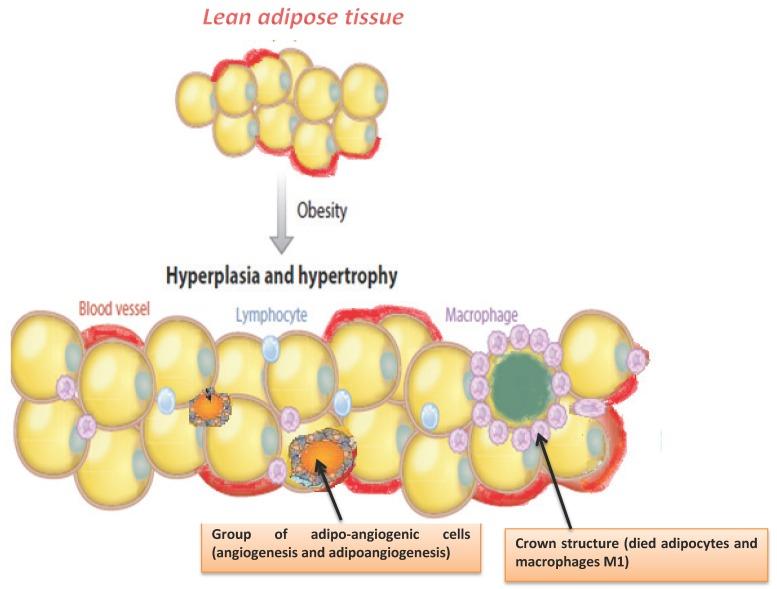
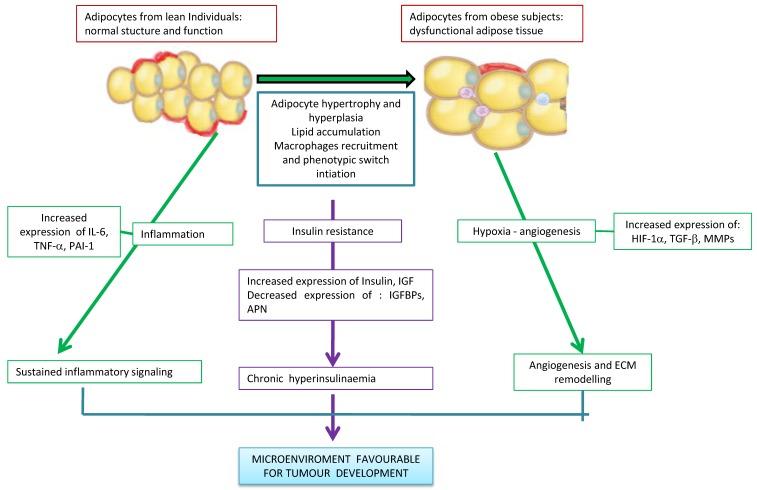
Adipose tissue in addition to its ability to keep lipids is now recognized as a real organ with both metabolic and endocrine functions. Recent studies demonstrated that in obese animals is established a status of adipocyte hypoxia and in this hypoxic state interaction between adipocytes and stromal vascular cells contribute to tumor development and progression. In several tumors such as breast, colon, liver and prostate, obesity represents a poor predictor of clinical outcomes. Dysfunctional adipose tissue in obesity releases a disturbed profile of adipokines with elevated levels of pro-inflammatory factors and a consequent alteration of key signaling mediators which may be an active local player in establishing the peritumoral environment promoting tumor growth and progression. Therefore, adipose tissue hypoxia might contribute to cancer risk in the obese population. To date the precise mechanisms behind this obesity-cancer link is not yet fully understood. In the light of information provided in this review that aims to identify the key mechanisms underlying the link between obesity and cancer we support that inflammatory state specific of obesity may be important in obesity-cancer link.
脂肪组织除了具有储存脂质的能力外,现在还被认为是一个具有代谢和内分泌功能的真正器官。最近的研究表明,在肥胖动物中会出现脂肪细胞缺氧状态,在这种缺氧状态下,脂肪细胞与基质血管细胞之间的相互作用会促进肿瘤的发生和发展。在几种肿瘤中,如乳腺癌、结肠癌、肝癌和前列腺癌,肥胖是临床预后不良的一个预测指标。肥胖状态下功能失调的脂肪组织会释放出紊乱的脂肪因子谱,其中促炎因子水平升高,进而导致关键信号介质的改变,这可能是促进肿瘤生长和发展的肿瘤周围环境的一个活跃局部因素。因此,脂肪组织缺氧可能会增加肥胖人群患癌风险。迄今为止,肥胖与癌症之间联系背后的确切机制尚未完全明确。鉴于本综述中提供的旨在确定肥胖与癌症之间联系的关键机制的信息,我们认为肥胖特有的炎症状态在肥胖与癌症的联系中可能很重要。





 Zotero 插件