
共表达白细胞介素-12和核心蛋白聚糖的溶瘤腺病毒克服调节性T细胞介导的免疫抑制,在弱免疫原性肿瘤模型中诱导强大的抗肿瘤作用。
Oncolytic adenovirus coexpressing interleukin-12 and decorin overcomes Treg-mediated immunosuppression inducing potent antitumor effects in a weakly immunogenic tumor model.
作者信息
Oh Eonju, Choi Il-Kyu, Hong JinWoo, Yun Chae-Ok
机构信息
Department of Bioengineering, College of Engineering, Hanyang University, Seongdong-gu, Seoul 133-791, Korea.
Department of Medical Oncology, Dana-Farber Cancer Institute, Harvard Medical School, Boston, MA 02215, USA.
出版信息
Oncotarget. 2017 Jan 17;8(3):4730-4746. doi: 10.18632/oncotarget.13972.
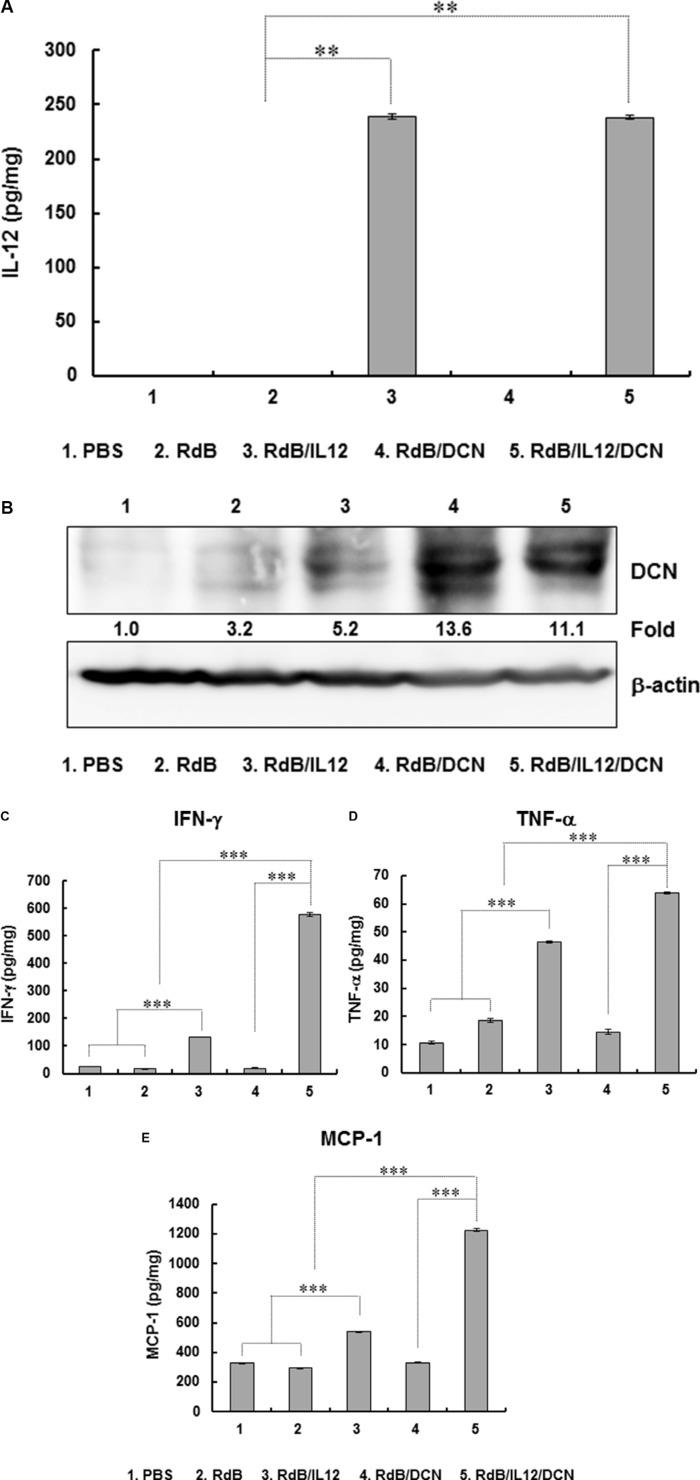
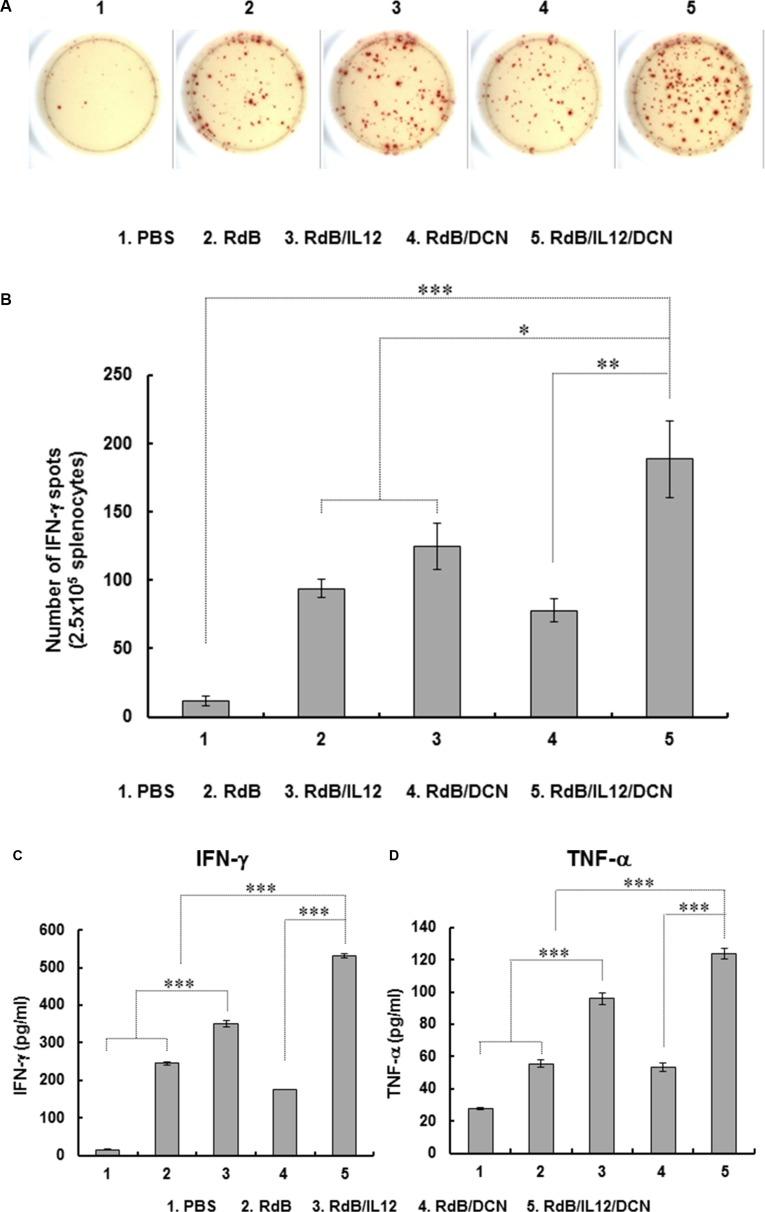
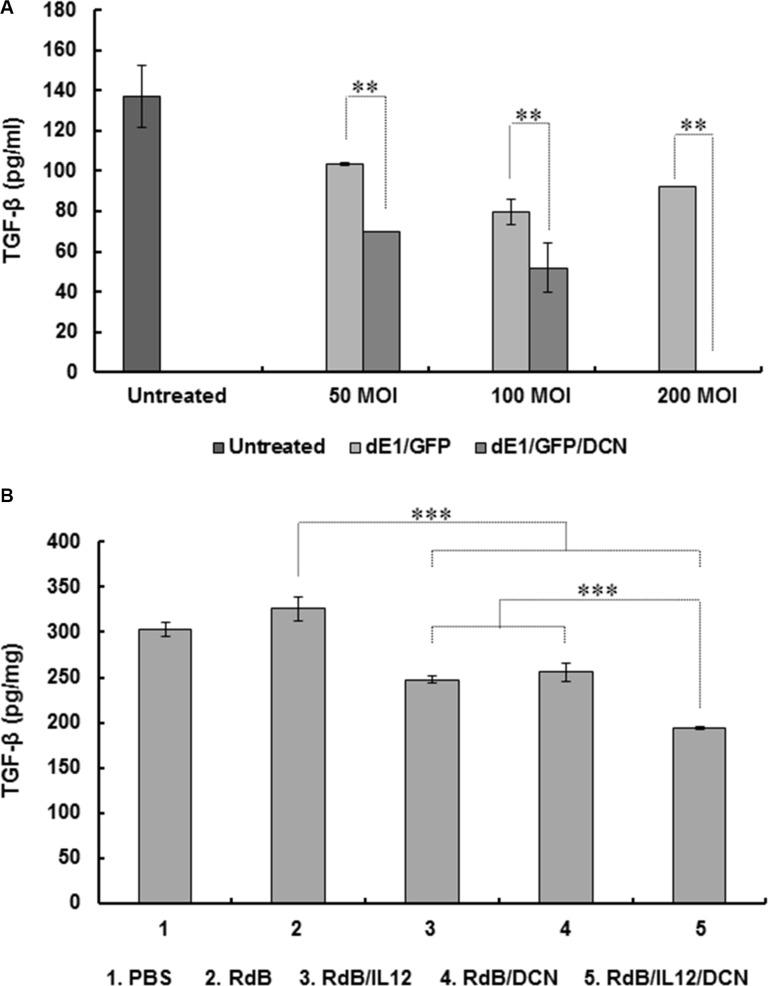
Interleukin (IL)-12 is a potent antitumor cytokine. However, immunosuppressive tumor microenvironments containing transforming growth factor-β (TGF-β) attenuate cytokine-mediated antitumor immune responses. To enhance the efficacy of IL-12-mediated cancer immunotherapy, decorin (DCN) was explored as an adjuvant for overcoming TGF-β-mediated immunosuppression. We designed and generated a novel oncolytic adenovirus (Ad) coexpressing IL-12 and DCN (RdB/IL12/DCN). RdB/IL12/DCN-treated tumors showed significantly greater levels of interferon (IFN)-γ, tumor necrosis factor-α, monocyte chemoattractant protein-1, and IFN-γ-secreting immune cells than tumors treated with cognate control oncolytic Ad expressing a single therapeutic gene (RdB/DCN or RdB/IL12). Moreover, RdB/IL12/DCN attenuated intratumoral TGF-β expression, which positively correlated with reduction of Treg cells in draining lymph nodes and tumor tissues. Furthermore, tumor tissue treated with RdB/IL12/DCN showed increases infiltration of CD8+ T cells and proficient viral spreading within tumor tissues. These results demonstrated that an oncolytic Ad co-expressing IL-12 and DCN induces a potent antitumor immune response via restoration of antitumor immune function in a weakly immunogenic murine 4T1 orthotopic breast cancer model. These findings provide new insights into the therapeutic mechanisms of IL-12 plus DCN, making it a promising cancer immunotherapeutic agent for overcoming tumor-induced immunosuppression.
白细胞介素(IL)-12是一种有效的抗肿瘤细胞因子。然而,含有转化生长因子-β(TGF-β)的免疫抑制性肿瘤微环境会减弱细胞因子介导的抗肿瘤免疫反应。为了提高IL-12介导的癌症免疫治疗效果,探索了核心蛋白聚糖(DCN)作为克服TGF-β介导的免疫抑制的佐剂。我们设计并构建了一种新型的共表达IL-12和DCN的溶瘤腺病毒(Ad)(RdB/IL12/DCN)。与用表达单个治疗基因的同源对照溶瘤Ad(RdB/DCN或RdB/IL12)处理的肿瘤相比,RdB/IL12/DCN处理的肿瘤显示出更高水平的干扰素(IFN)-γ、肿瘤坏死因子-α、单核细胞趋化蛋白-1以及分泌IFN-γ的免疫细胞。此外,RdB/IL12/DCN减弱了肿瘤内TGF-β的表达,这与引流淋巴结和肿瘤组织中调节性T细胞的减少呈正相关。此外,用RdB/IL12/DCN处理的肿瘤组织显示CD8+T细胞浸润增加,并且病毒在肿瘤组织内有效扩散。这些结果表明,在弱免疫原性的小鼠4T1原位乳腺癌模型中,共表达IL-12和DCN的溶瘤腺病毒通过恢复抗肿瘤免疫功能诱导了强大的抗肿瘤免疫反应。这些发现为IL-12加DCN的治疗机制提供了新的见解,使其成为一种有前途的用于克服肿瘤诱导的免疫抑制的癌症免疫治疗剂。


 Zotero 插件