
将造血分化与多能性相关基因和印记基因的共表达集以及调控性微小RNA-转录因子基序相联系。
Linking Hematopoietic Differentiation to Co-Expressed Sets of Pluripotency-Associated and Imprinted Genes and to Regulatory microRNA-Transcription Factor Motifs.
作者信息
Hamed Mohamed, Trumm Johannes, Spaniol Christian, Sethi Riccha, Irhimeh Mohammad R, Fuellen Georg, Paulsen Martina, Helms Volkhard
机构信息
Center for Bioinformatics, Saarland University, Saarbrücken, Germany.
Institute for Biostatistics and Informatics in Medicine and Ageing Research, Rostock University Medical Center, Rostock, Germany.
出版信息
PLoS One. 2017 Jan 4;12(1):e0166852. doi: 10.1371/journal.pone.0166852. eCollection 2017.
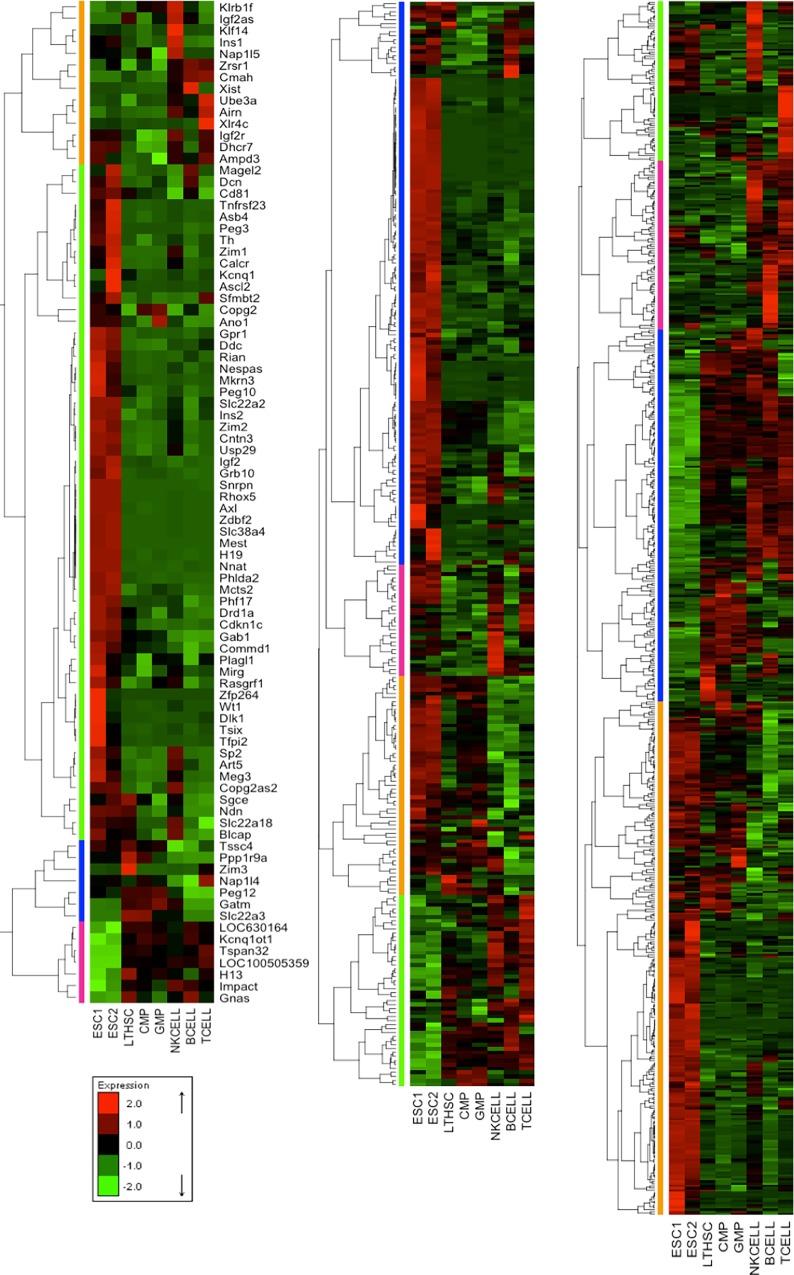
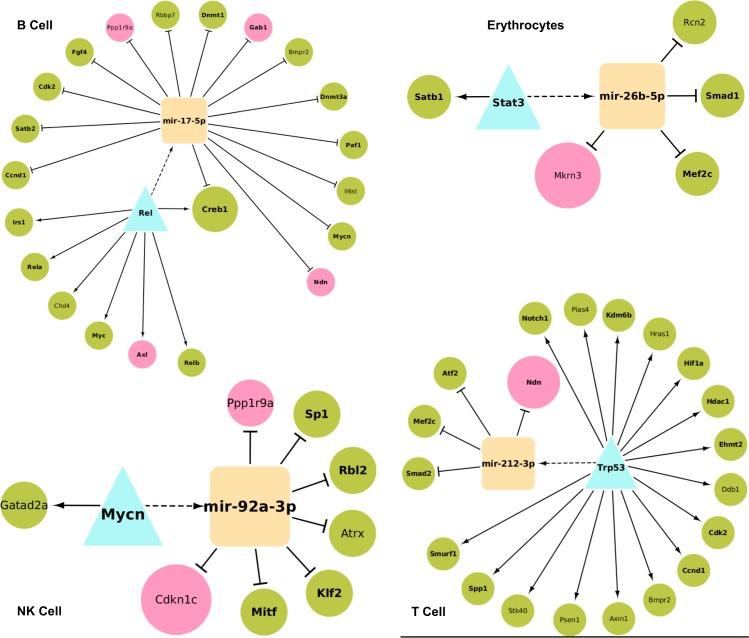
Maintenance of cell pluripotency, differentiation, and reprogramming are regulated by complex gene regulatory networks (GRNs) including monoallelically-expressed imprinted genes. Besides transcriptional control, epigenetic modifications and microRNAs contribute to cellular differentiation. As a model system for studying the capacity of cells to preserve their pluripotency state and the onset of differentiation and subsequent specialization, murine hematopoiesis was used and compared to embryonic stem cells (ESCs) as a control. Using published microarray data, the expression profiles of two sets of genes, pluripotent and imprinted, were compared to a third set of known hematopoietic genes. We found that more than half of the pluripotent and imprinted genes are clearly upregulated in ESCs but subsequently repressed during hematopoiesis. The remaining genes were either upregulated in hematopoietic progenitors or in differentiated blood cells. The three gene sets each consist of three similarly behaving gene groups with similar expression profiles in various lineages of the hematopoietic system as well as in ESCs. To explain this co-regulation behavior, we explored the transcriptional and post-transcriptional mechanisms of pluripotent and imprinted genes and their regulator/target miRNAs in six different hematopoietic lineages. Therewith, lineage-specific transcription factor (TF)-miRNA regulatory networks were generated and their topologies and functional impacts during hematopoiesis were analyzed. This led to the identification of TF-miRNA co-regulatory motifs, for which we validated the contribution to the cellular development of the corresponding lineage in terms of statistical significance and relevance to biological evidence. This analysis also identified key miRNAs and TFs/genes that might play important roles in the derived lineage networks. These molecular associations suggest new aspects of the cellular regulation of the onset of cellular differentiation and during hematopoiesis involving, on one hand, pluripotent genes that were previously not discussed in the context of hematopoiesis and, on the other hand, involve genes that are related to genomic imprinting. These are new links between hematopoiesis and cellular differentiation and the important field of epigenetic modifications.
细胞多能性的维持、分化和重编程受复杂的基因调控网络(GRN)调节,其中包括单等位基因表达的印记基因。除了转录控制外,表观遗传修饰和微小RNA也有助于细胞分化。作为研究细胞维持多能性状态、分化起始及随后特化能力的模型系统,采用了小鼠造血过程,并与作为对照的胚胎干细胞(ESC)进行比较。利用已发表的微阵列数据,将两组基因(多能基因和印记基因)的表达谱与第三组已知的造血基因进行比较。我们发现,超过一半的多能基因和印记基因在胚胎干细胞中明显上调,但在造血过程中随后被抑制。其余基因要么在造血祖细胞中上调,要么在分化的血细胞中上调。这三组基因各自由三个行为相似的基因组组成,在造血系统的各种谱系以及胚胎干细胞中具有相似的表达谱。为了解释这种共同调控行为,我们在六个不同的造血谱系中探索了多能基因和印记基因及其调节因子/靶标微小RNA的转录和转录后机制。由此,生成了谱系特异性转录因子(TF)-微小RNA调控网络,并分析了它们在造血过程中的拓扑结构和功能影响。这导致了TF-微小RNA共同调控基序的鉴定,我们从统计学意义和与生物学证据的相关性方面验证了它们对相应谱系细胞发育的贡献。该分析还确定了可能在衍生的谱系网络中发挥重要作用的关键微小RNA和TF/基因。这些分子关联揭示了细胞分化起始和造血过程中细胞调控的新方面,一方面涉及以前在造血背景下未讨论过的多能基因,另一方面涉及与基因组印记相关的基因。这些是造血与细胞分化以及表观遗传修饰这一重要领域之间的新联系。


 Zotero 插件