
用于太阳能水分解的一维TiO纳米管光催化剂。
One-dimensional TiO Nanotube Photocatalysts for Solar Water Splitting.
作者信息
Ge Mingzheng, Li Qingsong, Cao Chunyan, Huang Jianying, Li Shuhui, Zhang Songnan, Chen Zhong, Zhang Keqin, Al-Deyab Salem S, Lai Yuekun
机构信息
National Engineering Laboratory for Modern Silk College of Textile and Clothing, Engineering Soochow University Suzhou 215123 P. R. China.
School of Materials Science and Engineering Nanyang Technological University Singapore 639798 Singapore.
出版信息
Adv Sci (Weinh). 2016 Sep 21;4(1):1600152. doi: 10.1002/advs.201600152. eCollection 2017 Jan.
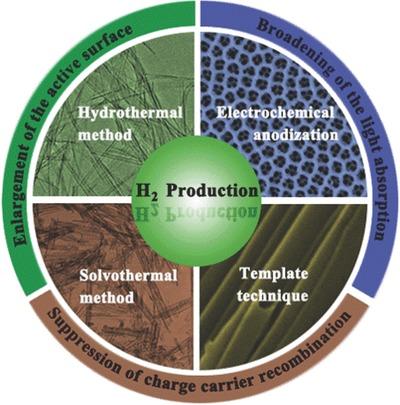
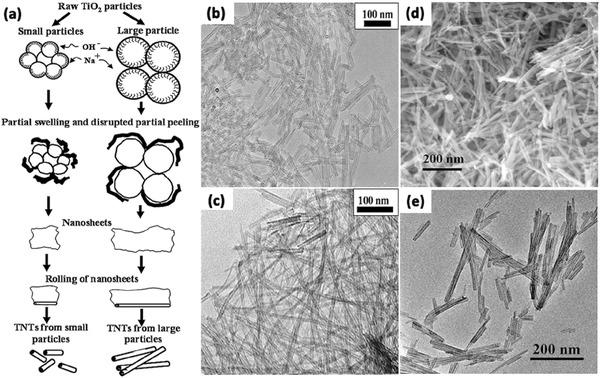
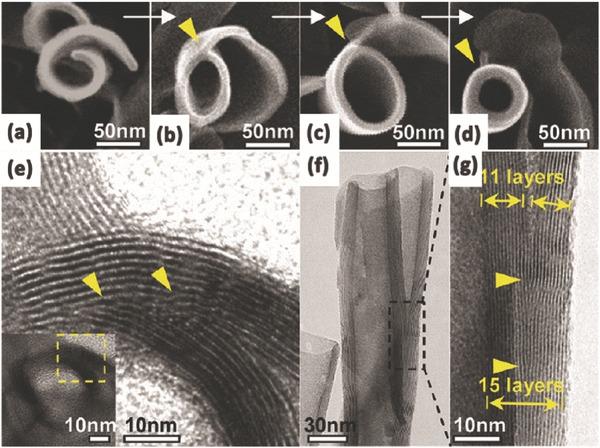
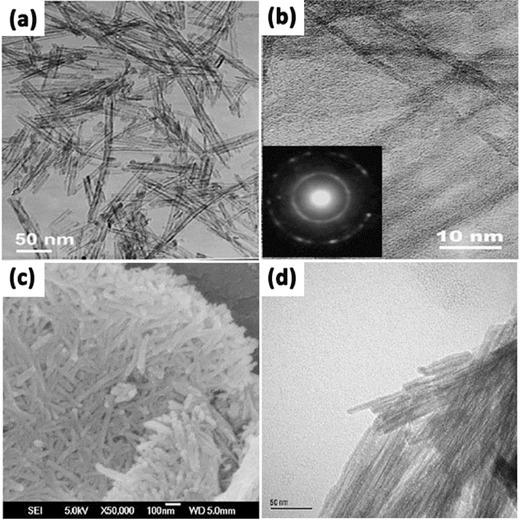
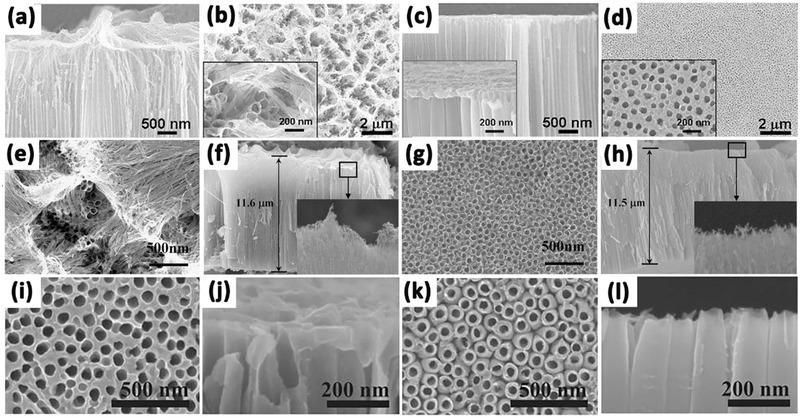
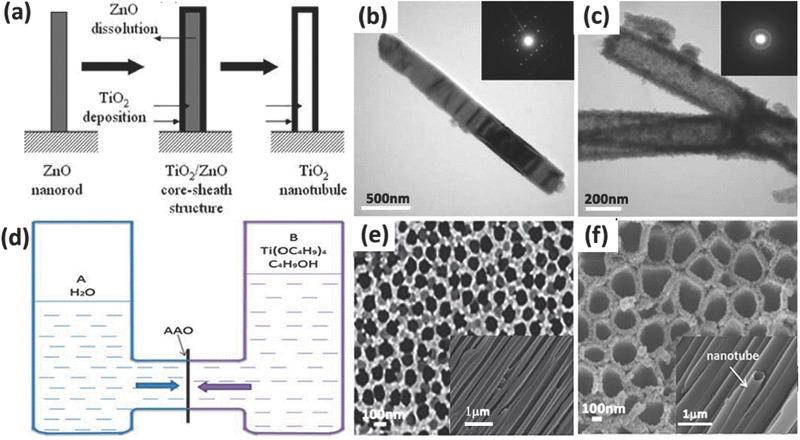
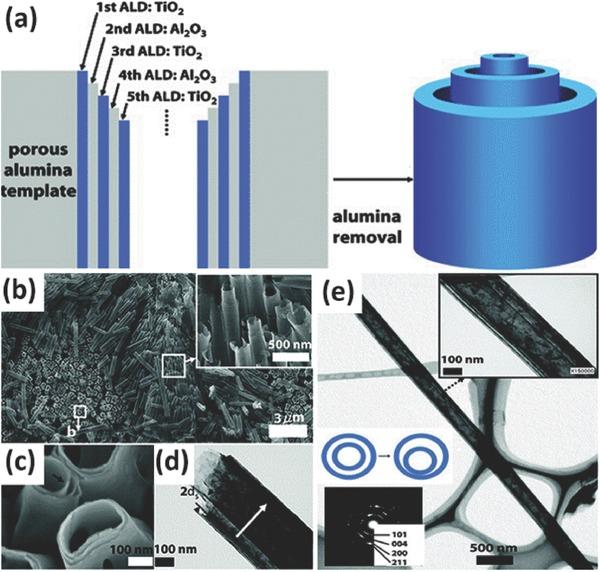
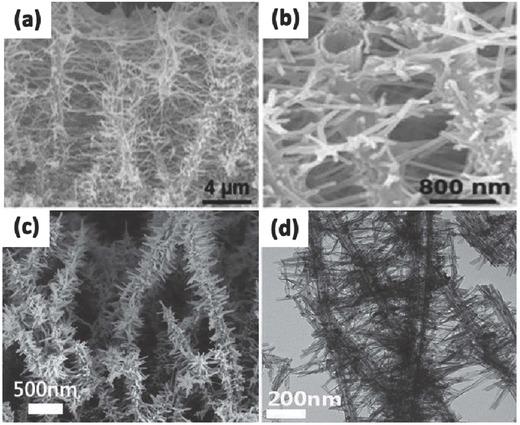
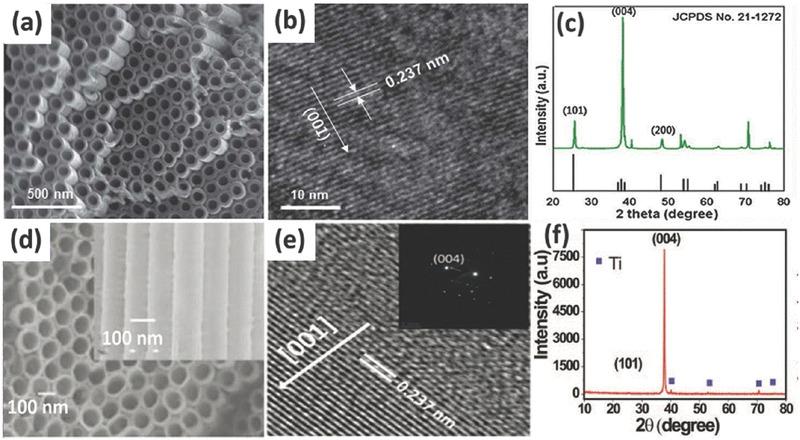
Hydrogen production from water splitting by photo/photoelectron-catalytic process is a promising route to solve both fossil fuel depletion and environmental pollution at the same time. Titanium dioxide (TiO) nanotubes have attracted much interest due to their large specific surface area and highly ordered structure, which has led to promising potential applications in photocatalytic degradation, photoreduction of CO, water splitting, supercapacitors, dye-sensitized solar cells, lithium-ion batteries and biomedical devices. Nanotubes can be fabricated via facile hydrothermal method, solvothermal method, template technique and electrochemical anodic oxidation. In this report, we provide a comprehensive review on recent progress of the synthesis and modification of TiO nanotubes to be used for photo/photoelectro-catalytic water splitting. The future development of TiO nanotubes is also discussed.
通过光/光电子催化过程从水分解中制氢是一种有望同时解决化石燃料枯竭和环境污染问题的途径。二氧化钛(TiO₂)纳米管因其大的比表面积和高度有序的结构而备受关注,这使其在光催化降解、CO光还原、水分解、超级电容器、染料敏化太阳能电池、锂离子电池和生物医学器件等方面具有广阔的潜在应用前景。纳米管可以通过简便的水热法、溶剂热法、模板技术和电化学阳极氧化法制备。在本报告中,我们对用于光/光电子催化水分解的TiO₂纳米管的合成与改性的最新进展进行了全面综述。同时也讨论了TiO₂纳米管的未来发展。



 Zotero 插件