
乙二醛酶和抗氧化防御系统在赋予植物非生物胁迫耐受性中的协同作用。
Coordinated Actions of Glyoxalase and Antioxidant Defense Systems in Conferring Abiotic Stress Tolerance in Plants.
作者信息
Hasanuzzaman Mirza, Nahar Kamrun, Hossain Md Shahadat, Mahmud Jubayer Al, Rahman Anisur, Inafuku Masashi, Oku Hirosuke, Fujita Masayuki
机构信息
Molecular Biotechnology Group, Center of Molecular Biosciences, Tropical Biosphere Research Center, University of the Ryukyus, 1 Senbaru, Nishihara, Okinawa 903-0213, Japan.
Department of Agronomy, Faculty of Agriculture, Sher-e-Bangla Agricultural University, Dhaka 1207, Bangladesh.
出版信息
Int J Mol Sci. 2017 Jan 20;18(1):200. doi: 10.3390/ijms18010200.
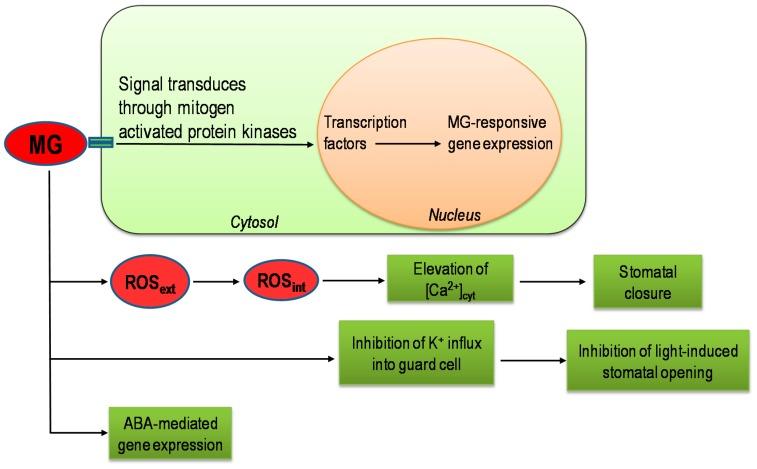
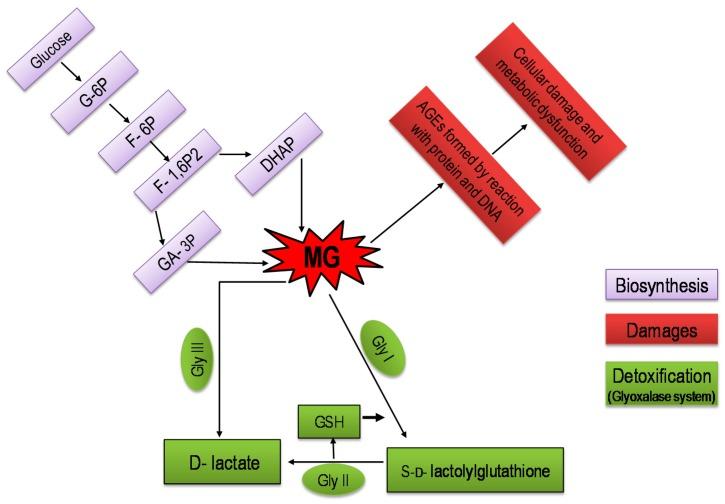
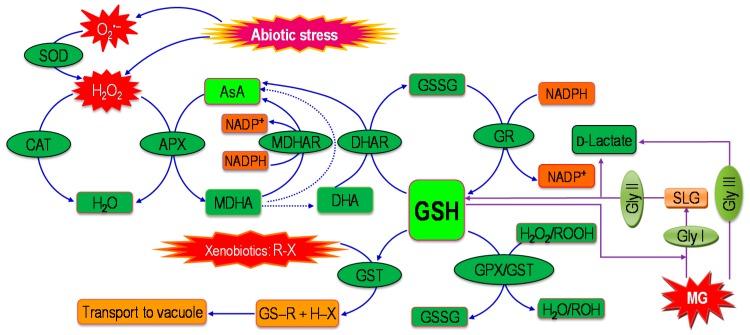
Being sessile organisms, plants are frequently exposed to various environmental stresses that cause several physiological disorders and even death. Oxidative stress is one of the common consequences of abiotic stress in plants, which is caused by excess generation of reactive oxygen species (ROS). Sometimes ROS production exceeds the capacity of antioxidant defense systems, which leads to oxidative stress. In line with ROS, plants also produce a high amount of methylglyoxal (MG), which is an α-oxoaldehyde compound, highly reactive, cytotoxic, and produced via different enzymatic and non-enzymatic reactions. This MG can impair cells or cell components and can even destroy DNA or cause mutation. Under stress conditions, MG concentration in plants can be increased 2- to 6-fold compared with normal conditions depending on the plant species. However, plants have a system developed to detoxify this MG consisting of two major enzymes: glyoxalase I (Gly I) and glyoxalase II (Gly II), and hence known as the glyoxalase system. Recently, a novel glyoxalase enzyme, named glyoxalase III (Gly III), has been detected in plants, providing a shorter pathway for MG detoxification, which is also a signpost in the research of abiotic stress tolerance. Glutathione (GSH) acts as a co-factor for this system. Therefore, this system not only detoxifies MG but also plays a role in maintaining GSH homeostasis and subsequent ROS detoxification. Upregulation of both Gly I and Gly II as well as their overexpression in plant species showed enhanced tolerance to various abiotic stresses including salinity, drought, metal toxicity, and extreme temperature. In the past few decades, a considerable amount of reports have indicated that both antioxidant defense and glyoxalase systems have strong interactions in conferring abiotic stress tolerance in plants through the detoxification of ROS and MG. In this review, we will focus on the mechanisms of these interactions and the coordinated action of these systems towards stress tolerance.
作为固着生物,植物经常面临各种环境胁迫,这些胁迫会导致多种生理紊乱甚至死亡。氧化应激是植物非生物胁迫的常见后果之一,它是由活性氧(ROS)的过量产生引起的。有时ROS的产生超过了抗氧化防御系统的能力,从而导致氧化应激。与ROS一样,植物还会产生大量的甲基乙二醛(MG),它是一种α-氧代醛化合物,具有高反应性、细胞毒性,可通过不同的酶促和非酶促反应产生。这种MG会损害细胞或细胞成分,甚至会破坏DNA或导致突变。在胁迫条件下,根据植物种类的不同,植物体内MG的浓度可比正常条件下增加2至6倍。然而,植物有一个由两种主要酶组成的系统来解毒这种MG,这两种酶分别是乙二醛酶I(Gly I)和乙二醛酶II(Gly II),因此被称为乙二醛酶系统。最近,在植物中检测到一种新的乙二醛酶,称为乙二醛酶III(Gly III),它为MG解毒提供了一条更短的途径,这也是非生物胁迫耐受性研究中的一个标志。谷胱甘肽(GSH)作为该系统的辅助因子。因此,该系统不仅能解毒MG,还在维持GSH稳态及随后的ROS解毒中发挥作用。Gly I和Gly II的上调以及它们在植物物种中的过表达显示出对包括盐度、干旱、金属毒性和极端温度在内的各种非生物胁迫的耐受性增强。在过去几十年中,大量报告表明,抗氧化防御和乙二醛酶系统在通过ROS和MG解毒赋予植物非生物胁迫耐受性方面具有很强的相互作用。在这篇综述中,我们将重点关注这些相互作用的机制以及这些系统对胁迫耐受性的协同作用。

 Zotero 插件