
通过调控动力相关蛋白1(Drp-1)启动子的羟甲基化靶向TET1,miR-30a作为特发性肺纤维化的潜在治疗手段
miR-30a as Potential Therapeutics by Targeting TET1 through Regulation of Drp-1 Promoter Hydroxymethylation in Idiopathic Pulmonary Fibrosis.
作者信息
Zhang Songzi, Liu Huizhu, Liu Yuxia, Zhang Jie, Li Hongbo, Liu Weili, Cao Guohong, Xv Pan, Zhang Jinjin, Lv Changjun, Song Xiaodong
机构信息
Department of Cellular and Genetic Medicine, School of Pharmaceutical Sciences, Binzhou Medical University, Yantai 264003, China.
Department of Clinical Pharmacology, School of Pharmaceutical Sciences, Taishan Medical University, Taishan 271016, China.
出版信息
Int J Mol Sci. 2017 Mar 15;18(3):633. doi: 10.3390/ijms18030633.
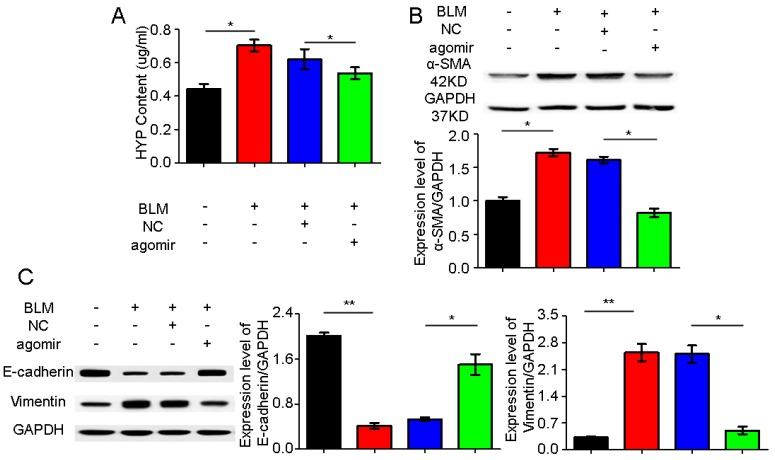
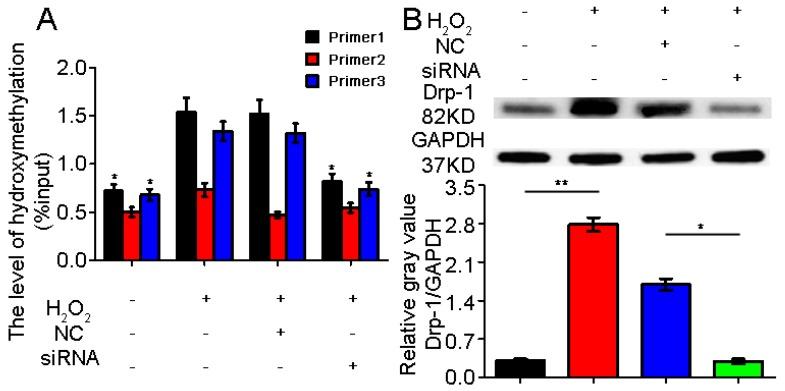
Several recent studies have indicated that miR-30a plays critical roles in various biological processes and diseases. However, the mechanism of miR-30a participation in idiopathic pulmonary fibrosis (IPF) regulation is ambiguous. Our previous study demonstrated that miR-30a may function as a novel therapeutic target for lung fibrosis by blocking mitochondrial fission, which is dependent on dynamin-related protein1 (Drp-1). However, the regulatory mechanism between miR-30a and Drp-1 is yet to be investigated. Additionally, whether miR-30a can act as a potential therapeutic has not been verified in vivo. In this study, the miR-30a expression in IPF patients was evaluated. Computational analysis and a dual-luciferase reporter assay system were used to identify the target gene of miR-30a, and cell transfection was utilized to confirm this relationship. Ten-eleven translocation 1 (TET1) was validated as a direct target of miR-30a, and miR-30a mimic and inhibitor transfection significantly reduced and increased the TET1 protein expression, respectively. Further experimentation verified that the TET1 siRNA interference could inhibit Drp-1 promoter hydroxymethylation. Finally, miR-30a agomir was designed and applied to identify and validate the therapeutic effect of miR-30a in vivo. Our study demonstrated that miR-30a could inhibit TET1 expression through base pairing with complementary sites in the 3'untranslated region to regulate Drp-1 promoter hydroxymethylation. Furthermore, miR-30a could act as a potential therapeutic target for IPF.
最近的几项研究表明,miR-30a在各种生物学过程和疾病中发挥着关键作用。然而,miR-30a参与特发性肺纤维化(IPF)调控的机制尚不清楚。我们之前的研究表明,miR-30a可能通过阻断依赖于动力相关蛋白1(Drp-1)的线粒体分裂,作为肺纤维化的一种新型治疗靶点。然而,miR-30a与Drp-1之间的调控机制尚待研究。此外,miR-30a是否可作为一种潜在的治疗方法尚未在体内得到验证。在本研究中,评估了IPF患者中miR-30a的表达。采用计算分析和双荧光素酶报告基因检测系统鉴定miR-30a的靶基因,并利用细胞转染来证实这种关系。验证了十一易位蛋白1(TET1)是miR-30a的直接靶标,miR-30a模拟物和抑制剂转染分别显著降低和增加了TET1蛋白表达。进一步的实验证实,TET1 siRNA干扰可抑制Drp-1启动子的羟甲基化。最后,设计并应用了miR-30a激动剂来鉴定和验证miR-30a在体内的治疗效果。我们的研究表明,miR-30a可通过与3'非翻译区的互补位点碱基配对来抑制TETI表达,从而调节Drp-1启动子的羟甲基化。此外,miR-30a可作为IPF的一种潜在治疗靶点。



 Zotero 插件