
二倍体森林草莓(Fragaria vesca)中丝裂原活化蛋白激酶基因家族的生物信息学鉴定及转录谱分析
Bioinformatics identification and transcript profile analysis of the mitogen-activated protein kinase gene family in the diploid woodland strawberry Fragaria vesca.
作者信息
Wei Wei, Chai Zhuangzhuang, Xie Yinge, Gao Kuan, Cui Mengyuan, Jiang Ying, Feng Jiayue
机构信息
State Key Laboratory of Crop Stress Biology for Arid Areas, College of Horticulture, Northwest A&F University, Yangling, Shaanxi, China.
Key Laboratory of Protected Horticulture Engineering in Northwest China, Ministry of Agriculture, Yangling, Shaanxi, China.
出版信息
PLoS One. 2017 May 31;12(5):e0178596. doi: 10.1371/journal.pone.0178596. eCollection 2017.
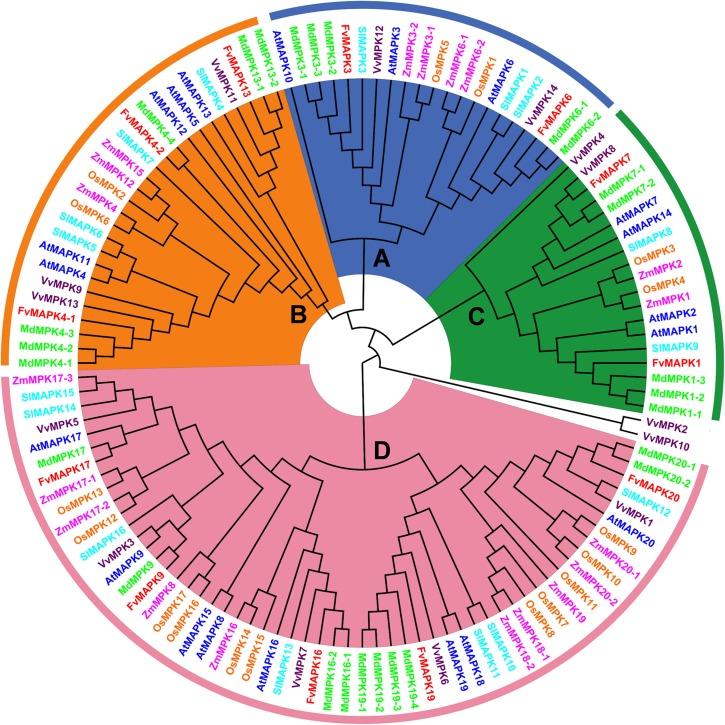
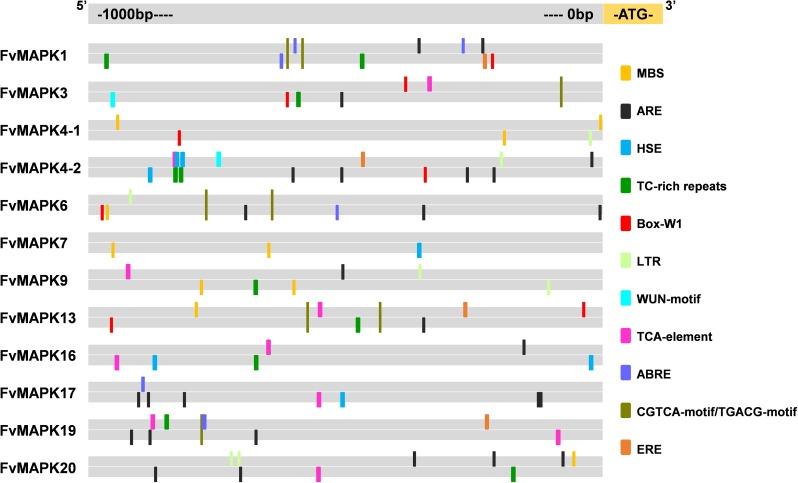
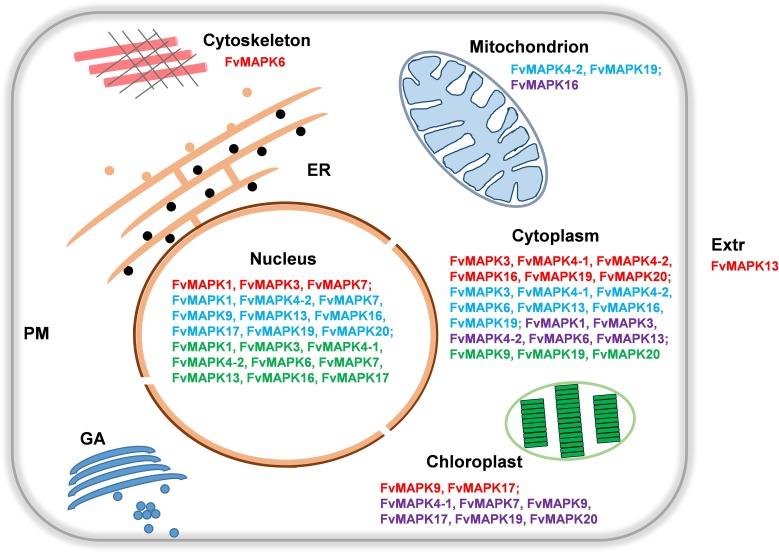
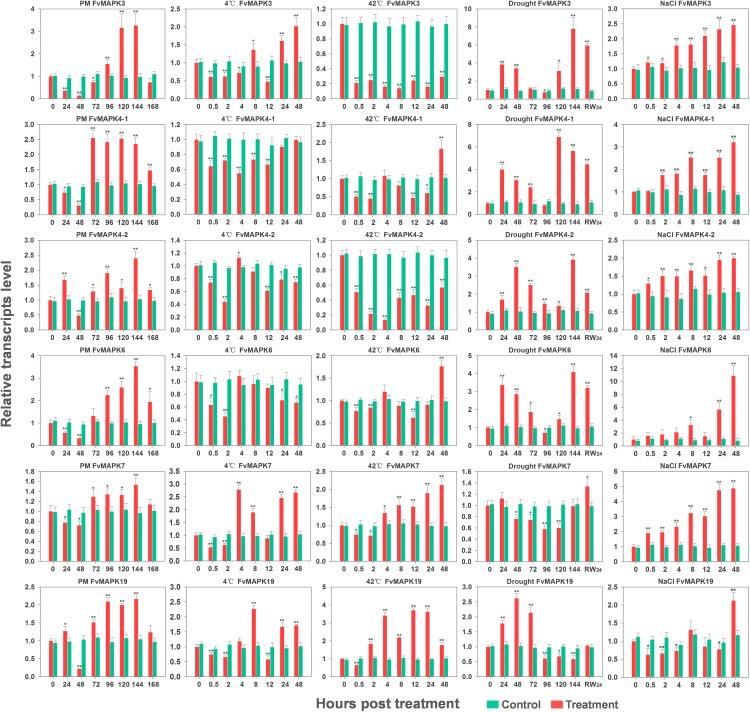
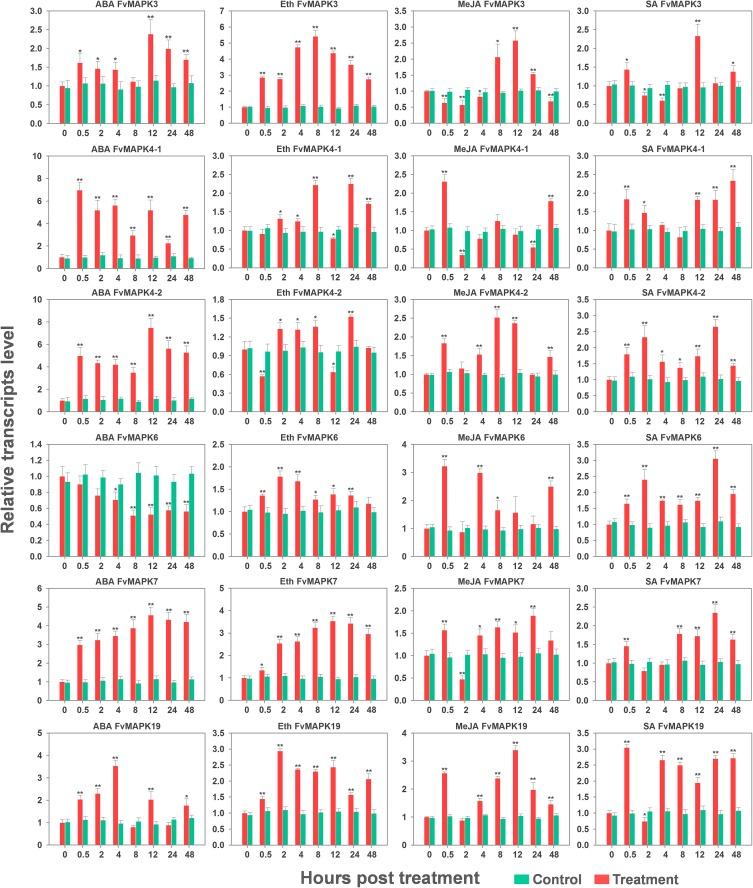
Mitogen-activated protein kinases (MAPKs) play essential roles in mediating biotic and abiotic stress responses in plants. However, the MAPK gene family in strawberry has not been systematically characterized. Here, we performed a genome-wide survey and identified 12 MAPK genes in the Fragaria vesca genome. Protein domain analysis indicated that all FvMAPKs have typical protein kinase domains. Sequence alignments and phylogenetic analysis classified the FvMAPK genes into four different groups. Conserved motif and exon-intron organization supported the evolutionary relationships inferred from the phylogenetic analysis. Analysis of the stress-related cis-regulatory element in the promoters and subcellular localization predictions of FvMAPKs were also performed. Gene transcript profile analysis showed that the majority of the FvMAPK genes were ubiquitously transcribed in strawberry leaves after Podosphaera aphanis inoculation and after treatment with cold, heat, drought, salt and the exogenous hormones abscisic acid, ethephon, methyl jasmonate, and salicylic acid. RT-qPCR showed that six selected FvMAPK genes comprehensively responded to various stimuli. Additionally, interaction networks revealed that the crucial signaling transduction controlled by FvMAPKs may be involved in the biotic and abiotic stress responses. Our results may provide useful information for future research on the function of the MAPK gene family and the genetic improvement of strawberry resistance to environmental stresses.
丝裂原活化蛋白激酶(MAPKs)在介导植物的生物和非生物胁迫反应中发挥着重要作用。然而,草莓中的MAPK基因家族尚未得到系统的表征。在此,我们进行了全基因组调查,并在野草莓(Fragaria vesca)基因组中鉴定出12个MAPK基因。蛋白质结构域分析表明,所有FvMAPKs都具有典型的蛋白激酶结构域。序列比对和系统发育分析将FvMAPK基因分为四个不同的组。保守基序和外显子-内含子组织支持了从系统发育分析中推断出的进化关系。我们还对FvMAPKs启动子中与胁迫相关的顺式调控元件进行了分析,并对其亚细胞定位进行了预测。基因转录谱分析表明,在接种白粉菌(Podosphaera aphanis)后以及在冷、热、干旱、盐处理以及用脱落酸、乙烯利、茉莉酸甲酯和水杨酸等外源激素处理后,大多数FvMAPK基因在草莓叶片中普遍转录。RT-qPCR表明,六个选定的FvMAPK基因对各种刺激有综合反应。此外,相互作用网络显示FvMAPKs控制的关键信号转导可能参与生物和非生物胁迫反应。我们的结果可能为未来MAPK基因家族功能研究以及草莓抗环境胁迫的遗传改良提供有用信息。




 Zotero 插件