
进食时间调节人体的昼夜节律系统。
Meal Timing Regulates the Human Circadian System.
机构信息
Faculty of Health and Medical Science, University of Surrey, Stag Hill Campus, Guildford, Surrey GU2 7XH, UK.
Faculty of Health and Medical Science, University of Surrey, Stag Hill Campus, Guildford, Surrey GU2 7XH, UK.
出版信息
Curr Biol. 2017 Jun 19;27(12):1768-1775.e3. doi: 10.1016/j.cub.2017.04.059. Epub 2017 Jun 1.
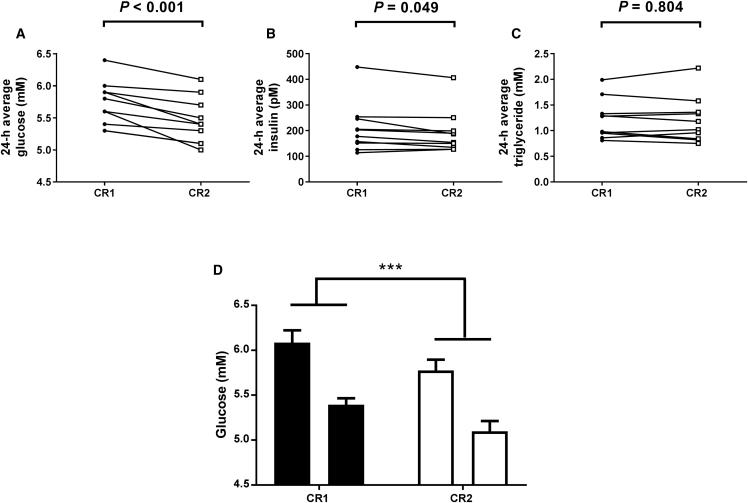
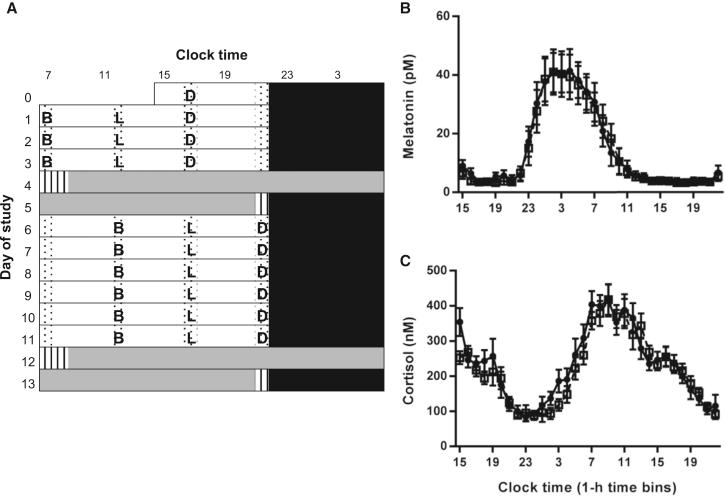
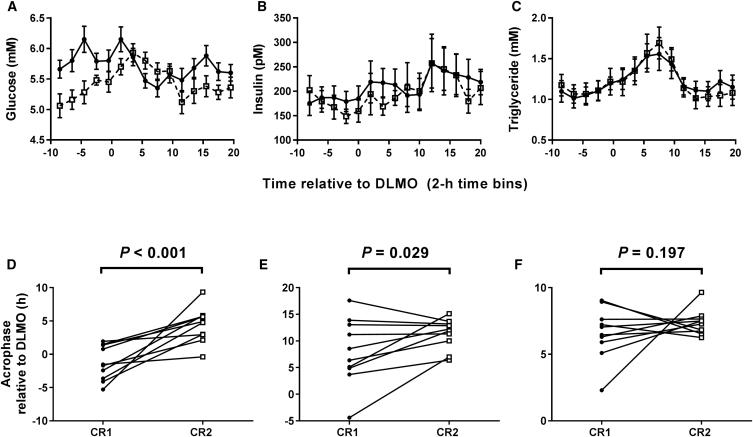
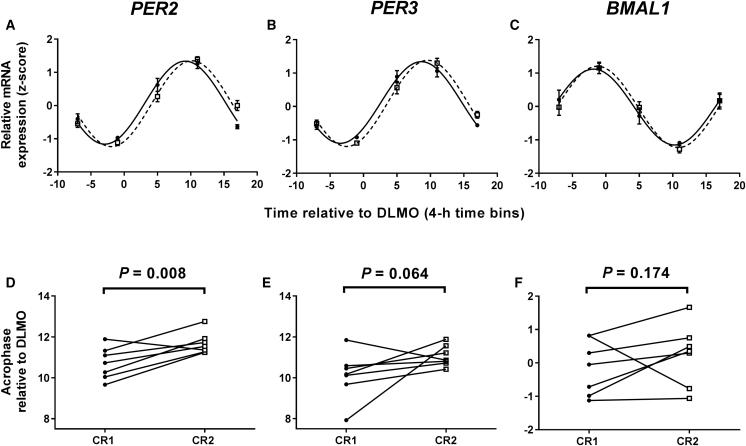
Circadian rhythms, metabolism, and nutrition are intimately linked [1, 2], although effects of meal timing on the human circadian system are poorly understood. We investigated the effect of a 5-hr delay in meals on markers of the human master clock and multiple peripheral circadian rhythms. Ten healthy young men undertook a 13-day laboratory protocol. Three meals (breakfast, lunch, dinner) were given at 5-hr intervals, beginning either 0.5 (early) or 5.5 (late) hr after wake. Participants were acclimated to early meals and then switched to late meals for 6 days. After each meal schedule, participants' circadian rhythms were measured in a 37-hr constant routine that removes sleep and environmental rhythms while replacing meals with hourly isocaloric snacks. Meal timing did not alter actigraphic sleep parameters before circadian rhythm measurement. In constant routines, meal timing did not affect rhythms of subjective hunger and sleepiness, master clock markers (plasma melatonin and cortisol), plasma triglycerides, or clock gene expression in whole blood. Following late meals, however, plasma glucose rhythms were delayed by 5.69 ± 1.29 hr (p < 0.001), and average glucose concentration decreased by 0.27 ± 0.05 mM (p < 0.001). In adipose tissue, PER2 mRNA rhythms were delayed by 0.97 ± 0.29 hr (p < 0.01), indicating that human molecular clocks may be regulated by feeding time and could underpin plasma glucose changes. Timed meals therefore play a role in synchronizing peripheral circadian rhythms in humans and may have particular relevance for patients with circadian rhythm disorders, shift workers, and transmeridian travelers.
昼夜节律、代谢和营养密切相关[1,2],尽管用餐时间对人体昼夜节律系统的影响知之甚少。我们研究了用餐时间延迟 5 小时对人体主时钟和多个外周昼夜节律标记物的影响。10 名健康年轻男性参与了为期 13 天的实验室方案。三餐(早餐、午餐、晚餐)每 5 小时间隔一次,分别在醒来后 0.5(早)或 5.5(晚)小时开始。参与者适应了早期用餐,然后切换到 6 天的晚期用餐。在每一种用餐时间表后,参与者的昼夜节律在 37 小时的恒常性常规中进行测量,该常规消除了睡眠和环境节律,同时用每小时等热量的零食代替用餐。用餐时间在进行昼夜节律测量之前不会改变活动记录仪的睡眠参数。在恒常性常规中,用餐时间不会影响主观饥饿和困意、主时钟标记物(血浆褪黑素和皮质醇)、血浆甘油三酯或全血时钟基因表达的节律。然而,在用餐后,血浆葡萄糖节律延迟了 5.69±1.29 小时(p<0.001),平均葡萄糖浓度降低了 0.27±0.05mM(p<0.001)。此外,脂肪组织中 PER2 mRNA 节律延迟了 0.97±0.29 小时(p<0.01),这表明人类分子时钟可能受到进食时间的调节,并可能为血浆葡萄糖变化提供基础。因此,定时用餐在协调人体外周昼夜节律方面发挥作用,对于昼夜节律紊乱患者、轮班工人和跨时区旅行者可能具有特殊意义。
 Zotero 插件