
二十二碳六烯酸调节血管内皮细胞功能并预防心血管疾病。
Docosahexaenoic acid regulates vascular endothelial cell function and prevents cardiovascular disease.
作者信息
Yamagata Kazuo
机构信息
Department of Food Bioscience and Biotechnology, College of Bioresourse, Science, Nihon University (NUBS), 1866, Kameino, Fujisawa, Kanagawa, 252-8510, Japan.
出版信息
Lipids Health Dis. 2017 Jun 15;16(1):118. doi: 10.1186/s12944-017-0514-6.
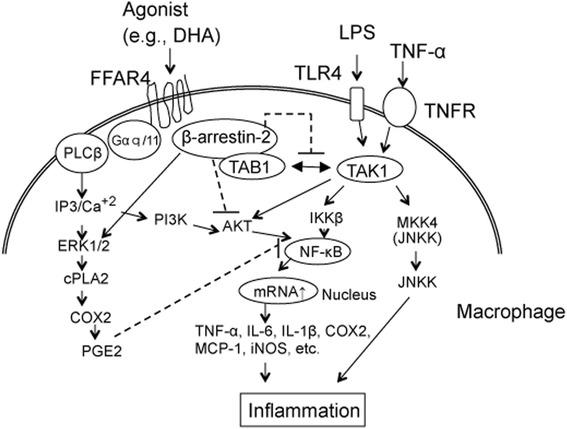
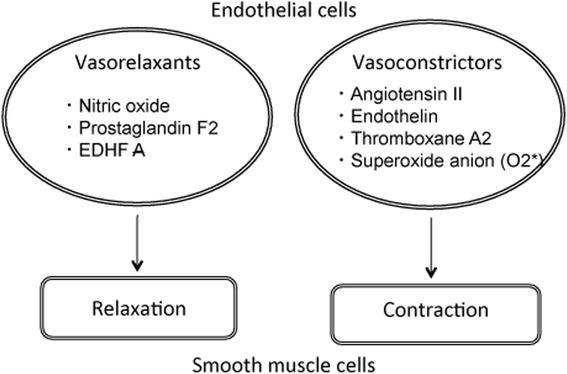
Docosahexaenoic acid (DHA) is present in high concentrations in salmon, herring, and trout. Epidemiologic studies have shown that high dietary consumption of these and other oily fish is associated with reduced rates of myocardial infarction, atherosclerosis, and other ischemic pathologies. Atherosclerosis is induced by inflammation and can lead to acute cardiovascular events and extensive plaque. DHA inhibits the development of inflammation in endothelial cells, alters the function and regulation of vascular biomarkers, and reduces cardiovascular risk. It also affects vascular relaxation and constriction by controlling nitric oxide and endothelin 1 production in endothelial cells. DHA also contributes to the prevention of arteriosclerosis by regulating the expression of oxidized low density lipoprotein receptor 1, plasminogen activator inhibitor 1, thromboxane A2 receptor, and adhesion molecules such as vascular cell adhesion molecule-1, monocyte chemoattractant protein-1, and intercellular adhesion molecule 1 in endothelial cells. Recent research showed that DHA reduces the increase in adhesion factor expression induced by lipopolysaccharide by suppressing toll-like receptor 4. A new mechanism of action of DHA has been described that is mediated through endothelial free fatty acid receptor 4, associated with heme oxygenase 1 induction by Nrf2. However, the efficacy and mechanisms of action of DHA in cardiovascular disease prevention are not yet completely understood. The aim of this paper was to review the effects of DHA on vascular endothelial cells and recent findings on their potential for the prevention of circulatory diseases.
二十二碳六烯酸(DHA)在三文鱼、鲱鱼和鳟鱼中含量很高。流行病学研究表明,大量食用这些鱼类及其他油性鱼类与心肌梗死、动脉粥样硬化和其他缺血性疾病的发病率降低有关。动脉粥样硬化由炎症引发,可导致急性心血管事件和广泛的斑块形成。DHA可抑制内皮细胞炎症的发展,改变血管生物标志物的功能和调节,降低心血管风险。它还通过控制内皮细胞中一氧化氮和内皮素1的产生来影响血管舒张和收缩。DHA还通过调节内皮细胞中氧化型低密度脂蛋白受体1、纤溶酶原激活物抑制剂1、血栓素A2受体以及血管细胞黏附分子-1、单核细胞趋化蛋白-1和细胞间黏附分子1等黏附分子的表达,有助于预防动脉硬化。最近的研究表明,DHA通过抑制Toll样受体4来减少脂多糖诱导的黏附因子表达增加。已经描述了一种新的DHA作用机制,该机制通过内皮游离脂肪酸受体4介导,与Nrf2诱导的血红素加氧酶1相关。然而,DHA在预防心血管疾病中的功效和作用机制尚未完全明确。本文的目的是综述DHA对血管内皮细胞的影响以及近期关于其预防循环系统疾病潜力的研究发现。


 Zotero 插件