
寨卡病毒NS2B-NS3蛋白酶的溶液构象及其受食用植物天然产物的抑制作用
Solution conformations of Zika NS2B-NS3pro and its inhibition by natural products from edible plants.
作者信息
Roy Amrita, Lim Liangzhong, Srivastava Shagun, Lu Yimei, Song Jianxing
机构信息
Department of Biological Sciences, Faculty of Science, National University of Singapore, Singapore, Singapore.
出版信息
PLoS One. 2017 Jul 10;12(7):e0180632. doi: 10.1371/journal.pone.0180632. eCollection 2017.
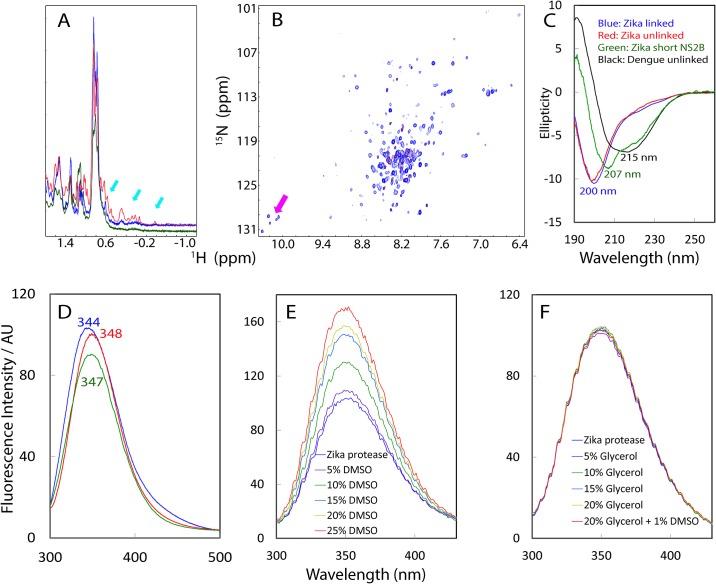
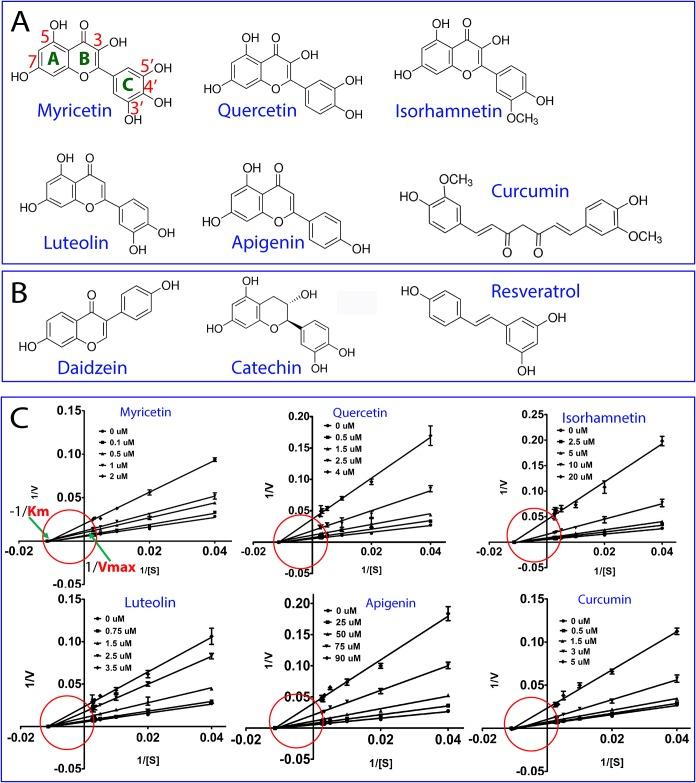
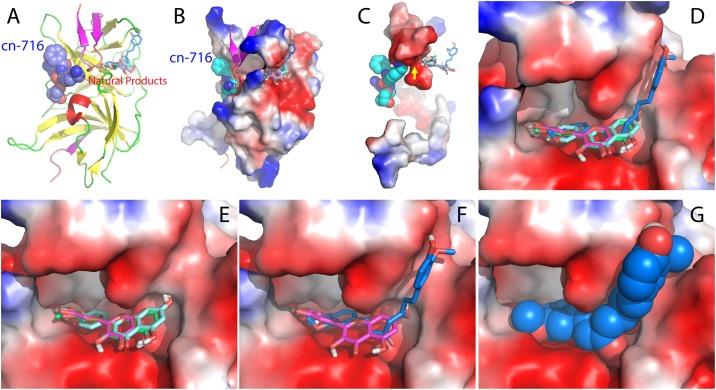
The recent Zika viral (ZIKV) epidemic has been associated with severe neurological pathologies such as neonatal microcephaly and Guillain-Barre syndrome but unfortunately no vaccine or medication is effectively available yet. Zika NS2B-NS3pro is essential for the proteolysis of the viral polyprotein and thereby viral replication. Thus NS2B-NS3pro represents an attractive target for anti-Zika drug discovery/design. Here, we have characterized the solution conformations and catalytic parameters of both linked and unlinked Zika NS2B-NS3pro complexes and found that the unlinked complex manifested well-dispersed NMR spectra. Subsequently with selective isotope-labeling using NMR spectroscopy, we demonstrated that C-terminal residues (R73-K100) of NS2B is highly disordered without any stable tertiary and secondary structures in the Zika NS2B-NS3pro complex in the free state. Upon binding to the well-characterized serine protease inhibitor, bovine pancreatic trypsin inhibitor (BPTI), only the extreme C-terminal residues (L86-K100) remain disordered. Additionally, we have identified five flavonoids and one natural phenol rich in edible plants including fruits and vegetables, which inhibit Zika NS2B-NS3pro in a non-competitive mode, with Ki ranging from 770 nM for Myricetin to 34.02 μM for Apigenin. Molecular docking showed that they all bind to a pocket on the back of the active site and their structure-activity relationship was elucidated. Our study provides valuable insights into the solution conformation of Zika NS2B-NS3pro and further deciphers its susceptibility towards allosteric inhibition by natural products. As these natural product inhibitors fundamentally differ from the currently-known active site inhibitors in terms of both inhibitory mode and chemical scaffold, our finding might open a new avenue for development of better allosteric inhibitors to fight ZIKV infection.
近期的寨卡病毒(ZIKV)疫情与严重的神经病理学病症相关,如新生儿小头畸形和吉兰-巴雷综合征,但不幸的是,目前尚无有效的疫苗或药物。寨卡病毒NS2B-NS3蛋白酶(NS2B-NS3pro)对于病毒多聚蛋白的蛋白水解以及病毒复制至关重要。因此,NS2B-NS3pro是抗寨卡病毒药物研发的一个有吸引力的靶点。在此,我们对连接型和非连接型寨卡病毒NS2B-NS3pro复合物的溶液构象和催化参数进行了表征,发现非连接型复合物呈现出分散良好的核磁共振谱。随后,通过核磁共振光谱的选择性同位素标记,我们证明在游离状态下,寨卡病毒NS2B-NS3pro复合物中NS2B的C末端残基(R73-K100)高度无序,没有任何稳定的三级和二级结构。在与特征明确的丝氨酸蛋白酶抑制剂牛胰蛋白酶抑制剂(BPTI)结合后,只有最末端的C末端残基(L86-K100)仍保持无序状态。此外,我们鉴定出了五种黄酮类化合物和一种富含于包括水果和蔬菜在内的可食用植物中的天然酚类物质,它们以非竞争性模式抑制寨卡病毒NS2B-NS3pro,抑制常数(Ki)范围从杨梅素的770 nM到芹菜素的34.02 μM。分子对接显示它们都结合在活性位点背面的一个口袋中,并阐明了它们的构效关系。我们的研究为寨卡病毒NS2B-NS3pro的溶液构象提供了有价值的见解,并进一步解读了其对天然产物变构抑制的敏感性。由于这些天然产物抑制剂在抑制模式和化学支架方面与目前已知的活性位点抑制剂有根本不同,我们的发现可能为开发更好的变构抑制剂以对抗寨卡病毒感染开辟一条新途径。


 Zotero 插件