
嵌合抗原受体修饰 T 细胞治疗 HER2 阳性晚期胆道癌和胰腺癌的 I 期研究。
Phase I study of chimeric antigen receptor modified T cells in treating HER2-positive advanced biliary tract cancers and pancreatic cancers.
机构信息
Department of Bio-therapeutic, Chinese PLA General Hospital, Beijing, 100853, China.
Department of Geriatric Hematology, Chinese PLA General Hospital, Beijing, 100853, China.
出版信息
Protein Cell. 2018 Oct;9(10):838-847. doi: 10.1007/s13238-017-0440-4. Epub 2017 Jul 14.
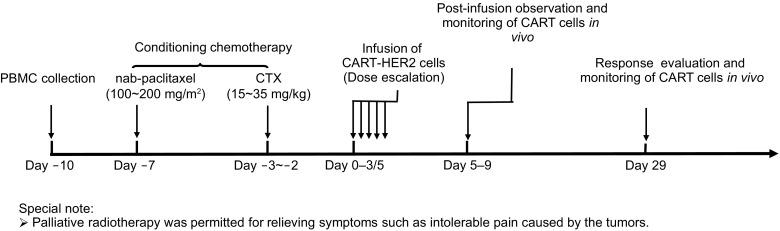
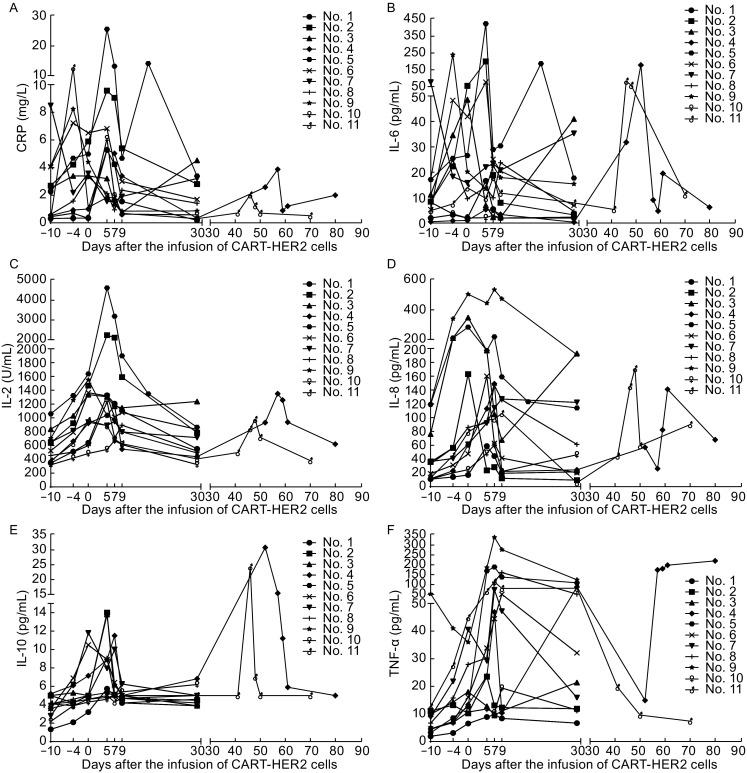
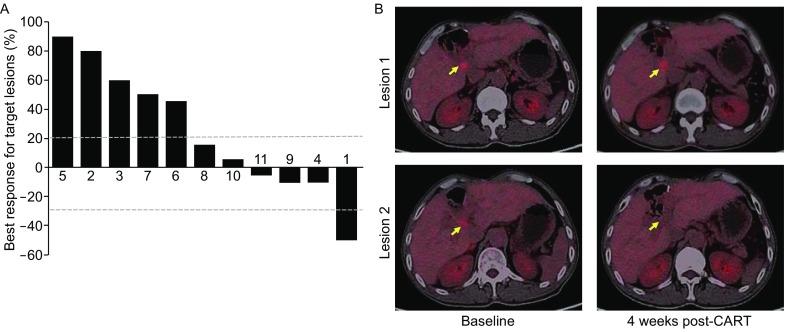
This phase I clinical trial (NCT01935843) is to evaluate the safety, feasibility, and activity of chimeric antigen receptor-engineered T cell (CART) immunotherapy targeting human epidermal growth factor receptor 2 (HER2) in patients with advanced biliary tract cancers (BTCs) and pancreatic cancers (PCs). Eligible patients with HER2-positive (>50%) BTCs and PCs were enrolled in the trial. Well cultured CART-HER2 cells were infused following the conditioning treatment composed of nab-paclitaxel (100-200 mg/m) and cyclophosphamide (15-35 mg/kg). CAR transgene copy number in the peripheral blood was serially measured to monitor the expansion and persistence of CART-HER2 cells in vivo. Eleven enrolled patients received 1 to 2-cycle CART-HER2 cell infusion (median CAR T cell 2.1 × 10/kg). The conditioning treatment resulted in mild-to-moderate fatigue, nausea/vomiting, myalgia/arthralgia, and lymphopenia. Except one grade-3 acute febrile syndrome and one abnormal elevation of transaminase (>9 ULN), adverse events related to the infusion of CART-HER2 cells were mild-to-moderate. Post-infusion toxicities included one case of reversible severe upper gastrointestinal hemorrhage which occurred in a patient with gastric antrum invaded by metastasis 11 days after the CART-HER2 cell infusion, and 2 cases of grade 1-2 delayed fever, accompanied by the release of C-reactive protein and interleukin-6. All patients were evaluable for assessment of clinical response, among which 1 obtained a 4.5-months partial response and 5 achieved stable disease. The median progression free survival was 4.8 months (range, 1.5-8.3 months). Finally, data from this study demonstrated the safety and feasibility of CART-HER2 immunotherapy, and showed encouraging signals of clinical activity.
这项 I 期临床试验(NCT01935843)旨在评估针对表皮生长因子受体 2(HER2)的嵌合抗原受体工程 T 细胞(CART)免疫疗法在晚期胆道癌(BTC)和胰腺导管腺癌(PC)患者中的安全性、可行性和活性。符合条件的 HER2 阳性(>50%)BTC 和 PC 患者入组本试验。在由纳武利尤单抗(100-200mg/m)和环磷酰胺(15-35mg/kg)组成的预处理治疗后输注经充分培养的 CART-HER2 细胞。连续测量外周血中的 CAR 转导基因拷贝数,以监测体内 CART-HER2 细胞的扩增和持续存在。11 名入组患者接受了 1 至 2 个周期的 CART-HER2 细胞输注(中位 CAR T 细胞 2.1×10/kg)。预处理治疗导致轻度至中度疲劳、恶心/呕吐、肌痛/关节痛和淋巴细胞减少。除了 1 例 3 级急性发热综合征和 1 例转氨酶异常升高(>9ULN)外,与输注 CART-HER2 细胞相关的不良事件为轻度至中度。输注后毒性包括 1 例可逆转的严重上消化道出血,发生在接受 CART-HER2 细胞输注 11 天后胃窦部受转移侵犯的患者中,以及 2 例 1-2 级迟发性发热,伴有 C-反应蛋白和白细胞介素-6 的释放。所有患者均可评估临床反应,其中 1 例获得 4.5 个月的部分缓解,5 例获得疾病稳定。中位无进展生存期为 4.8 个月(范围 1.5-8.3 个月)。最后,该研究的数据表明 CART-HER2 免疫疗法具有安全性和可行性,并显示出令人鼓舞的临床活性信号。

 Zotero 插件