
基于模型的晚期左旋多巴治疗帕金森病患者饮食优化
Model-based dietary optimization for late-stage, levodopa-treated, Parkinson's disease patients.
作者信息
Guebila Marouen Ben, Thiele Ines
机构信息
Molecular Systems Physiology, Luxembourg Centre for Systems Biomedicine, University of Luxembourg, Esch-sur-Alzette, Luxembourg.
出版信息
NPJ Syst Biol Appl. 2016 Jun 16;2:16013. doi: 10.1038/npjsba.2016.13. eCollection 2016.
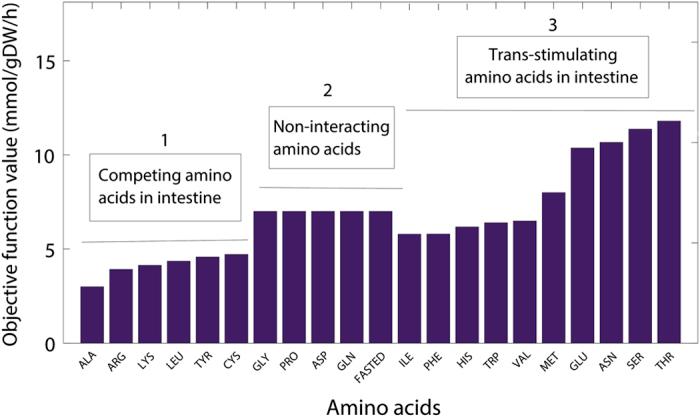
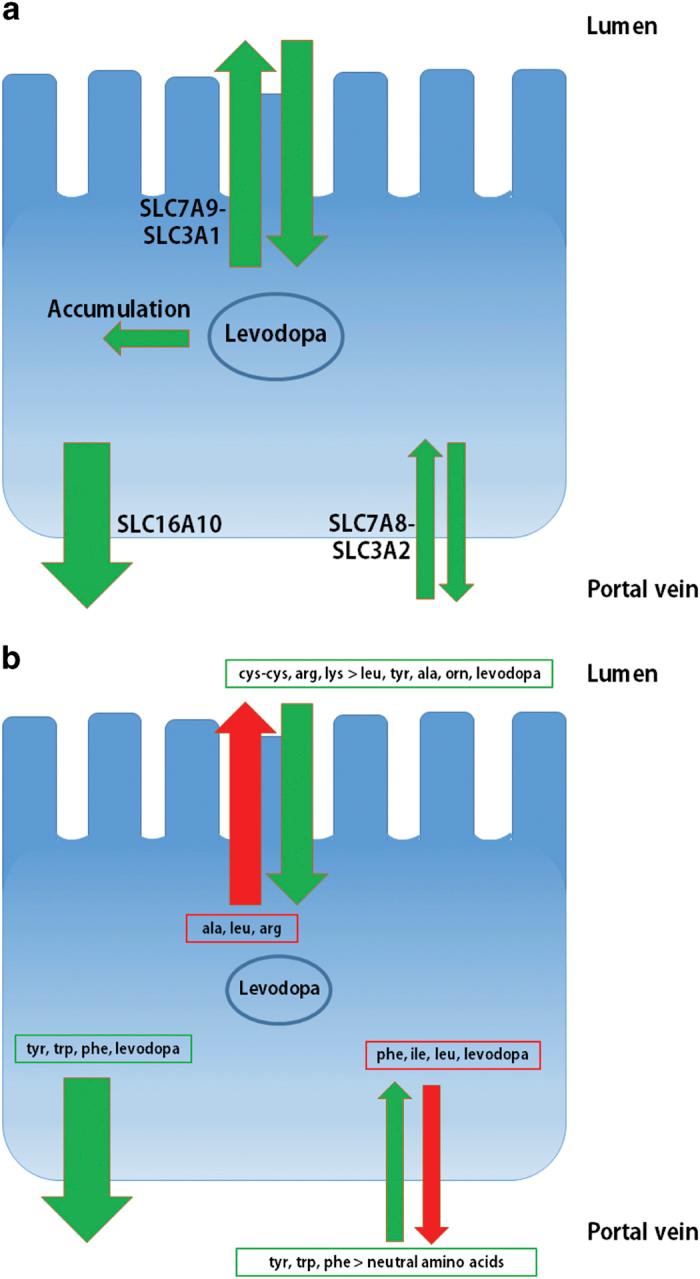
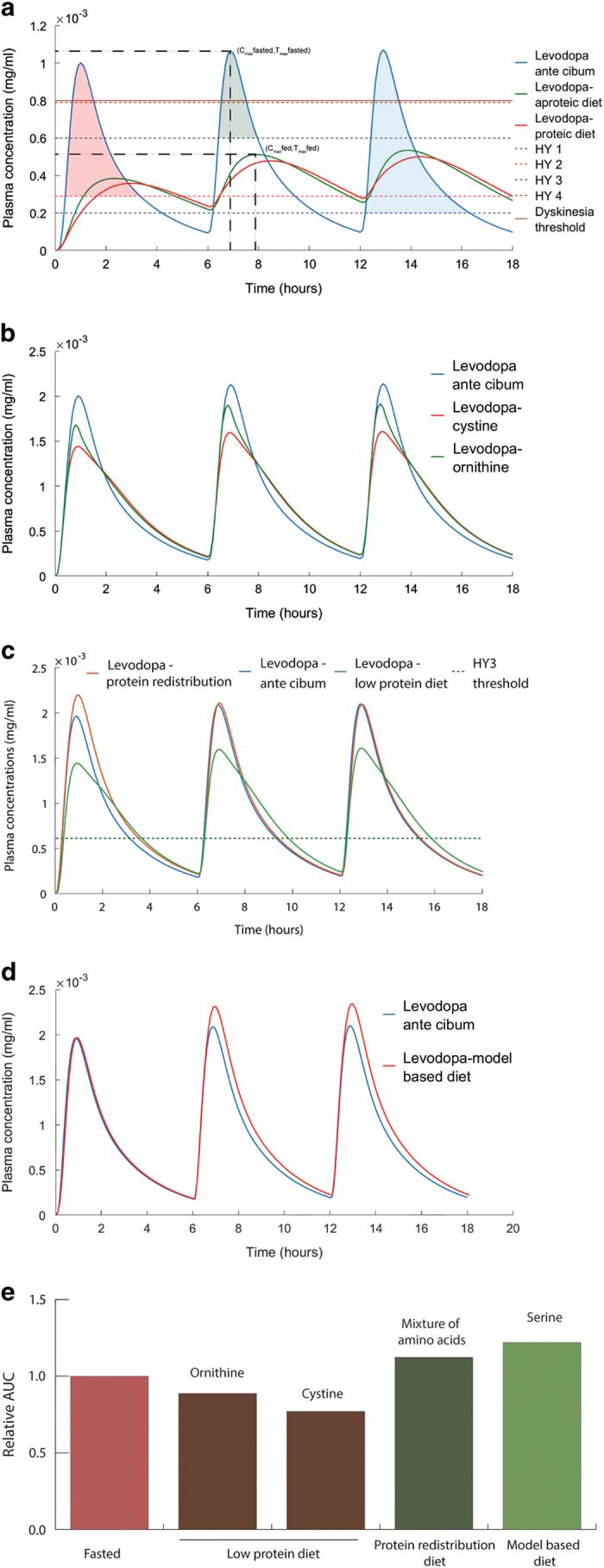
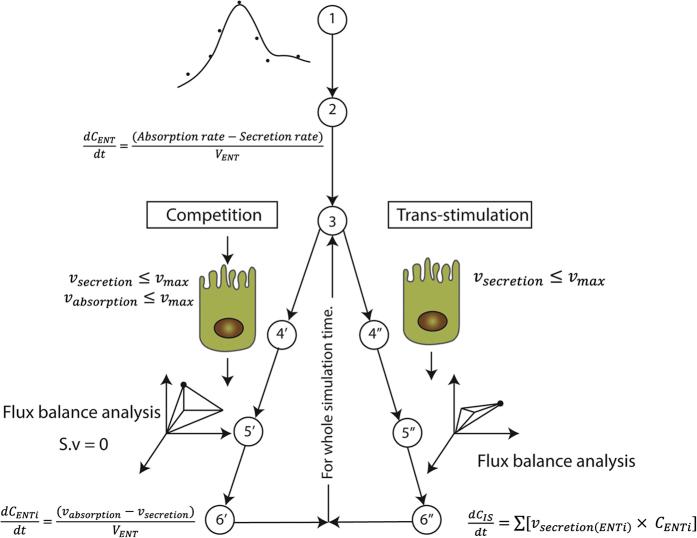
Levodopa has been the gold standard for Parkinson's disease treatment for more than 40 years. Its bioavailability is hindered by dietary amino acids, leading to fluctuations in the motor response particularly in late-stage (stage 3 and 4 on Hoehn and Yahr scale) patients. The routine dietary intervention consists of low-protein (<0.8 g/kg) diets or the redistribution of daily protein allowance to the last meal. Computational modeling was used to examine the fluctuation of gastrointestinal levodopa absorption under consideration of the diet by (i) identifying the group of patients that could benefit from dietary interventions, (ii) comparing existing diet recommendations for their impact on levodopa bioavailability, and (iii) suggesting a mechanism-based dietary intervention. We developed a multiscale computational model consisting of an ordinary differential equations-based advanced compartmentalized absorption and transit (ACAT) gut model and metabolic genome-scale small intestine epithelial cell model. We used this model to investigate complex spatiotemporal relationship between dietary amino acids and levodopa absorption. Our model predicted an improvement in bioavailability, as reflected by blood concentrations of levodopa with protein redistribution diet by 34% compared with a low-protein diet and by 11% compared with the ante cibum (a.c.) administration. These results are consistent with the reported better outcome in late-stage patients. A systematic analysis of the effect of different amino acids in the diet suggested that a serine-rich diet could improve the bioavailability by 22% compared with the a.c. administration. In addition, the slower gastric emptying rate in PD patients exacerbates the loss of levodopa due to competition. Optimizing dietary recommendations in quantity, composition, and intake time holds the promise to improve levodopa efficiency and patient's quality of life based on highly detailed, mechanistic models of gut physiology endowed with improved extrapolative properties, thus paving the way for precision medical treatment.
四十多年来,左旋多巴一直是治疗帕金森病的金标准。其生物利用度受到膳食氨基酸的阻碍,导致运动反应波动,尤其是在晚期(Hoehn和Yahr分级的3期和4期)患者中。常规的饮食干预包括低蛋白(<0.8 g/kg)饮食或将每日蛋白质摄入量重新分配到最后一餐。通过计算建模来研究考虑饮食因素时胃肠道左旋多巴吸收的波动情况,具体包括:(i)确定可从饮食干预中受益的患者群体;(ii)比较现有饮食建议对左旋多巴生物利用度的影响;(iii)提出基于机制的饮食干预措施。我们开发了一个多尺度计算模型,该模型由基于常微分方程、先进的多室吸收与转运(ACAT)肠道模型和代谢基因组规模的小肠上皮细胞模型组成。我们使用这个模型来研究膳食氨基酸与左旋多巴吸收之间复杂的时空关系。我们的模型预测,与低蛋白饮食相比,蛋白质重新分配饮食使左旋多巴血药浓度所反映的生物利用度提高了34%,与空腹给药相比提高了11%。这些结果与报道的晚期患者更好的治疗效果一致。对饮食中不同氨基酸作用的系统分析表明,与空腹给药相比,富含丝氨酸的饮食可使生物利用度提高22%。此外,帕金森病患者较慢的胃排空率因竞争加剧了左旋多巴的损失。基于具有改进外推特性的高度详细的肠道生理机制模型,在数量、组成和摄入时间方面优化饮食建议有望提高左旋多巴疗效和患者生活质量,从而为精准医疗铺平道路。

 Zotero 插件