
一种用于检测猫的积液和血清/血浆中猫冠状病毒突变以诊断猫传染性腹膜炎的实时逆转录聚合酶链反应的敏感性和特异性。
Sensitivity and specificity of a real-time reverse transcriptase polymerase chain reaction detecting feline coronavirus mutations in effusion and serum/plasma of cats to diagnose feline infectious peritonitis.
作者信息
Felten Sandra, Leutenegger Christian M, Balzer Hans-Joerg, Pantchev Nikola, Matiasek Kaspar, Wess Gerhard, Egberink Herman, Hartmann Katrin
机构信息
Clinic of Small Animal Medicine, Centre for Clinical Veterinary Medicine, Ludwig-Maximilians-Universitaet Munich, Veterinaerstr. 13, 80539, Munich, Germany.
IDEXX Laboratories, Inc., 2825 KOVR Drive, West Sacramento, USA.
出版信息
BMC Vet Res. 2017 Aug 2;13(1):228. doi: 10.1186/s12917-017-1147-8.
BACKGROUND
Feline coronavirus (FCoV) exists as two pathotypes, and FCoV spike gene mutations are considered responsible for the pathotypic switch in feline infectious peritonitis (FIP) pathogenesis. The aim of this study was to evaluate sensitivity and specificity of a real-time reverse transcriptase polymerase chain reaction (RT-PCR) specifically designed to detect FCoV spike gene mutations at two nucleotide positions. It was hypothesized that this test would correctly discriminate feline infectious peritonitis virus (FIPV) and feline enteric coronavirus (FECV).
METHODS
The study included 63 cats with signs consistent with FIP. FIP was confirmed in 38 cats. Twenty-five control cats were definitively diagnosed with a disease other than FIP. Effusion and/or serum/plasma samples were examined by real-time RT-PCR targeting the two FCoV spike gene fusion peptide mutations M1058 L and S1060A using an allelic discrimination approach. Sensitivity, specificity, negative and positive predictive values including 95% confidence intervals (95% CI) were calculated.
RESULTS
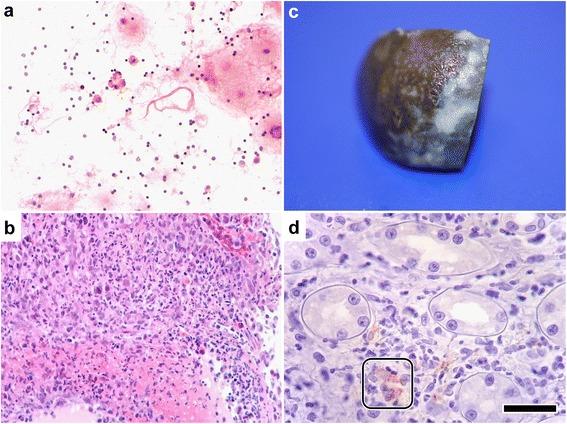
FIPV was detected in the effusion of 25/59 cats, one of them being a control cat with chronic kidney disease. A mixed population of FIPV/FECV was detected in the effusion of 2/59 cats; all of them had FIP. RT-PCR was negative or the pathotype could not be determined in 34/59 effusion samples. In effusion, sensitivity was 68.6% (95% CI 50.7-83.2), specificity was 95.8% (95% CI 78.9-99.9). No serum/plasma samples were positive for FIPV.
CONCLUSIONS
Although specificity of the test in effusions was high, one false positive result occurred. The use of serum/plasma cannot be recommended due to a low viral load in blood.
背景
猫冠状病毒(FCoV)以两种致病型存在,FCoV刺突基因突变被认为是猫传染性腹膜炎(FIP)发病机制中致病型转换的原因。本研究的目的是评估专门设计用于检测FCoV刺突基因两个核苷酸位置突变的实时逆转录聚合酶链反应(RT-PCR)的敏感性和特异性。假设该检测能正确区分猫传染性腹膜炎病毒(FIPV)和猫肠道冠状病毒(FECV)。
方法
该研究纳入了63只出现与FIP相符症状的猫。38只猫被确诊为FIP。25只对照猫被明确诊断为除FIP以外的其他疾病。采用等位基因鉴别法,通过针对两个FCoV刺突基因融合肽突变M1058L和S1060A的实时RT-PCR检测积液和/或血清/血浆样本。计算敏感性、特异性、阴性和阳性预测值,包括95%置信区间(95%CI)。
结果
在59只猫中的25只猫的积液中检测到FIPV,其中一只为患有慢性肾病的对照猫。在59只猫中的2只猫的积液中检测到FIPV/FECV混合群体;它们均患有FIP。在59份积液样本中,34份RT-PCR结果为阴性或无法确定致病型。在积液中,敏感性为68.6%(95%CI 50.7 - 83.2),特异性为95.8%(95%CI 78.9 - 99.9)。没有血清/血浆样本FIPV呈阳性。
结论
尽管该检测在积液中的特异性较高,但出现了一例假阳性结果。由于血液中病毒载量较低,不建议使用血清/血浆进行检测。
 Zotero 插件