
采用干拌制造工艺研究高炉矿渣、天然黄麻纤维和丁苯胶乳对用于植物生长的多孔混凝土物理和力学性能的影响。
Effects on the Physical and Mechanical Properties of Porous Concrete for Plant Growth of Blast Furnace Slag, Natural Jute Fiber, and Styrene Butadiene Latex Using a Dry Mixing Manufacturing Process.
作者信息
Kim Hwang-Hee, Kim Chun-Soo, Jeon Ji-Hong, Park Chan-Gi
机构信息
Research institute of technology, Nature and Environment Co. Ltd., 116-28 Boheung 1-Gil, Kongju 325-33, Korea.
Department of Environmental Engineering, Andong National University, 1375 Gyeongdong Street, Andong 760-749, Korea.
出版信息
Materials (Basel). 2016 Jan 29;9(2):84. doi: 10.3390/ma9020084.
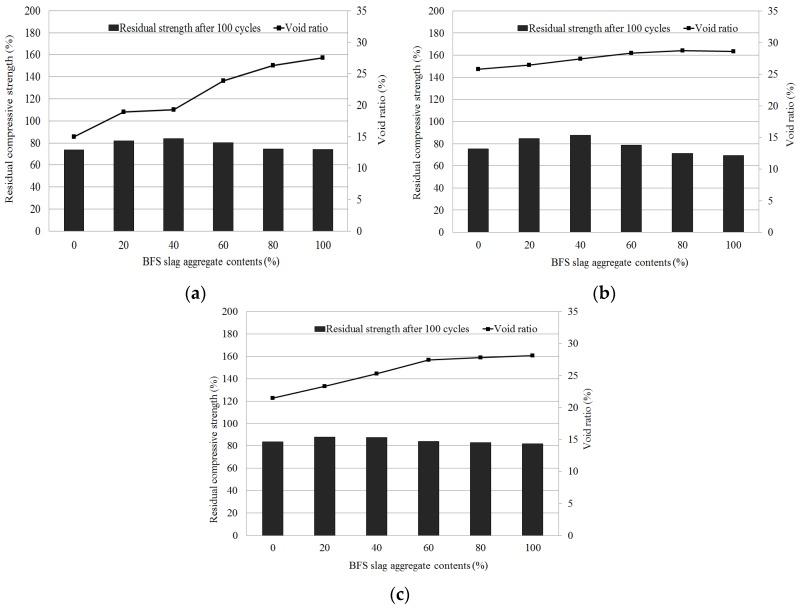
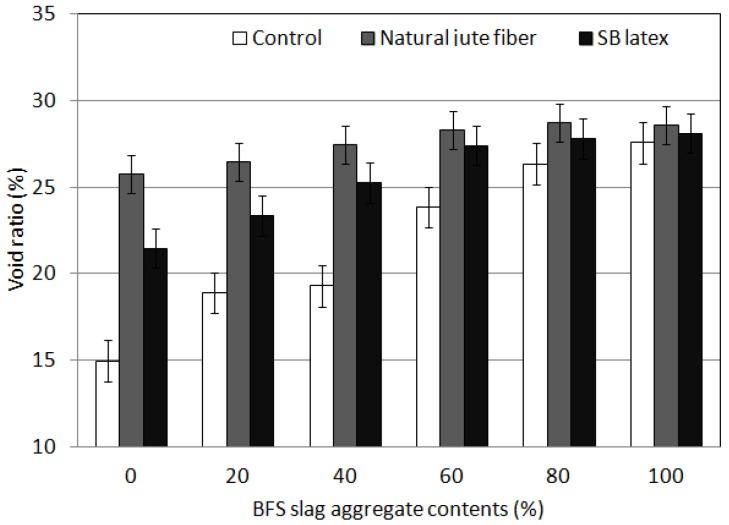
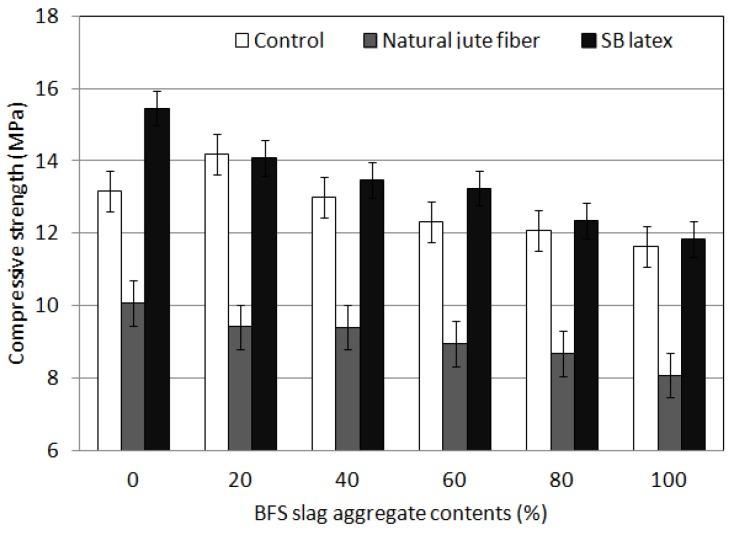
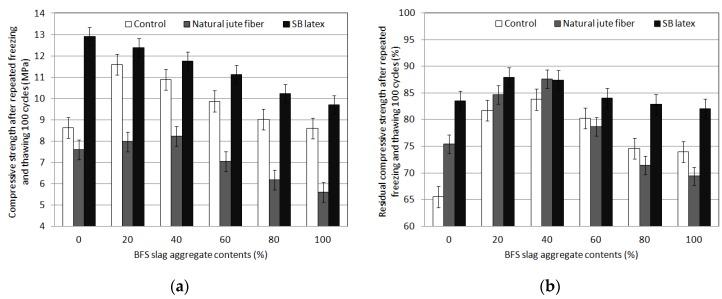
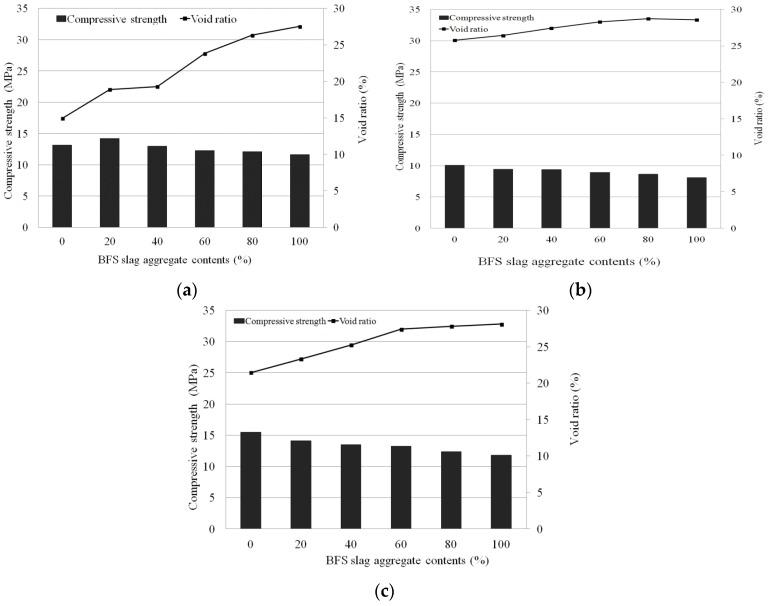
To evaluate the effects of industrial by-products materials on the performance of porous concrete for plant growth, this study investigated the physical, strength, and freeze/thaw resistances of porous concrete for plant growth, prepared by replacing cement with blast furnace slag powder at 60% by weight, and replacing natural stone aggregates with coarse blast furnace slag aggregates at rates of 0%, 20%, 40%, 60% and 100% by weight. In addition, the effects of adding natural jute fiber and styrene butadiene SB) latex to these concrete mixtures were evaluated. The void ratio, compressive strength, and freeze/thaw resistance of the samples were measured. With increasing replacement rate of blast furnace aggregates, addition of latex, and mixing of natural jute fiber the void ratio of the concrete was increased. Compressive strength decreased as the replacement rate of blast-furnace slag aggregates increased. The compressive strength decreased after 100 freeze/thaw cycles, regardless of the replacement rate of blast furnace slag aggregates or of the addition of natural jute fiber and latex. The addition of natural jute fiber and latex decreased the compressive strength after 100 freeze/thaw cycles. The test results indicate that the control mixture satisfied the target compressive strength of 10 MPa and the target void ratio of 25% at replacement rates of 0% and 20% for blast furnace aggregates, and that the mixtures containing latex satisfied the criteria up to an aggregate replacement rate of 60%. However, the mixtures containing natural jute fiber did not satisfy these criteria. The relationship between void ratio and residual compressive strength after 100 freeze/thaw cycles indicates that the control mixture and the mixtures containing jute fiber at aggregate replacement rates of 20% and 40% satisfied the target void ratio of 25% and the target residual compressive strength of over 80% after 100 freeze/thaw cycles. The mixtures containing latex and aggregate replacement rates up to 60% satisfied the target void ratio and compressive strength.
为评估工业副产品材料对用于植物生长的多孔混凝土性能的影响,本研究调查了通过用60%重量的高炉矿渣粉替代水泥,并以0%、20%、40%、60%和100%重量比用粗高炉矿渣骨料替代天然石材骨料制备的用于植物生长的多孔混凝土的物理性能、强度和抗冻融性。此外,还评估了向这些混凝土混合物中添加天然黄麻纤维和丁苯(SB)胶乳的影响。测量了样品的孔隙率、抗压强度和抗冻融性。随着高炉骨料替代率的增加、胶乳的添加以及天然黄麻纤维的混合,混凝土的孔隙率增加。抗压强度随着高炉矿渣骨料替代率的增加而降低。无论高炉矿渣骨料的替代率如何,也无论是否添加天然黄麻纤维和胶乳,经过100次冻融循环后抗压强度都会降低。添加天然黄麻纤维和胶乳会降低100次冻融循环后的抗压强度。试验结果表明,对于高炉骨料替代率为0%和20%的情况,对照混合物满足10 MPa的目标抗压强度和25%的目标孔隙率,而含有胶乳的混合物在骨料替代率达到60%时满足标准。然而,含有天然黄麻纤维的混合物不满足这些标准。100次冻融循环后孔隙率与残余抗压强度之间的关系表明,对照混合物以及骨料替代率为20%和40%且含有黄麻纤维的混合物满足25%的目标孔隙率和100次冻融循环后超过80%的目标残余抗压强度。含有胶乳且骨料替代率高达60%的混合物满足目标孔隙率和抗压强度。
 Zotero 插件