
染色体末端修复与基因组稳定性 于……中 (原文句子不完整,翻译可能不太准确,需结合完整内容进一步完善)
Chromosome End Repair and Genome Stability in .
作者信息
Calhoun Susannah F, Reed Jake, Alexander Noah, Mason Christopher E, Deitsch Kirk W, Kirkman Laura A
机构信息
Department of Microbiology and Immunology, Weill Medical College of Cornell University, New York, New York, USA.
Department of Physiology and Biophysics, Weill Medical College of Cornell University, New York, New York, USA.
出版信息
mBio. 2017 Aug 8;8(4):e00547-17. doi: 10.1128/mBio.00547-17.
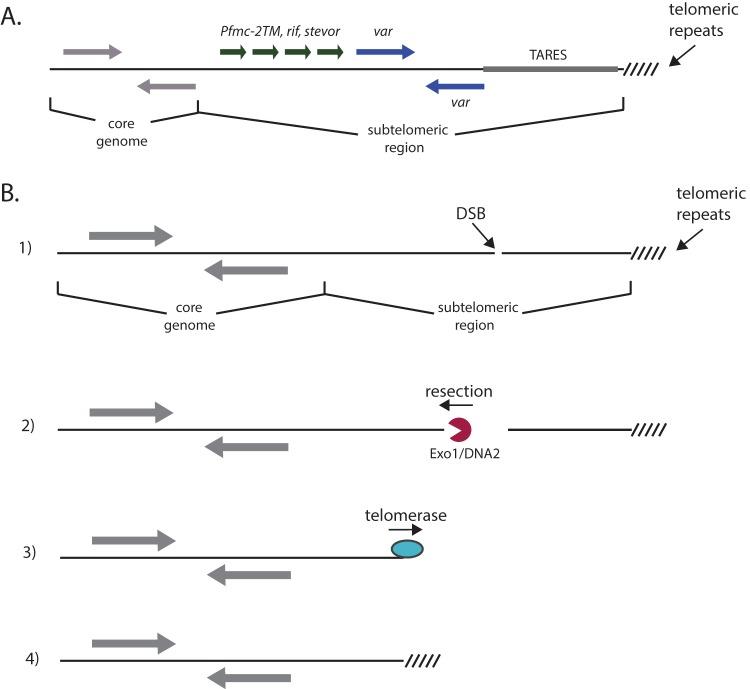
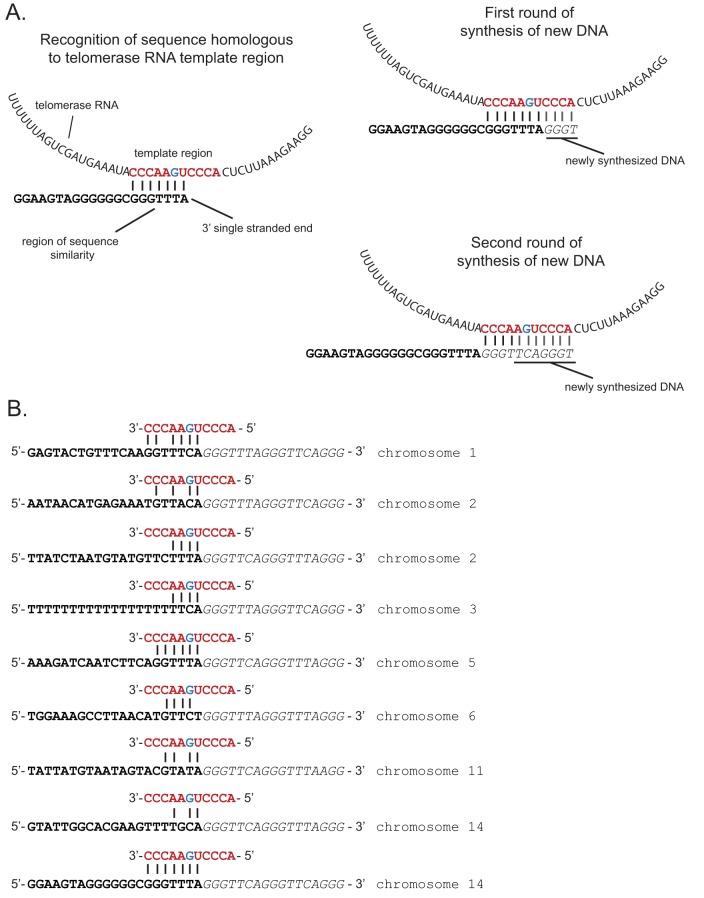
The human malaria parasite replicates within circulating red blood cells, where it is subjected to conditions that frequently cause DNA damage. The repair of DNA double-stranded breaks (DSBs) is thought to rely almost exclusively on homologous recombination (HR), due to a lack of efficient nonhomologous end joining. However, given that the parasite is haploid during this stage of its life cycle, the mechanisms involved in maintaining genome stability are poorly understood. Of particular interest are the subtelomeric regions of the chromosomes, which contain the majority of the multicopy variant antigen-encoding genes responsible for virulence and disease severity. Here, we show that parasites utilize a competitive balance between telomere addition, also called "telomere healing," and HR to stabilize chromosome ends. Products of both repair pathways were observed in response to DSBs that occurred spontaneously during routine culture or resulted from experimentally induced DSBs, demonstrating that both pathways are active in repairing DSBs within subtelomeric regions and that the pathway utilized was determined by the DNA sequences immediately surrounding the break. In combination, these two repair pathways enable parasites to efficiently maintain chromosome stability while also contributing to the generation of genetic diversity. Malaria is a major global health threat, causing approximately 430,000 deaths annually. This mosquito-transmitted disease is caused by parasites, with infection with the species being the most lethal. Mechanisms underlying DNA repair and maintenance of genome integrity in are not well understood and represent a gap in our understanding of how parasites survive the hostile environment of their vertebrate and insect hosts. Our work examines DNA repair in real time by using single-molecule real-time (SMRT) sequencing focused on the subtelomeric regions of the genome that harbor the multicopy gene families important for virulence and the maintenance of infection. We show that parasites utilize two competing molecular mechanisms to repair double-strand breaks, homologous recombination and telomere addition, with the pathway used being determined by the surrounding DNA sequence. In combination, these two pathways balance the need to maintain genome stability with the selective advantage of generating antigenic diversity.
人类疟原虫在循环红细胞内复制,在此过程中它会遭遇频繁导致DNA损伤的环境。由于缺乏高效的非同源末端连接,DNA双链断裂(DSB)的修复被认为几乎完全依赖同源重组(HR)。然而,鉴于疟原虫在其生命周期的这一阶段是单倍体,维持基因组稳定性的机制尚不清楚。特别令人感兴趣的是染色体的亚端粒区域,其中包含大多数负责毒力和疾病严重程度的多拷贝变异抗原编码基因。在这里,我们表明疟原虫利用端粒添加(也称为“端粒修复”)和HR之间的竞争平衡来稳定染色体末端。在常规培养过程中自发产生的DSB或实验诱导的DSB所产生的反应中,均观察到了两种修复途径的产物,这表明这两种途径在修复亚端粒区域内的DSB时均具有活性,并且所使用的途径由断裂处紧邻的DNA序列决定。这两种修复途径共同作用,使疟原虫能够有效地维持染色体稳定性,同时也有助于遗传多样性的产生。疟疾是全球主要的健康威胁,每年导致约43万人死亡。这种由蚊子传播的疾病是由疟原虫引起的,其中感染该物种最为致命。疟原虫中DNA修复和基因组完整性维持的潜在机制尚不清楚,这是我们在理解寄生虫如何在其脊椎动物和昆虫宿主的恶劣环境中生存方面的一个空白。我们的工作通过使用单分子实时(SMRT)测序实时检测基因组的亚端粒区域,该区域包含对毒力和感染维持重要的多拷贝基因家族。我们表明疟原虫利用两种相互竞争的分子机制来修复双链断裂,即同源重组和端粒添加,所使用的途径由周围的DNA序列决定。这两种途径共同作用,在维持基因组稳定性的需求与产生抗原多样性的选择优势之间取得平衡。




 Zotero 插件