
从皮肤和软组织及其他肠外感染中分离出的[具体内容未给出]的比较基因组学 。
Comparative Genomics of Isolated from Skin and Soft Tissue and Other Extraintestinal Infections.
作者信息
Ranjan Amit, Shaik Sabiha, Nandanwar Nishant, Hussain Arif, Tiwari Sumeet K, Semmler Torsten, Jadhav Savita, Wieler Lothar H, Alam Munirul, Colwell Rita R, Ahmed Niyaz
机构信息
Pathogen Biology Laboratory, Department of Biotechnology and Bioinformatics, University of Hyderabad, Gachibowli, Hyderabad, India.
Centre for Infection Medicine, Institute of Microbiology and Epizootics, Freie Universität Berlin, Berlin, Germany.
出版信息
mBio. 2017 Aug 15;8(4):e01070-17. doi: 10.1128/mBio.01070-17.
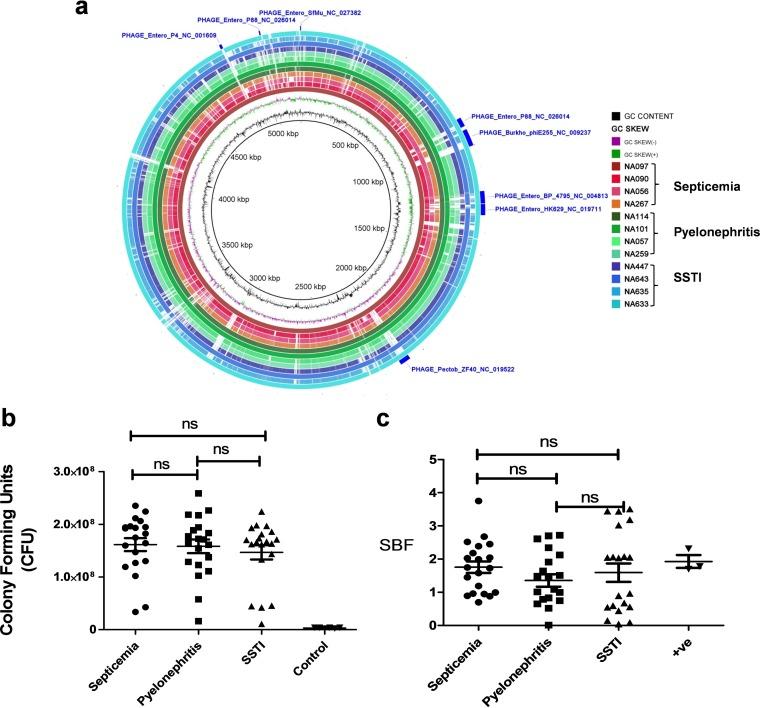
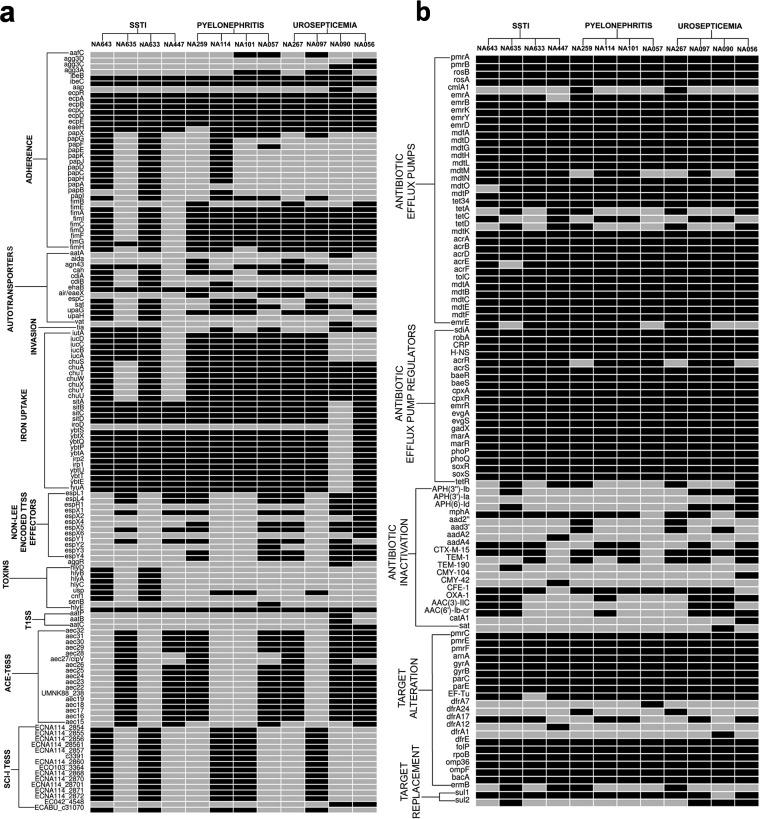
, an intestinal Gram-negative bacterium, has been shown to be associated with a variety of diseases in addition to intestinal infections, such as urinary tract infections (UTIs), meningitis in neonates, septicemia, skin and soft tissue infections (SSTIs), and colisepticemia. Thus, for nonintestinal infections, it is categorized as extraintestinal pathogenic (ExPEC). It is also an opportunistic pathogen, causing cross infections, notably as an agent of zoonotic diseases. However, comparative genomic data providing functional and genetic coordinates for ExPEC strains associated with these different types of infections have not proven conclusive. In the study reported here, ExPEC isolated from SSTIs was characterized, including virulence and drug resistance profiles, and compared with isolates from patients suffering either pyelonephritis or septicemia. Results revealed that the majority of the isolates belonged to two pathogenic phylogroups, B2 and D. Approximately 67% of the isolates were multidrug resistant (MDR), with 85% producing extended-spectrum beta-lactamase (ESBL) and 6% producing metallo-beta-lactamase (MBL). The genotype was observed in at least 70% of the isolates in each category, conferring resistance to an extended range of beta-lactam antibiotics. Whole-genome sequencing and comparative genomics of the ExPEC isolates revealed that two of the four isolates from SSTIs, NA633 and NA643, belong to pandemic sequence type ST131, whereas functional characteristics of three of the ExPEC pathotypes revealed that they had equal capabilities to form biofilm and were resistant to human serum. Overall, the isolates from a variety of ExPEC infections demonstrated similar resistomes and virulomes and did not display any disease-specific functional or genetic coordinates. Infections caused by extraintestinal pathogenic (ExPEC) are of global concern as they result in significant costs to health care facilities management. The recent emergence of a multidrug-resistant pandemic clone, ST131, is of primary concern as a global threat. In developing countries, such as India, skin and soft tissue infections (SSTIs) associated with are marginally addressed. In this study, we employed both genomic analysis and phenotypic assays to determine relationships, if any, among the ExPEC pathotypes. Similarity between antibiotic resistance and virulence profiles was observed, ST131 isolates from SSTIs were reported, and genomic similarities among strains isolated from different disease conditions were detected. This study provides functional molecular infection epidemiology insight into SSTI-associated compared with ExPEC pathotypes.
大肠埃希菌是一种肠道革兰氏阴性菌,除肠道感染外,还与多种疾病有关,如尿路感染(UTIs)、新生儿脑膜炎、败血症、皮肤和软组织感染(SSTIs)以及结肠败血症。因此,对于非肠道感染,它被归类为肠外致病性大肠埃希菌(ExPEC)。它也是一种机会致病菌,可引起交叉感染,尤其是作为人畜共患病的病原体。然而,为与这些不同类型感染相关的ExPEC菌株提供功能和基因坐标的比较基因组数据尚未得到确凿结论。在本文报道的研究中,对从SSTIs中分离出的ExPEC进行了表征,包括毒力和耐药谱,并与肾盂肾炎或败血症患者的分离株进行了比较。结果显示,大多数分离株属于两个致病菌群,B2和D。大约67%的分离株对多种药物耐药(MDR),85%产生超广谱β-内酰胺酶(ESBL),6%产生金属β-内酰胺酶(MBL)。在每个类别中至少70%的分离株中观察到该基因型,赋予对多种β-内酰胺抗生素的耐药性。ExPEC分离株的全基因组测序和比较基因组学表明,来自SSTIs的四个分离株中的两个,NA633和NA643,属于大流行序列型ST131,而三种ExPEC致病型的功能特征表明它们形成生物膜的能力相同且对人血清耐药。总体而言,来自各种ExPEC感染的分离株表现出相似的耐药组和毒力组,并且没有显示出任何疾病特异性的功能或基因坐标。肠外致病性大肠埃希菌(ExPEC)引起的感染是全球关注的问题,因为它们给医疗保健设施管理带来了巨大成本。最近出现的一种对多种药物耐药的大流行克隆株ST131,作为一种全球威胁,是首要关注对象。在印度等发展中国家,与ExPEC相关的皮肤和软组织感染(SSTIs)很少得到关注。在本研究中,我们采用基因组分析和表型测定来确定ExPEC致病型之间的关系(如果有的话)。观察到抗生素耐药性和毒力谱之间的相似性,报道了来自SSTIs的ST131分离株,并检测了从不同疾病状况分离出的菌株之间的基因组相似性。与ExPEC致病型相比,本研究为与SSTI相关的ExPEC提供了功能分子感染流行病学见解。
 Zotero 插件