
微生物烃类和营养物质在热液沉积物中的循环过程中潜在相互依存关系的基因组研究
Genomic insights into potential interdependencies in microbial hydrocarbon and nutrient cycling in hydrothermal sediments.
机构信息
Department of Marine Science, Marine Science Institute, University of Texas Austin, Port Aransas, TX, USA.
Department of Marine Sciences, University of North Carolina at Chapel Hill, Chapel Hill, NC, USA.
出版信息
Microbiome. 2017 Aug 23;5(1):106. doi: 10.1186/s40168-017-0322-2.
BACKGROUND
Deep-sea hydrothermal vents are hotspots for productivity and biodiversity. Thermal pyrolysis and circulation produce fluids rich in hydrocarbons and reduced compounds that stimulate microbial activity in surrounding sediments. Several studies have characterized the diversity of Guaymas Basin (Gulf of California) sediment-inhabiting microorganisms; however, many of the identified taxa lack cultures or genomic representations. Here, we resolved the metabolic potential and community-level interactions of these diverse communities by reconstructing and analyzing microbial genomes from metagenomic sequencing data.
RESULTS
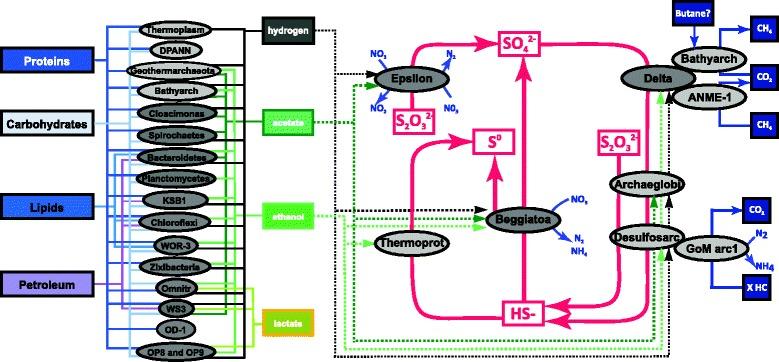
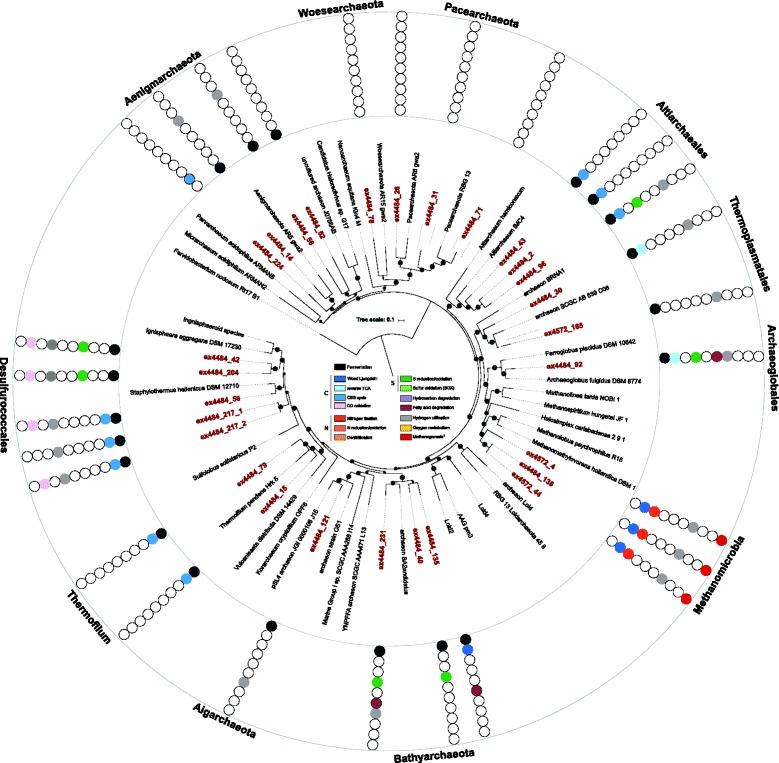
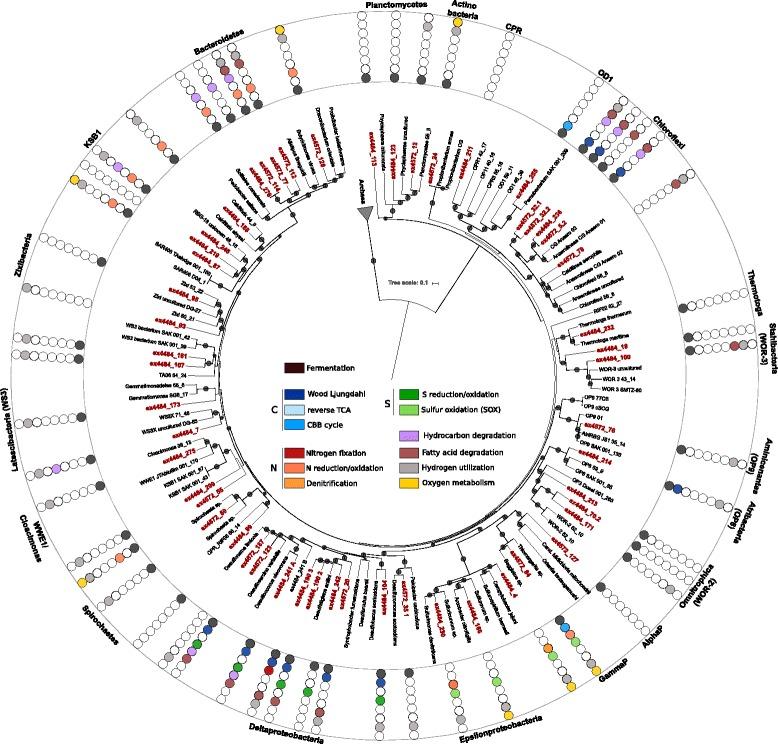
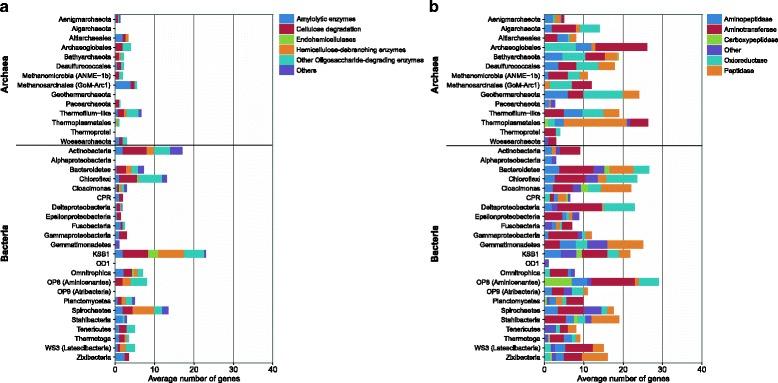
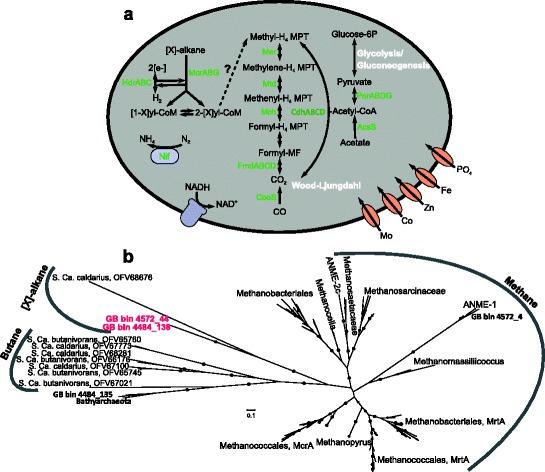
We reconstructed 115 microbial metagenome-assembled genomes comprising 27 distinct archaeal and bacterial phyla. The archaea included members of the DPANN and TACK superphyla, Bathyarchaeota, novel Methanosarcinales (GoM-Arc1), and anaerobic methane-oxidizing lineages (ANME-1). Among the bacterial phyla, members of the Bacteroidetes, Chloroflexi, and Deltaproteobacteria were metabolically versatile and harbored potential pathways for hydrocarbon and lipid degradation and a variety of respiratory processes. Genes encoding enzymes that activate anaerobic hydrocarbons for degradation were detected in Bacteroidetes, Chloroflexi, Latescibacteria, and KSB1 phyla, while the reconstructed genomes for most candidate bacteria phyla (Aminicenantes, Atribacteria, Omnitrophica, and Stahlbacteria) indicated a fermentative metabolism. Newly obtained GoM-Arc1 archaeal genomes encoded novel pathways for short-chain hydrocarbon oxidation by alkyl-coenzyme M formation. We propose metabolic linkages among different functional groups, such as fermentative community members sharing substrate-level interdependencies with sulfur- and nitrogen-cycling microbes.
CONCLUSIONS
Overall, inferring the physiologies of archaea and bacteria from metagenome-assembled genomes in hydrothermal deep-sea sediments has revealed potential mechanisms of carbon cycling in deep-sea sediments. Our results further suggest a network of biogeochemical interdependencies in organic matter utilization, hydrocarbon degradation, and respiratory sulfur cycling among deep-sea-inhabiting microbial communities.
背景
深海热液喷口是生产力和生物多样性的热点。热解和循环产生富含碳氢化合物和还原化合物的流体,刺激周围沉积物中的微生物活动。已有多项研究对加利福尼亚湾(Guaymas 盆地)沉积物中栖息的微生物多样性进行了描述;然而,许多已鉴定的分类群缺乏培养物或基因组代表。在这里,我们通过重建和分析宏基因组测序数据中的微生物基因组,解析了这些多样群落的代谢潜力和群落水平的相互作用。
结果
我们重建了 115 个微生物宏基因组组装基因组,包含 27 个不同的古菌和细菌门。古菌包括 DPANN 和 TACK 超门、Bathyarchaeota、新型 Methanosarcinales(GoM-Arc1)和厌氧甲烷氧化谱系(ANME-1)的成员。在细菌门中,Bacteroidetes、Chloroflexi 和 Deltaproteobacteria 成员具有代谢多样性,并具有烃类和脂质降解以及多种呼吸过程的潜在途径。在 Bacteroidetes、Chloroflexi、Latescibacteria 和 KSB1 门中检测到激活厌氧烃类降解的酶基因,而大多数候选细菌门(Aminicenantes、Atribacteria、Omnitrophica 和 Stahlbacteria)的重建基因组则表明存在发酵代谢。新获得的 GoM-Arc1 古菌基因组编码了通过烷基辅酶 M 形成短链烃类氧化的新途径。我们提出了不同功能群之间的代谢联系,例如发酵群落成员与硫和氮循环微生物共享底物水平的相互依存关系。
结论
总体而言,从热液深海沉积物的宏基因组组装基因组中推断古菌和细菌的生理特性,揭示了深海沉积物中碳循环的潜在机制。我们的研究结果进一步表明,在深海栖息的微生物群落中,存在有机物利用、烃类降解和呼吸硫循环之间的生物地球化学相互依存关系网络。

 Zotero 插件