
一种酵母发酵物通过调节肠道微生物群改善胃肠道不适和便秘:一项随机双盲安慰剂对照试验的结果
A yeast fermentate improves gastrointestinal discomfort and constipation by modulation of the gut microbiome: results from a randomized double-blind placebo-controlled pilot trial.
作者信息
Pinheiro Iris, Robinson Larry, Verhelst An, Marzorati Massimo, Winkens Björn, den Abbeele Pieter Van, Possemiers Sam
机构信息
ProDigest, Technologiepark 3, 9052, Ghent, Belgium.
Embria Health Sciences, 2105 SE Creekview Dr, Ankeny, IA, 50021, USA.
出版信息
BMC Complement Altern Med. 2017 Sep 4;17(1):441. doi: 10.1186/s12906-017-1948-0.
BACKGROUND
Constipation and symptoms of gastrointestinal discomfort such as bloating are common among otherwise healthy individuals, but with significant impact on quality of life. Despite the recognized contribution of the gut microbiome to this pathology, little is known about which group(s) of microorganism(s) are playing a role. A previous study performed in vitro suggests that EpiCor® fermentate has prebiotic-like properties, being able to favorably modulate the composition of the gut microbiome. Therefore, the aim of this study was to investigate the effects of EpiCor fermentate in a population with symptoms of gastrointestinal discomfort and reduced bowel movements and to evaluate its effect at the level of the gut microbiome.
METHODS
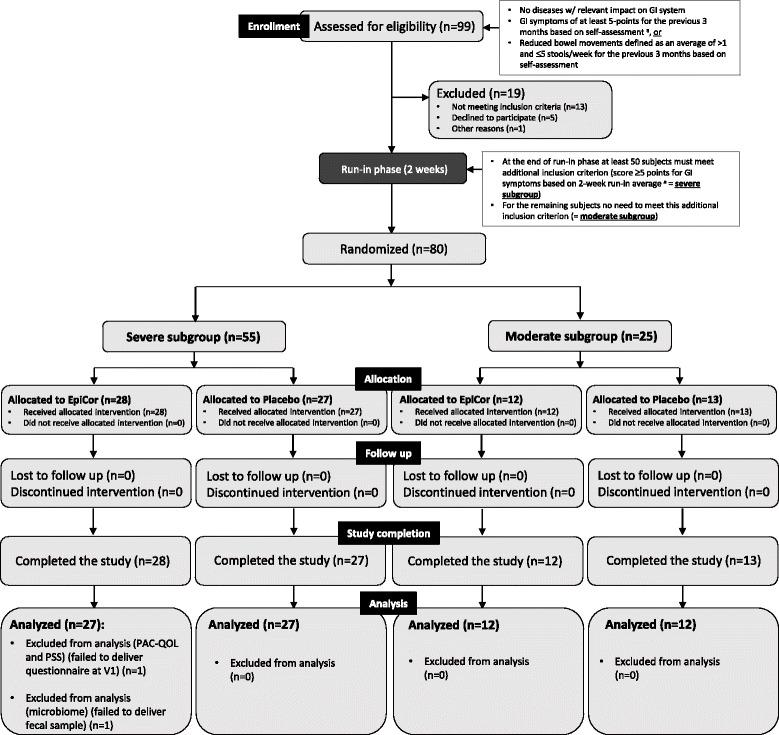
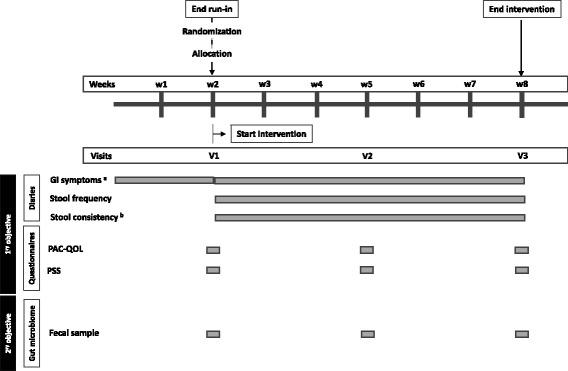
This pilot study was performed according to a randomized, double-blind, placebo-controlled parallel design. Eighty subjects with symptoms of gastrointestinal discomfort and constipation were allocated to one of two trial arms (placebo or EpiCor fermentate). Randomization was done in a stratified manner according to symptom severity, resulting in two subgroups of patients: severe and moderate. Daily records of gastrointestinal symptoms were assessed on a 5-point scale, and also stool frequency and consistency were documented during a 2-week run-in and a 6-week intervention phases. Averages over two-week intervals were calculated. Constipation-associated quality of life and general perceived stress were assessed at baseline and after 3 and 6 weeks of intervention. Fecal samples were also collected at these same time points.
RESULTS
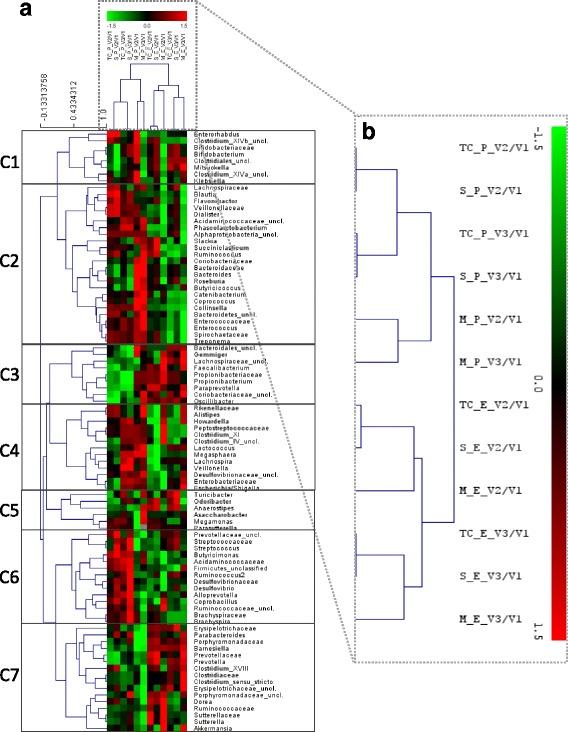
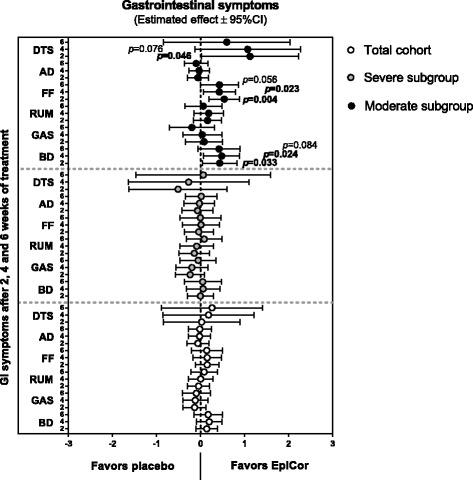
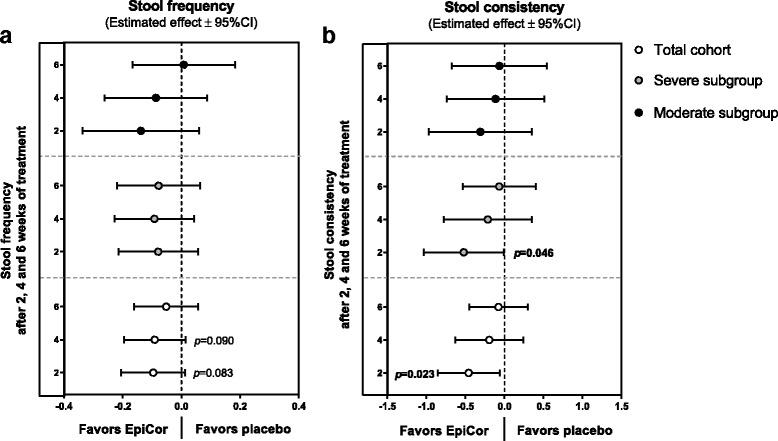
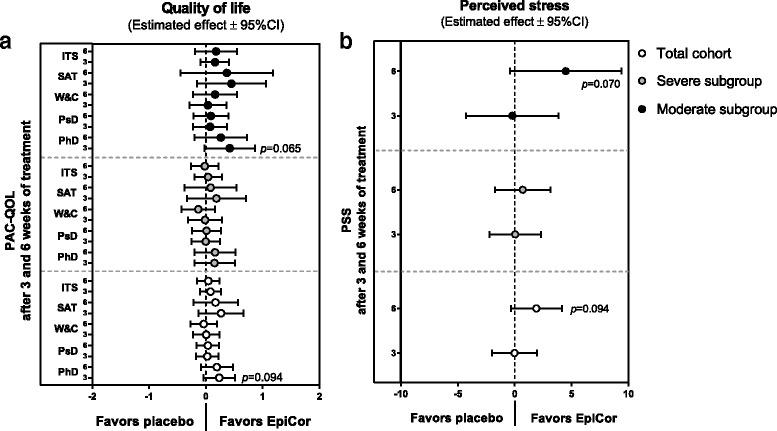
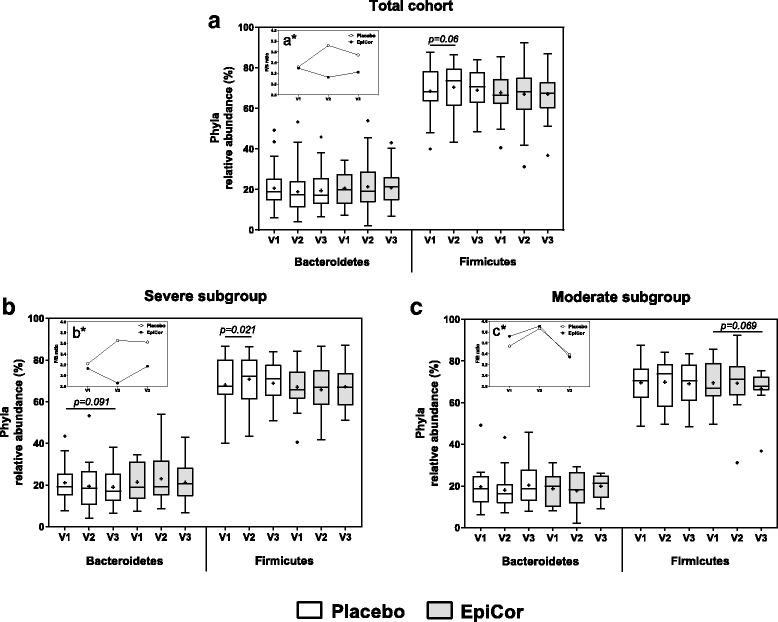
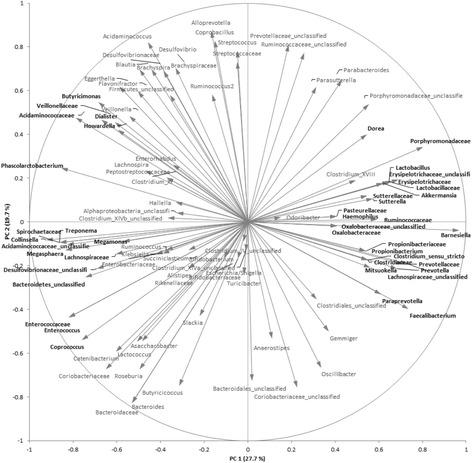
EpiCor fermentate led to a significant improvement of symptoms such as bloating/distension (p = 0.033 and p = 0.024 after 2 and 4 weeks of intervention, respectively), feeling of fullness (p = 0.004 and p = 0.023 after 2 and 4 weeks of intervention, respectively) and general daily scores (p = 0.046 after 2 weeks of intervention) in the moderate subgroup. A significant improvement in stool consistency was observed for the total population (p = 0.023 after 2 weeks of intervention) as well as for the severe subgroup (p = 0.046 after 2 weeks of intervention), and a nearly significant increase in stool frequency was detected for the total cohort (p = 0.083 and p = 0.090 after 2 and 4 weeks of intervention, respectively). These effects were accompanied by an improvement in constipation-associated quality of life and general perceived stress, particularly in the moderate subgroup. Members of the families Bacteroidaceae and Prevotellaceae, two groups of bacteria that have been previously reported to be deficient in constipated patients, were found to increase with EpiCor fermentate in the severe subgroup. In the moderate subgroup, a significant increase in Akkermansia muciniphila was observed.
CONCLUSIONS
Despite the relatively low dose administered (500 mg/day), particularly when comparing to the high recommended doses for prebiotic fibers, EpiCor fermentate was able to modulate the composition of the gut microbiome, resulting in improvement of constipation-associated symptoms. Conversely, the reported increase in bowel movements may have altered the gut microbial community by increasing those groups of bacteria that are better adapted to a faster gastrointestinal transit time.
TRIAL REGISTRATION
NCT03051399 at ClinicalTrials.gov. Retrospectively registered. Registration date: 13 February 2017.
背景
便秘以及腹胀等胃肠道不适症状在健康人群中很常见,但对生活质量有显著影响。尽管肠道微生物群对这种病理状况的作用已得到认可,但对于哪些微生物群体在其中发挥作用却知之甚少。此前一项体外研究表明,EpiCor®发酵物具有类似益生元的特性,能够有利地调节肠道微生物群的组成。因此,本研究的目的是调查EpiCor发酵物对有胃肠道不适症状且排便次数减少的人群的影响,并评估其在肠道微生物群水平上的作用。
方法
本初步研究采用随机、双盲、安慰剂对照平行设计。80名有胃肠道不适和便秘症状的受试者被分配到两个试验组之一(安慰剂组或EpiCor发酵物组)。根据症状严重程度进行分层随机分组,形成两个患者亚组:重度和中度。采用5分制对胃肠道症状进行每日记录,在为期2周的导入期和6周的干预期内记录大便频率和稠度。计算两周间隔的平均值。在基线以及干预3周和6周后评估与便秘相关的生活质量和一般感知压力。在相同时间点也采集粪便样本。
结果
EpiCor发酵物使中度亚组的腹胀/膨胀(干预2周和4周后p值分别为0.033和0.024)、饱腹感(干预2周和4周后p值分别为0.004和0.023)以及总体每日评分(干预2周后p值为0.046)等症状有显著改善。在总人群(干预2周后p值为0.023)以及重度亚组(干预2周后p值为0.046)中观察到大便稠度有显著改善,在整个队列中检测到大便频率有近乎显著的增加(干预2周和4周后p值分别为0.083和0.090)。这些效果伴随着与便秘相关的生活质量和一般感知压力的改善,尤其是在中度亚组中。在重度亚组中,先前报道在便秘患者中缺乏的拟杆菌科和普雷沃氏菌科细菌成员随着EpiCor发酵物而增加。在中度亚组中,观察到嗜黏蛋白阿克曼氏菌有显著增加。
结论
尽管给药剂量相对较低(500毫克/天),特别是与益生元纤维的高推荐剂量相比,EpiCor发酵物仍能够调节肠道微生物群的组成,从而改善与便秘相关的症状。相反,所报道的排便次数增加可能通过增加那些更适应更快胃肠道转运时间的细菌群体而改变了肠道微生物群落。
试验注册
ClinicalTrials.gov上的NCT03051399。回顾性注册。注册日期:2017年2月13日。

 Zotero 插件