
自然杀伤(NK)细胞有效杀伤小鼠多能干细胞需要细胞因子激活,且部分依赖于活化性NK受体NKG2D。
Efficient Killing of Murine Pluripotent Stem Cells by Natural Killer (NK) Cells Requires Activation by Cytokines and Partly Depends on the Activating NK Receptor NKG2D.
作者信息
Gröschel Carina, Hübscher Daniela, Nolte Jessica, Monecke Sebastian, Sasse André, Elsner Leslie, Paulus Walter, Trenkwalder Claudia, Polić Bojan, Mansouri Ahmed, Guan Kaomei, Dressel Ralf
机构信息
Institute of Cellular and Molecular Immunology, University Medical Center Göttingen, Göttingen, Germany.
DZHK (German Center for Cardiovascular Research), Göttingen, Germany.
出版信息
Front Immunol. 2017 Jul 26;8:870. doi: 10.3389/fimmu.2017.00870. eCollection 2017.
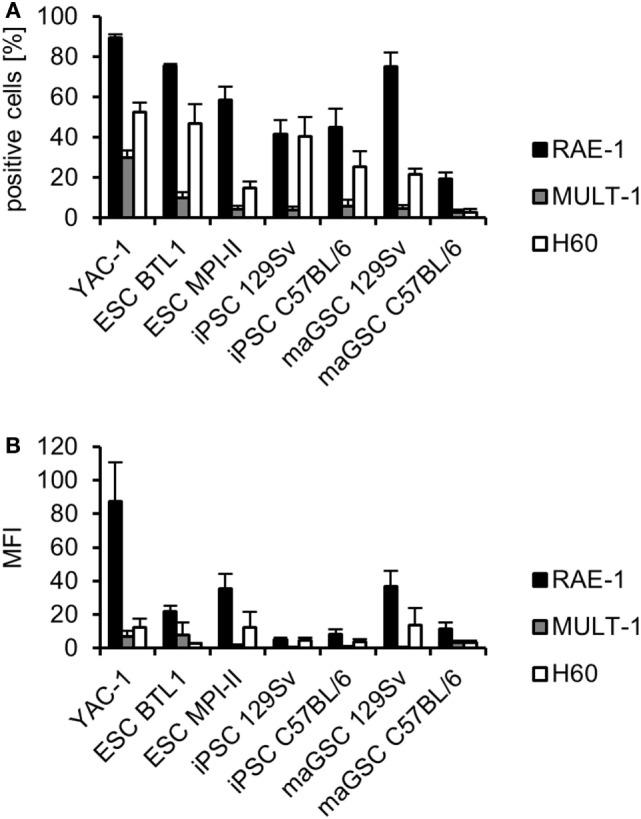
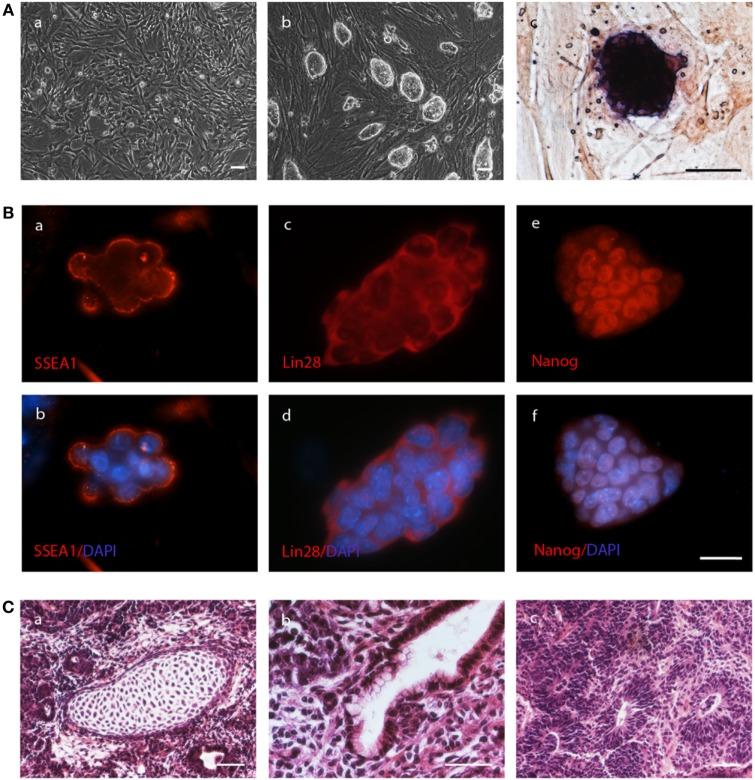
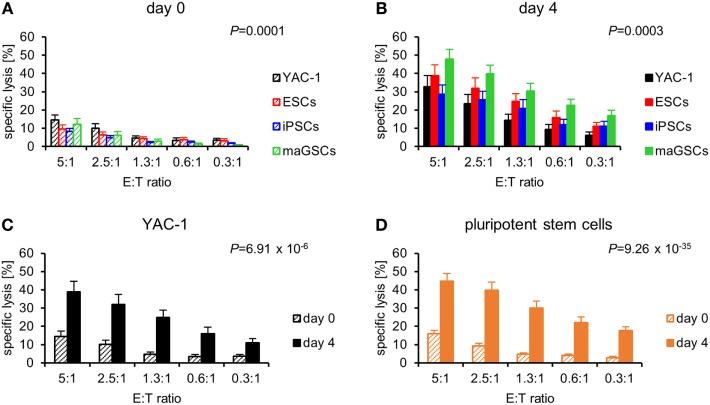
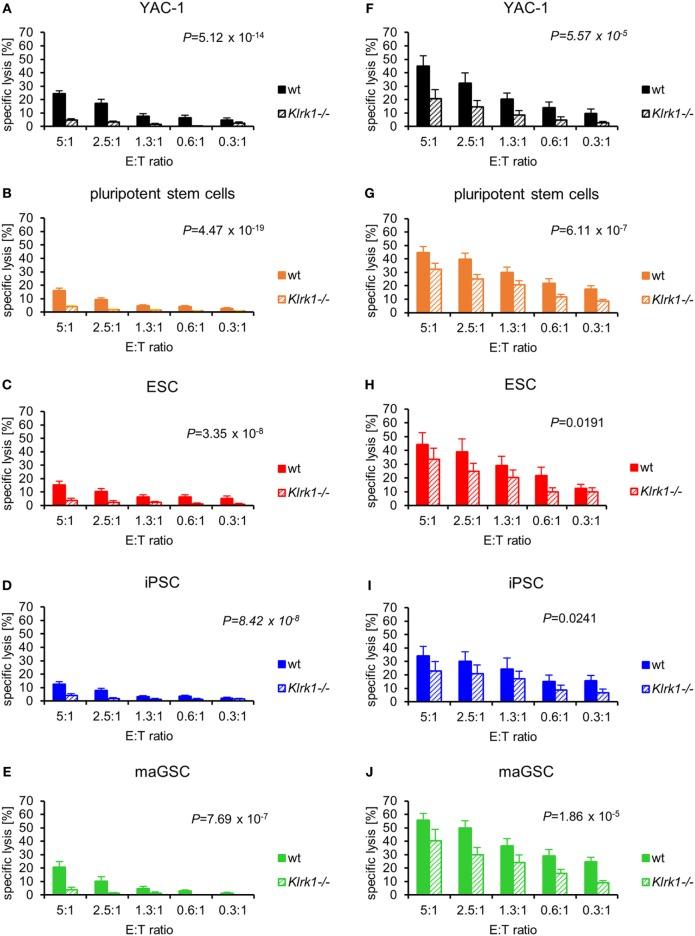
Natural killer (NK) cells play an important role as cytotoxic effector cells, which scan the organism for infected or tumorigenic cells. Conflicting data have been published whether NK cells can also kill allogeneic or even autologous pluripotent stem cells (PSCs) and which receptors are involved. A clarification of this question is relevant since an activity of NK cells against PSCs could reduce the risk of teratoma growth after transplantation of PSC-derived grafts. Therefore, the hypothesis has been tested that the activity of NK cells against PSCs depends on cytokine activation and specifically on the activating NK receptor NKG2D. It is shown that a subcutaneous injection of autologous iPSCs failed to activate NK cells against these iPSCs and can give rise to teratomas. In agreement with this result, several PSC lines, including two iPSC, two embryonic stem cell (ESC), and two so-called multipotent adult germline stem cell (maGSC) lines, were largely resistant against resting NK cells although differences in killing were found at low level. All PSC lines were killed by interleukin (IL)-2-activated NK cells, and maGSCs were better killed than the other PSC types. The PSCs expressed ligands of the activating NK receptor NKG2D and NKG2D-deficient NK cells from mice were impaired in their cytotoxic activity against PSCs. The low-cytotoxic activity of resting NK cells was almost completely dependent on NKG2D. The cytotoxic activity of IL-2-activated NKG2D-deficient NK cells against PSCs was reduced, indicating that also other activating receptors on cytokine-activated NK cells must be engaged by ligands on PSCs. Thus, NKG2D is an important activating receptor involved in killing of murine PSCs. However, NK cells need to be activated by cytokines before they efficiently target PSCs and then also other NK receptors become relevant. These features of NK cells might be relevant for transplantation of PSC-derived grafts since NK cells have the capability to kill undifferentiated cells, which might be present in grafts in trace amounts.
自然杀伤(NK)细胞作为细胞毒性效应细胞发挥着重要作用,其在机体中扫描感染或致瘤细胞。关于NK细胞是否也能杀伤同种异体甚至自体多能干细胞(PSC)以及涉及哪些受体,已有相互矛盾的数据发表。阐明这个问题很重要,因为NK细胞对PSC的活性可能会降低PSC来源移植物移植后畸胎瘤生长的风险。因此,人们检验了这样一个假设,即NK细胞对PSC的活性取决于细胞因子激活,特别是取决于激活型NK受体NKG2D。结果表明,皮下注射自体诱导多能干细胞(iPSC)未能激活NK细胞针对这些iPSC的活性,并且会引发畸胎瘤。与这一结果一致的是,几个PSC系,包括两个iPSC系、两个胚胎干细胞(ESC)系和两个所谓的多能成体生殖系干细胞(maGSC)系,对静息NK细胞大多具有抗性,尽管在低水平上发现了杀伤差异。所有PSC系均被白细胞介素(IL)-2激活的NK细胞杀伤,并且maGSC比其他PSC类型更容易被杀伤。PSC表达激活型NK受体NKG2D的配体,来自小鼠的NKG2D缺陷型NK细胞对PSC的细胞毒性活性受损。静息NK细胞的低细胞毒性活性几乎完全依赖于NKG2D。IL-2激活的NKG2D缺陷型NK细胞对PSC的细胞毒性活性降低,表明细胞因子激活的NK细胞上的其他激活受体也必须与PSC上的配体结合。因此,NKG2D是参与杀伤小鼠PSC的重要激活受体。然而,NK细胞在有效靶向PSC之前需要被细胞因子激活,然后其他NK受体也变得相关。NK细胞的这些特性可能与PSC来源移植物的移植有关,因为NK细胞有能力杀伤可能微量存在于移植物中的未分化细胞。

 Zotero 插件