
单个斑马鱼hars基因编码细胞质和线粒体组氨酰-tRNA合成酶。
A single Danio rerio hars gene encodes both cytoplasmic and mitochondrial histidyl-tRNA synthetases.
作者信息
Waldron Ashley L, Cahan Sara Helms, Francklyn Christopher S, Ebert Alicia M
机构信息
Department of Biology, University of Vermont, Burlington, VT, United States of America.
Department of Biochemistry, University of Vermont College of Medicine, Burlington, VT, United States of America.
出版信息
PLoS One. 2017 Sep 21;12(9):e0185317. doi: 10.1371/journal.pone.0185317. eCollection 2017.
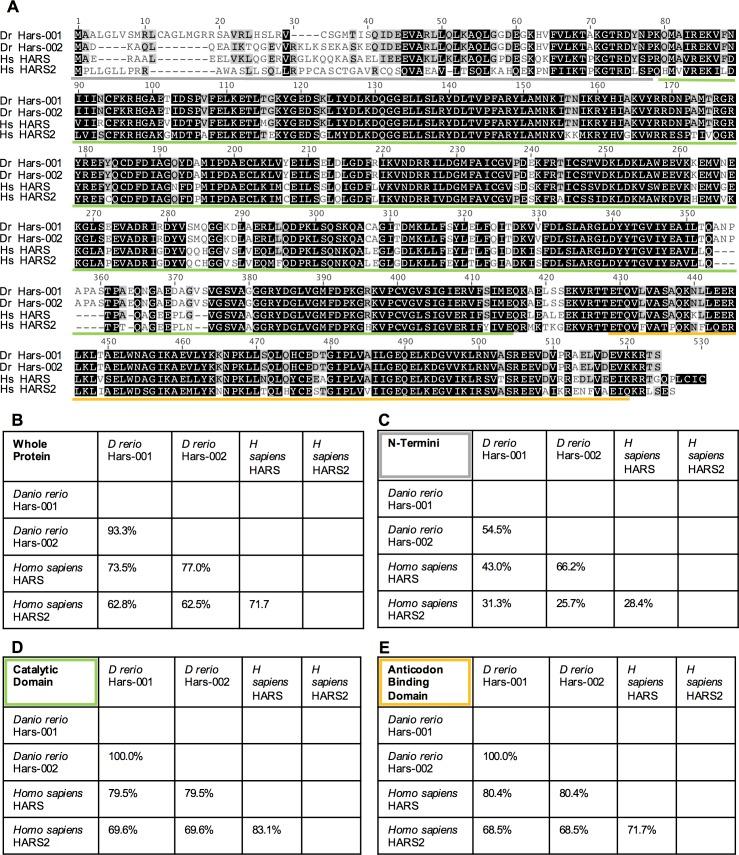
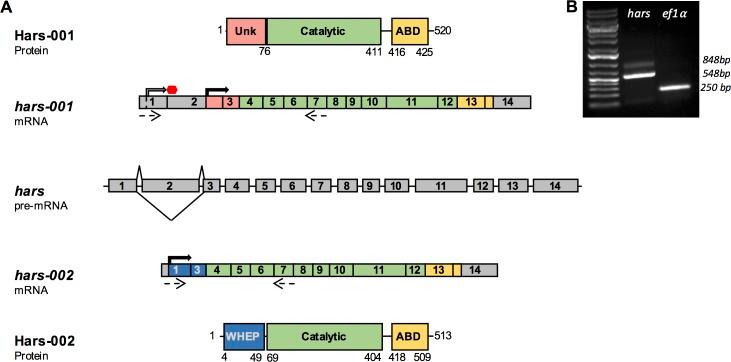
Histidyl tRNA Synthetase (HARS) is a member of the aminoacyl tRNA synthetase (ARS) family of enzymes. This family of 20 enzymes is responsible for attaching specific amino acids to their cognate tRNA molecules, a critical step in protein synthesis. However, recent work highlighting a growing number of associations between ARS genes and diverse human diseases raises the possibility of new and unexpected functions in this ancient enzyme family. For example, mutations in HARS have been linked to two different neurological disorders, Usher Syndrome Type IIIB and Charcot Marie Tooth peripheral neuropathy. These connections raise the possibility of previously undiscovered roles for HARS in metazoan development, with alterations in these functions leading to complex diseases. In an attempt to establish Danio rerio as a model for studying HARS functions in human disease, we characterized the Danio rerio hars gene and compared it to that of human HARS. Using a combination of bioinformatics, molecular biology, and cellular approaches, we found that while the human genome encodes separate genes for cytoplasmic and mitochondrial HARS protein, the Danio rerio genome encodes a single hars gene which undergoes alternative splicing to produce the respective cytoplasmic and mitochondrial versions of Hars. Nevertheless, while the HARS genes of humans and Danio differ significantly at the genomic level, we found that they are still highly conserved at the amino acid level, underscoring the potential utility of Danio rerio as a model organism for investigating HARS function and its link to human diseases in vivo.
组氨酰 - tRNA合成酶(HARS)是氨酰 - tRNA合成酶(ARS)家族的成员。该家族的20种酶负责将特定氨基酸连接到其对应的tRNA分子上,这是蛋白质合成中的关键步骤。然而,最近的研究突出了ARS基因与多种人类疾病之间越来越多的关联,这增加了这个古老酶家族具有新的和意想不到功能的可能性。例如,HARS中的突变已与两种不同的神经系统疾病相关联,即III B型Usher综合征和夏科 - 马里 - 图斯外周神经病。这些关联增加了HARS在后生动物发育中以前未被发现的作用的可能性,这些功能的改变会导致复杂疾病。为了将斑马鱼确立为研究HARS在人类疾病中功能的模型,我们对斑马鱼的hars基因进行了表征,并将其与人类HARS基因进行了比较。通过结合生物信息学、分子生物学和细胞方法,我们发现虽然人类基因组编码细胞质和线粒体HARS蛋白的单独基因,但斑马鱼基因组编码一个单一的hars基因,该基因通过可变剪接产生Hars各自的细胞质和线粒体版本。然而,虽然人类和斑马鱼的HARS基因在基因组水平上有显著差异,但我们发现它们在氨基酸水平上仍然高度保守,这突出了斑马鱼作为一种模式生物在体内研究HARS功能及其与人类疾病联系的潜在用途。


 Zotero 插件