
谷氨酰胺酶对于谷氨酰胺代谢途径失调的三阴性乳腺癌细胞的生长至关重要,其抑制作用与mTOR抑制协同发挥作用。
Glutaminase is essential for the growth of triple-negative breast cancer cells with a deregulated glutamine metabolism pathway and its suppression synergizes with mTOR inhibition.
作者信息
Lampa Michael, Arlt Heike, He Timothy, Ospina Beatriz, Reeves Jason, Zhang Bailin, Murtie Joshua, Deng Gejing, Barberis Claude, Hoffmann Dietmar, Cheng Hong, Pollard Jack, Winter Christopher, Richon Victoria, Garcia-Escheverria Carlos, Adrian Francisco, Wiederschain Dmitri, Srinivasan Lakshmi
机构信息
Oncology, Sanofi, Cambridge, MA, United States of America.
Integrated Drug Discovery Platform, Sanofi, Waltham, MA, United States of America.
出版信息
PLoS One. 2017 Sep 26;12(9):e0185092. doi: 10.1371/journal.pone.0185092. eCollection 2017.
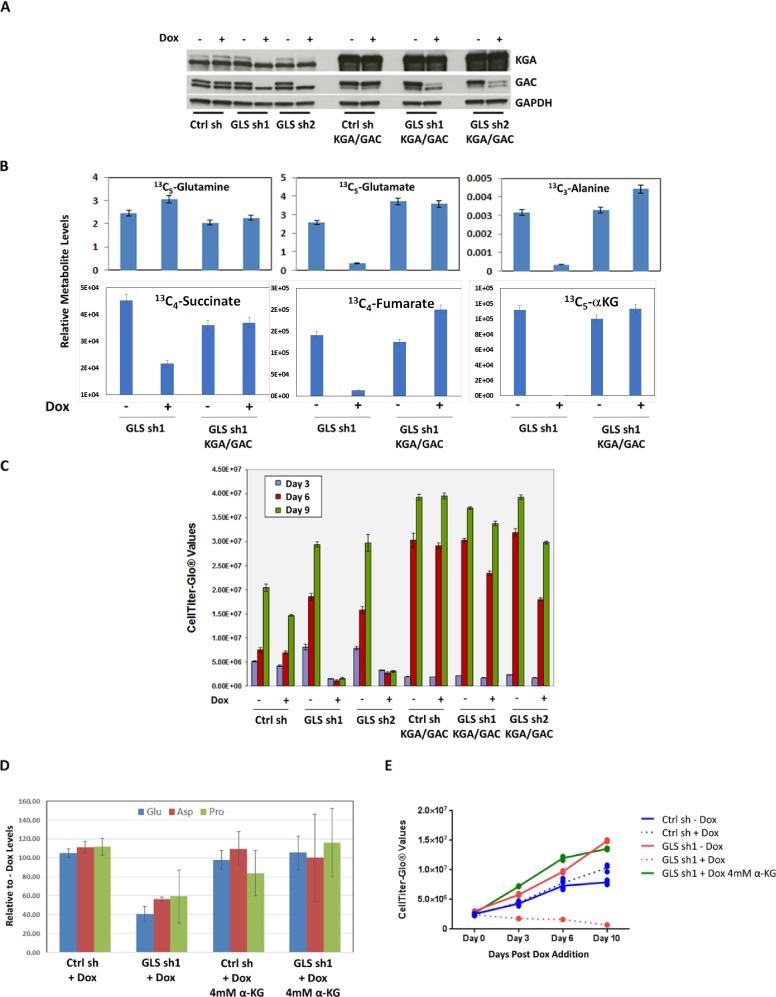
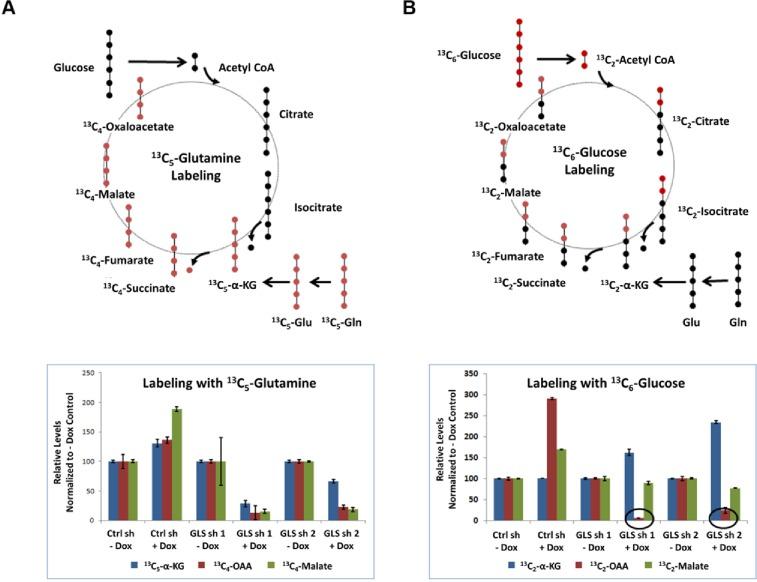
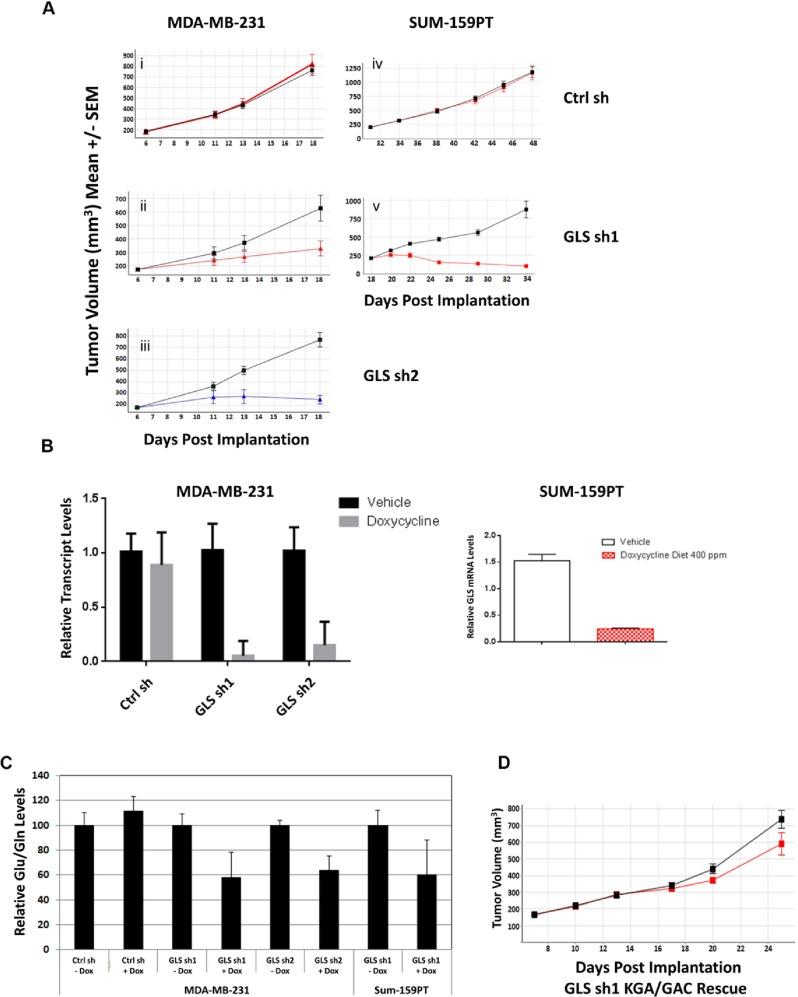
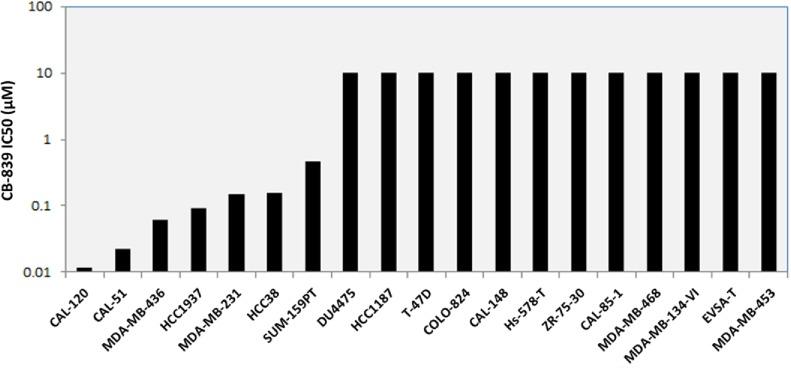
Tumor cells display fundamental changes in metabolism and nutrient uptake in order to utilize additional nutrient sources to meet their enhanced bioenergetic requirements. Glutamine (Gln) is one such nutrient that is rapidly taken up by tumor cells to fulfill this increased metabolic demand. A vital step in the catabolism of glutamine is its conversion to glutamate by the mitochondrial enzyme glutaminase (GLS). This study has identified GLS a potential therapeutic target in breast cancer, specifically in the basal subtype that exhibits a deregulated glutaminolysis pathway. Using inducible shRNA mediated gene knockdown, we discovered that loss of GLS function in triple-negative breast cancer (TNBC) cell lines with a deregulated glutaminolysis pathway led to profound tumor growth inhibition in vitro and in vivo. GLS knockdown had no effect on growth and metabolite levels in non-TNBC cell lines. We rescued the anti-tumor effect of GLS knockdown using shRNA resistant cDNAs encoding both GLS isoforms and by addition of an α-ketoglutarate (αKG) analog thus confirming the critical role of GLS in TNBC. Pharmacological inhibition of GLS with the small molecule inhibitor CB-839 reduced cell growth and led to a decrease in mammalian target of rapamycin (mTOR) activity and an increase in the stress response pathway driven by activating transcription factor 4 (ATF4). Finally, we found that GLS inhibition synergizes with mTOR inhibition, which introduces the possibility of a novel therapeutic strategy for TNBC. Our study revealed that GLS is essential for the survival of TNBC with a deregulated glutaminolysis pathway. The synergistic activity of GLS and mTOR inhibitors in TNBC cell lines suggests therapeutic potential of this combination for the treatment of vulnerable subpopulations of TNBC.
肿瘤细胞在代谢和营养摄取方面表现出根本性变化,以便利用额外的营养源来满足其增强的生物能量需求。谷氨酰胺(Gln)就是这样一种营养物质,肿瘤细胞会迅速摄取它以满足这种增加的代谢需求。谷氨酰胺分解代谢的一个关键步骤是通过线粒体酶谷氨酰胺酶(GLS)将其转化为谷氨酸。本研究已确定GLS是乳腺癌,特别是在谷氨酰胺分解代谢途径失调的基底亚型中的一个潜在治疗靶点。使用诱导型短发夹RNA(shRNA)介导的基因敲低,我们发现谷氨酰胺分解代谢途径失调的三阴性乳腺癌(TNBC)细胞系中GLS功能丧失会导致体外和体内肿瘤生长受到显著抑制。GLS敲低对非TNBC细胞系的生长和代谢物水平没有影响。我们使用编码两种GLS同工型的shRNA抗性cDNA并添加α-酮戊二酸(αKG)类似物挽救了GLS敲低的抗肿瘤作用,从而证实了GLS在TNBC中的关键作用。用小分子抑制剂CB-839对GLS进行药理学抑制可降低细胞生长,并导致雷帕霉素哺乳动物靶标(mTOR)活性降低以及由激活转录因子4(ATF4)驱动的应激反应途径增加。最后,我们发现GLS抑制与mTOR抑制具有协同作用,这为TNBC引入了一种新的治疗策略的可能性。我们的研究表明,GLS对于谷氨酰胺分解代谢途径失调的TNBC的存活至关重要。GLS和mTOR抑制剂在TNBC细胞系中的协同活性表明这种联合治疗对TNBC易感亚群具有治疗潜力。


 Zotero 插件