
研发性能更优且更安全的用于癌症治疗的HER2特异性嵌合抗原受体(CAR)。
Driving better and safer HER2-specific CARs for cancer therapy.
作者信息
Liu Xianqiang, Zhang Nan, Shi Huan
机构信息
Department of Breast and Thyroid Surgery, Jinan Central Hospital Affiliated to Shandong University, Jinan, Shandong 250013, P.R. China.
Department of Oncology, Jinan Central Hospital Affiliated to Shandong University, Jinan, Shandong 250013, P.R. China.
出版信息
Oncotarget. 2017 Apr 29;8(37):62730-62741. doi: 10.18632/oncotarget.17528. eCollection 2017 Sep 22.
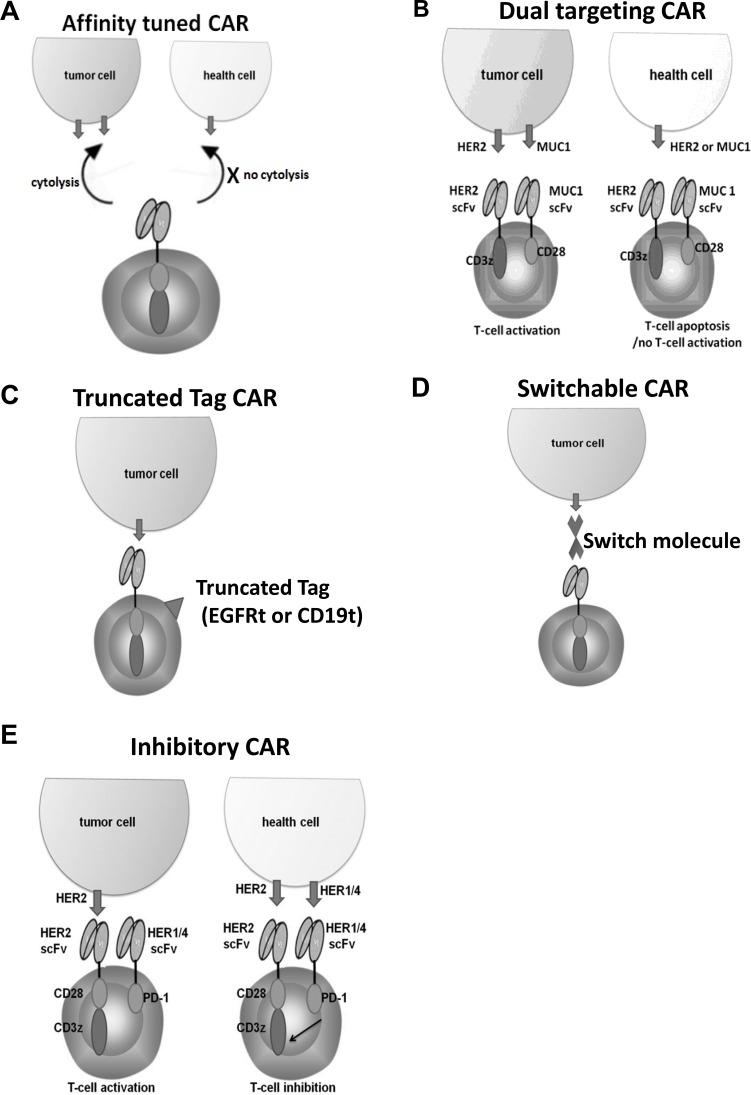
Given the clinical efficacy of chimeric antigen receptor (CAR)-based therapy in hematological malignancies, CAR T-cell therapy for a number of solid tumors has been actively investigated. Human epidermal growth factor receptor 2 (HER2) is a well-established therapeutic target in breast, as well as other types of cancer. However, HER2 CAR T cells pose a risk of lethal toxicity including cytokine release syndrome from "on-target, off-tumor" recognition of HER2. In this review, we summarize the development of conventional HER2 CAR technology, the alternative selection of CAR hosts, the novel HER2 CAR designs, clinical studies and toxicity. Furthermore, we also discuss the main strategies for improving the safety of HER2 CAR-based cancer therapies.
鉴于嵌合抗原受体(CAR)疗法在血液系统恶性肿瘤中的临床疗效,针对多种实体瘤的CAR T细胞疗法已得到积极研究。人表皮生长因子受体2(HER2)是乳腺癌以及其他类型癌症中公认的治疗靶点。然而,HER2 CAR T细胞存在致死性毒性风险,包括因对HER2的“靶向、脱瘤”识别而引发的细胞因子释放综合征。在本综述中,我们总结了传统HER2 CAR技术的发展、CAR宿主的替代选择、新型HER2 CAR设计、临床研究及毒性。此外,我们还讨论了提高基于HER2 CAR的癌症疗法安全性的主要策略。

 Zotero 插件