
分化角质形成细胞的 RNA-Seq 分析揭示了人乳头瘤病毒 16 感染过程中晚期事件的巨大反应,包括上皮屏障功能丧失。
RNA-Seq Analysis of Differentiated Keratinocytes Reveals a Massive Response to Late Events during Human Papillomavirus 16 Infection, Including Loss of Epithelial Barrier Function.
机构信息
MRC-University of Glasgow Centre for Virus Research, Institute of Infection, Immunity and Inflammation, College of Medical, Veterinary and Life Sciences, University of Glasgow, Glasgow, United Kingdom.
HPV Research Group, University of Edinburgh, Edinburgh, United Kingdom.
出版信息
J Virol. 2017 Nov 30;91(24). doi: 10.1128/JVI.01001-17. Print 2017 Dec 15.
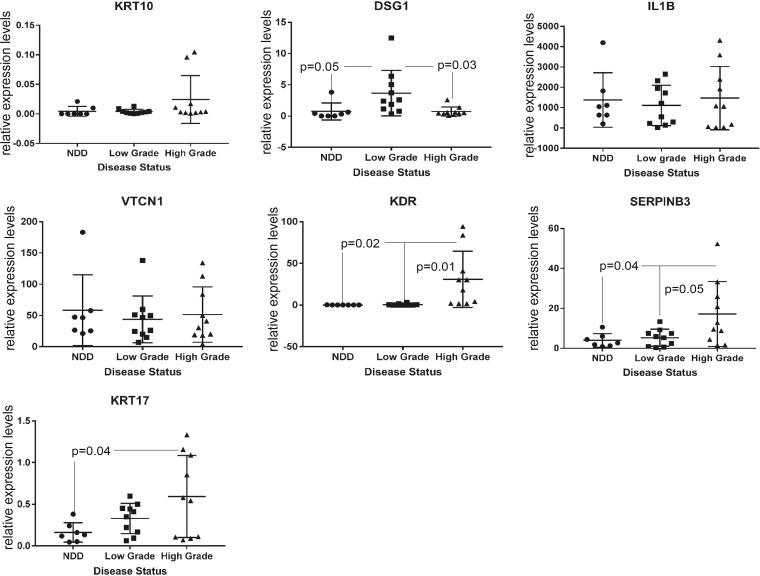
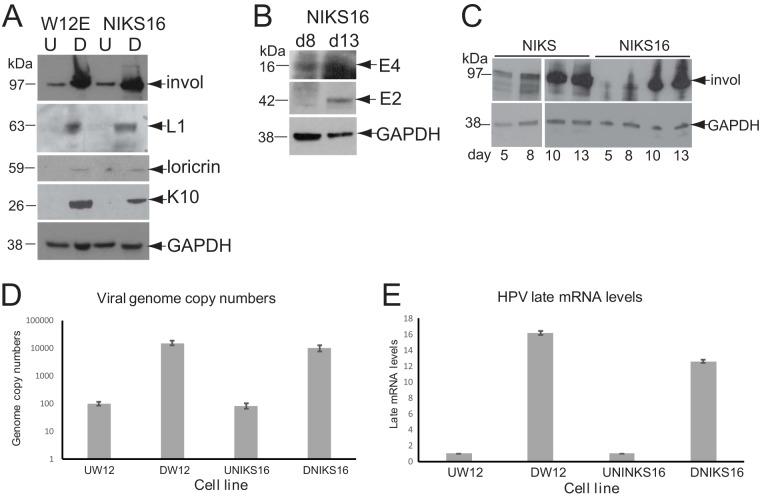
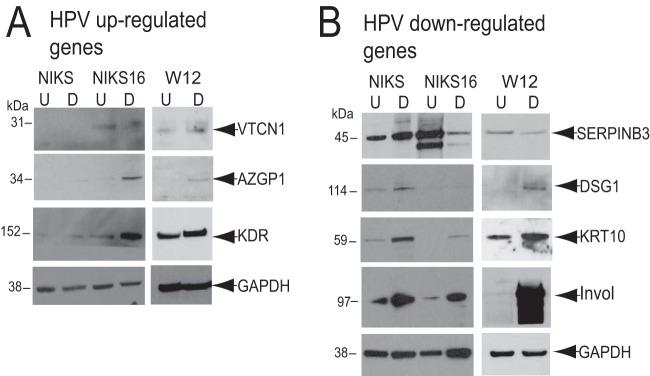
The human papillomavirus (HPV) replication cycle is tightly linked to epithelial cell differentiation. To examine HPV-associated changes in the keratinocyte transcriptome, RNAs isolated from undifferentiated and differentiated cell populations of normal, spontaneously immortalized keratinocytes (NIKS) and NIKS stably transfected with HPV16 episomal genomes (NIKS16) were compared using next-generation sequencing (RNA-Seq). HPV16 infection altered expression of 2,862 cellular genes. Next, to elucidate the role of keratinocyte gene expression in late events during the viral life cycle, RNA-Seq was carried out on triplicate differentiated populations of NIKS (uninfected) and NIKS16 (infected). Of the top 966 genes altered (>log = 1.8, 3.5-fold change), 670 genes were downregulated and 296 genes were upregulated. HPV downregulated many genes involved in epithelial barrier function, which involves structural resistance to the environment and immunity to infectious agents. For example, HPV infection repressed expression of the differentiated keratinocyte-specific pattern recognition receptor TLR7, the Langerhans cell chemoattractant CCL20, and proinflammatory cytokines interleukin 1α (IL-1α) and IL-1β. However, the type I interferon regulator IRF1, kappa interferon (IFN-κ), and viral restriction factors (IFIT1, -2, -3, and -5, OASL, CD74, and RTP4) were upregulated. HPV infection abrogated gene expression associated with the physical epithelial barrier, including keratinocyte cytoskeleton, intercellular junctions, and cell adhesion. Quantitative PCR (qRT-PCR) and Western blotting confirmed changes in expression of seven of the most significantly altered mRNAs. Expression of three genes showed statistically significant changes during cervical disease progression in clinical samples. Taken together, the data indicate that HPV infection manipulates the differentiating keratinocyte transcriptome to create an environment conducive to productive viral replication and egress. HPV genome amplification and capsid formation take place in differentiated keratinocytes. The viral life cycle is intimately associated with host cell differentiation. Deep sequencing (RNA-Seq) of RNA from undifferentiated and differentiated uninfected and HPV16-positive keratinocytes showed that almost 3,000 genes were differentially expressed in keratinocytes due to HPV16 infection. Strikingly, the epithelial barrier function of differentiated keratinocytes, comprising keratinocyte immune function and cellular structure, was found to be disrupted. These data provide new insights into the virus-host interaction that is crucial for the production of infectious virus and reveal that HPV infection remodels keratinocytes for completion of the virus replication cycle.
人乳头瘤病毒(HPV)的复制周期与上皮细胞分化密切相关。为了研究 HPV 相关的角质形成细胞转录组变化,使用下一代测序(RNA-Seq)比较了未分化和分化的正常、自发永生化角质形成细胞(NIKS)和稳定转染 HPV16 episomal 基因组的 NIKS(NIKS16)细胞群中分离的 RNA。HPV16 感染改变了 2862 个细胞基因的表达。接下来,为了阐明角质形成细胞基因表达在病毒生命周期后期事件中的作用,对未感染的 NIKS(未感染)和感染的 NIKS16(感染)的三个重复分化群体进行了 RNA-Seq。在改变最大的前 966 个基因(log = 1.8,变化 3.5 倍)中,有 670 个基因下调,296 个基因上调。HPV 下调了许多参与上皮屏障功能的基因,上皮屏障功能涉及对环境的结构抗性和对感染因子的免疫。例如,HPV 感染抑制了分化角质形成细胞特异性模式识别受体 TLR7、朗格汉斯细胞趋化因子 CCL20 和促炎细胞因子白细胞介素 1α(IL-1α)和白细胞介素 1β(IL-1β)的表达。然而,I 型干扰素调节因子 IRF1、κ 干扰素(IFN-κ)和病毒限制因子(IFIT1、-2、-3 和-5、OASL、CD74 和 RTP4)上调。HPV 感染消除了与物理上皮屏障相关的基因表达,包括角质形成细胞细胞骨架、细胞间连接和细胞黏附。实时定量 PCR(qRT-PCR)和 Western blot 验证了七种变化最显著的 mRNA 的表达变化。在临床样本中宫颈疾病进展过程中,三种基因的表达发生了统计学显著变化。综上所述,数据表明 HPV 感染改变了分化的角质形成细胞转录组,为病毒的复制和出芽创造了有利的环境。HPV 基因组扩增和衣壳形成发生在分化的角质形成细胞中。病毒生命周期与宿主细胞分化密切相关。对未分化和分化的未感染和 HPV16 阳性角质形成细胞的 RNA 进行深度测序(RNA-Seq)显示,由于 HPV16 感染,角质形成细胞中约有 3000 个基因表达差异。引人注目的是,分化角质形成细胞的上皮屏障功能,包括角质形成细胞免疫功能和细胞结构,被发现被破坏。这些数据提供了关于病毒-宿主相互作用的新见解,这对产生感染性病毒至关重要,并揭示了 HPV 感染重塑角质形成细胞以完成病毒复制周期。


 Zotero 插件