
社会行为塑造下丘脑对同种异性的神经集群表征。
Social behaviour shapes hypothalamic neural ensemble representations of conspecific sex.
作者信息
Remedios Ryan, Kennedy Ann, Zelikowsky Moriel, Grewe Benjamin F, Schnitzer Mark J, Anderson David J
机构信息
Division of Biology and Biological Engineering 156-29, Tianqiao and Chrissy Chen Institute for Neuroscience, California Institute of Technology, Pasadena, California 91125, USA.
James H. Clark Center for Biomedical Engineering & Sciences, Stanford University, Stanford, California 94305, USA.
出版信息
Nature. 2017 Oct 18;550(7676):388-392. doi: 10.1038/nature23885.
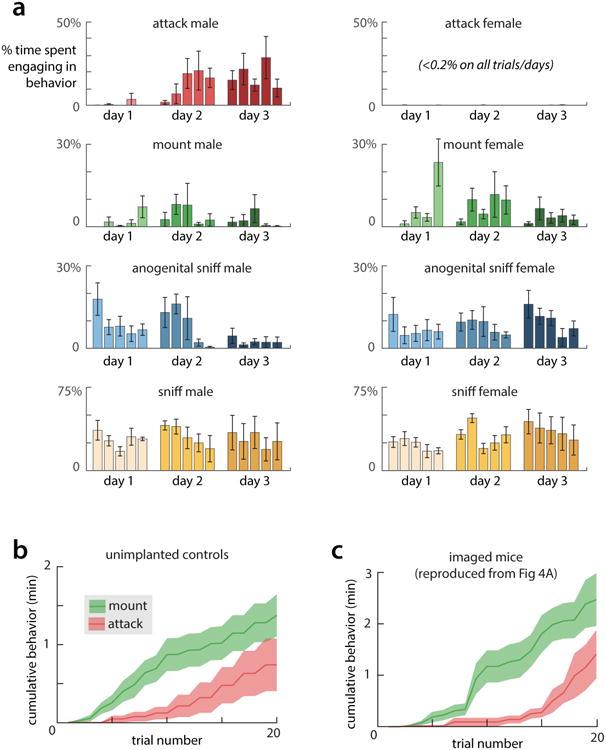
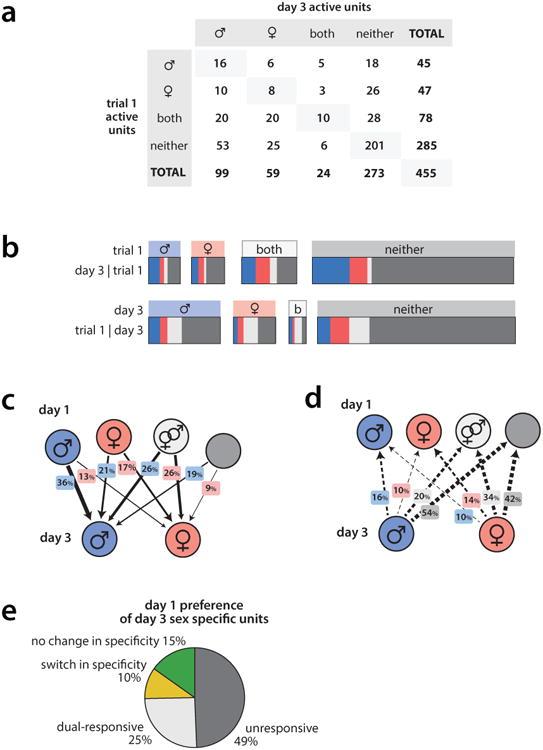
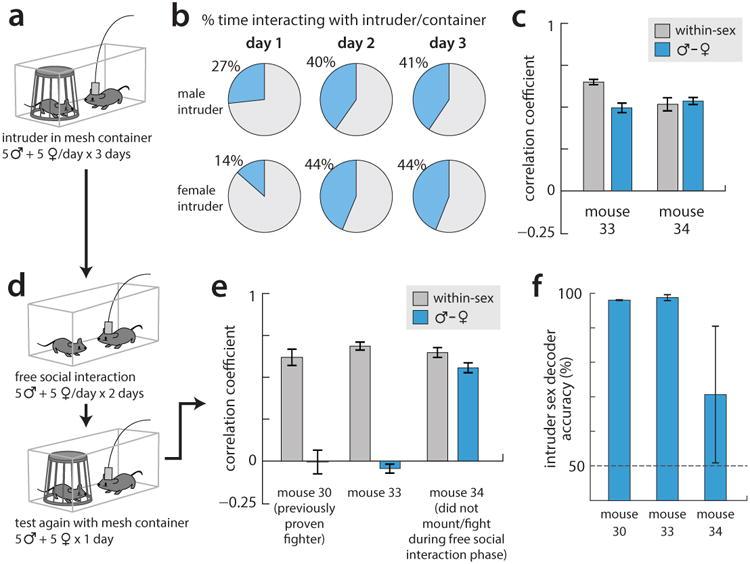
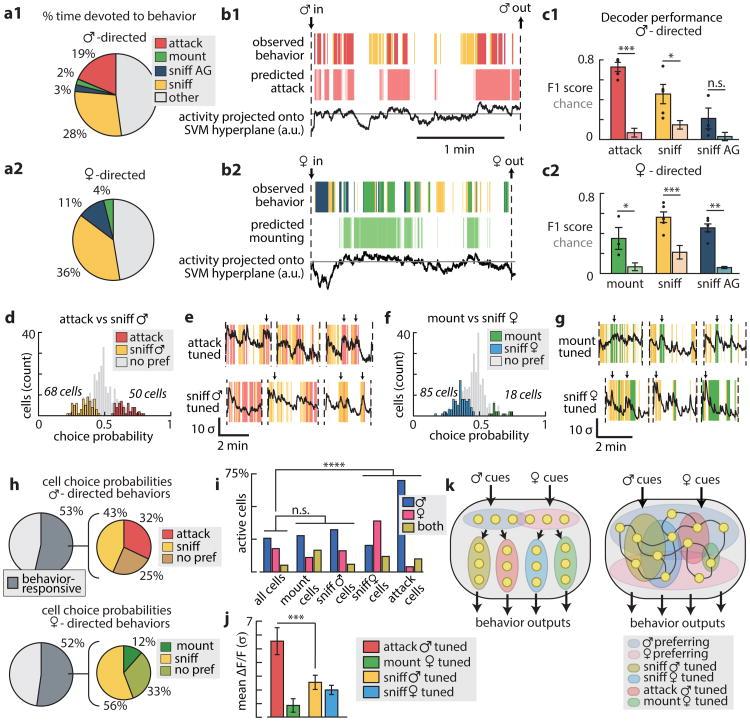
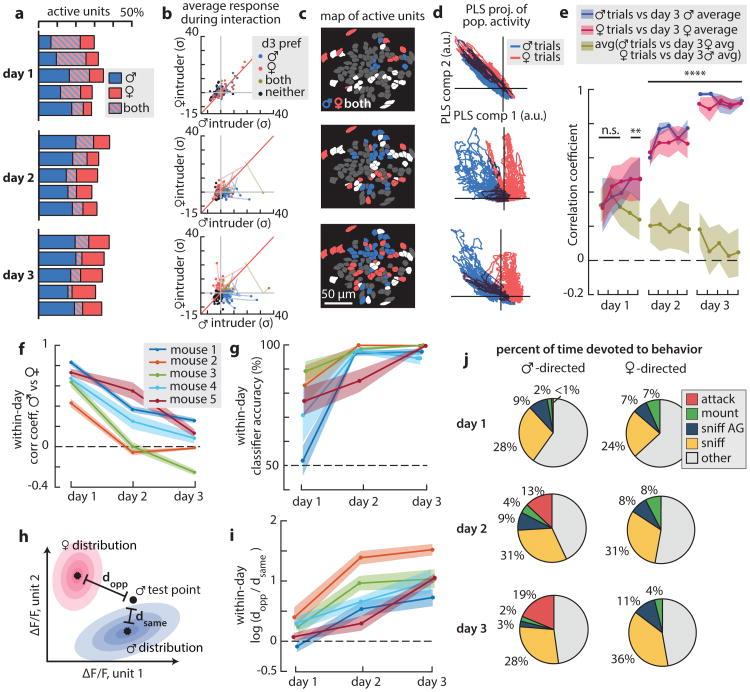
All animals possess a repertoire of innate (or instinctive) behaviours, which can be performed without training. Whether such behaviours are mediated by anatomically distinct and/or genetically specified neural pathways remains unknown. Here we report that neural representations within the mouse hypothalamus, that underlie innate social behaviours, are shaped by social experience. Oestrogen receptor 1-expressing (Esr1) neurons in the ventrolateral subdivision of the ventromedial hypothalamus (VMHvl) control mating and fighting in rodents. We used microendoscopy to image Esr1 neuronal activity in the VMHvl of male mice engaged in these social behaviours. In sexually and socially experienced adult males, divergent and characteristic neural ensembles represented male versus female conspecifics. However, in inexperienced adult males, male and female intruders activated overlapping neuronal populations. Sex-specific neuronal ensembles gradually separated as the mice acquired social and sexual experience. In mice permitted to investigate but not to mount or attack conspecifics, ensemble divergence did not occur. However, 30 minutes of sexual experience with a female was sufficient to promote the separation of male and female ensembles and to induce an attack response 24 h later. These observations uncover an unexpected social experience-dependent component to the formation of hypothalamic neural assemblies controlling innate social behaviours. More generally, they reveal plasticity and dynamic coding in an evolutionarily ancient deep subcortical structure that is traditionally viewed as a 'hard-wired' system.
所有动物都具备一系列先天(或本能)行为,这些行为无需训练即可表现出来。此类行为是否由解剖结构上不同和/或基因指定的神经通路介导,目前尚不清楚。在此,我们报告称,小鼠下丘脑内构成先天社会行为基础的神经表征是由社会经验塑造的。腹内侧下丘脑腹外侧亚区(VMHvl)中表达雌激素受体1(Esr1)的神经元控制着啮齿动物的交配和争斗行为。我们使用显微内窥镜对参与这些社会行为的雄性小鼠VMHvl中的Esr1神经元活动进行成像。在有性经验和社会经验的成年雄性小鼠中,不同且具有特征性的神经集群分别代表雄性和雌性同种个体。然而,在没有经验的成年雄性小鼠中,雄性和雌性入侵者激活的神经元群体相互重叠。随着小鼠获得社会和性经验,性别特异性神经集群逐渐分离。在被允许调查但不允许交配或攻击同种个体的小鼠中,集群差异并未出现。然而,与雌性有30分钟的性经验就足以促进雄性和雌性集群的分离,并在24小时后引发攻击反应。这些观察结果揭示了下丘脑神经集合形成过程中一个意想不到的依赖社会经验的组成部分,该神经集合控制着先天社会行为。更普遍地说,它们揭示了一个在进化上古老的深层皮质下结构中的可塑性和动态编码,传统上该结构被视为一个“硬连线”系统。






 Zotero 插件