
TREM2 缺乏可减轻神经炎症并预防神经退行性变tau 病模型中的小鼠。
TREM2 deficiency attenuates neuroinflammation and protects against neurodegeneration in a mouse model of tauopathy.
机构信息
Department of Neurology, Washington University School of Medicine, St. Louis, MO 63110.
Hope Center for Neurological Disorders, Washington University School of Medicine, St. Louis, MO 63110.
出版信息
Proc Natl Acad Sci U S A. 2017 Oct 24;114(43):11524-11529. doi: 10.1073/pnas.1710311114. Epub 2017 Oct 9.
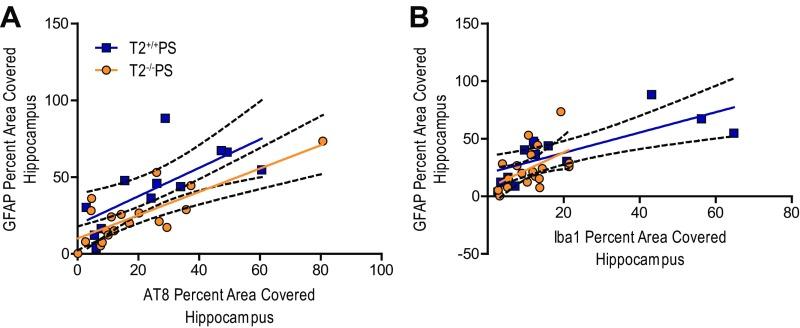
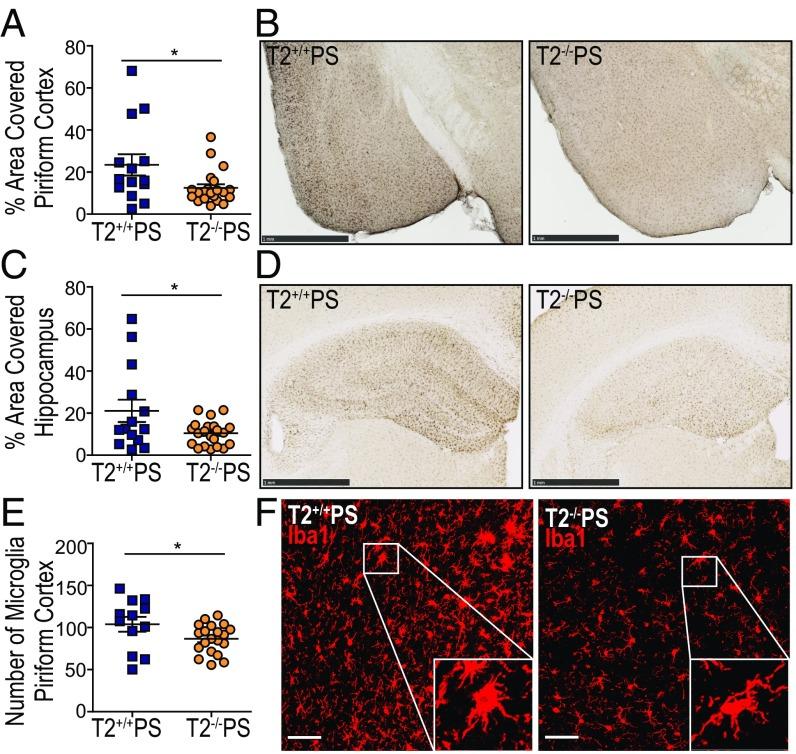
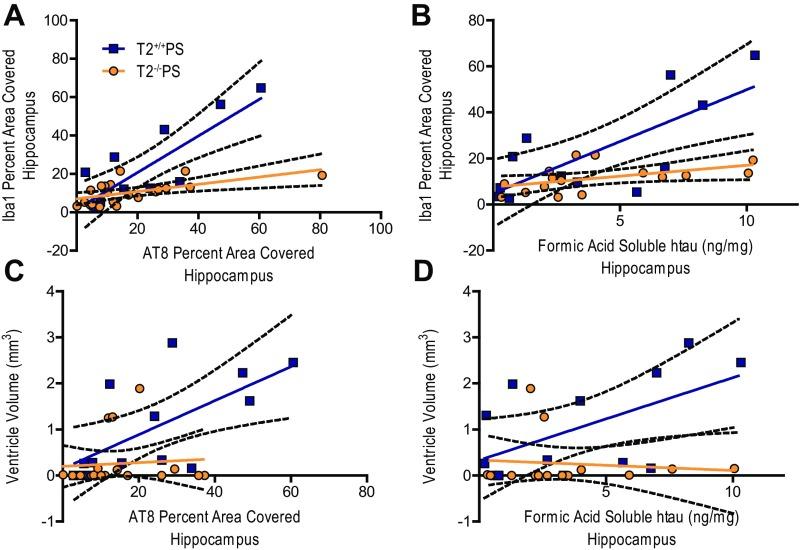
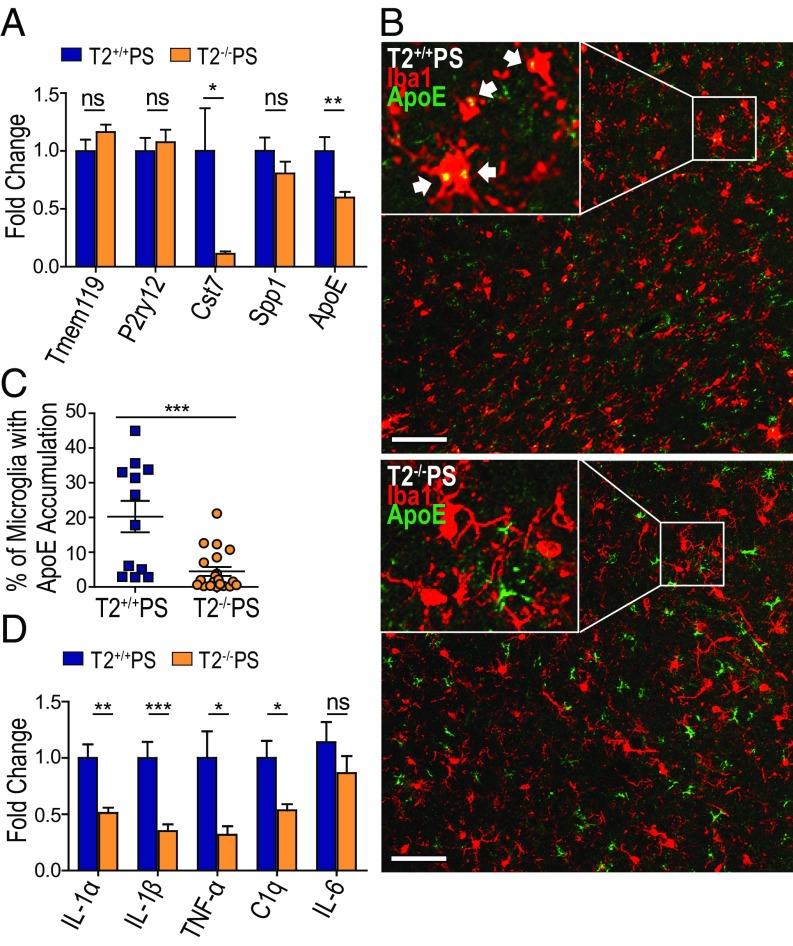
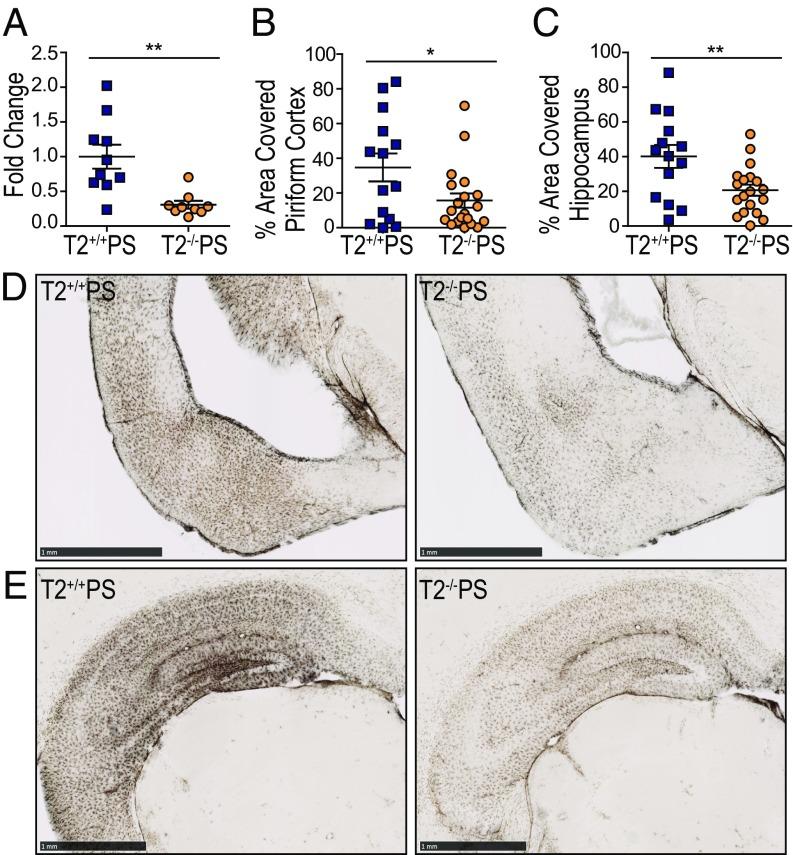
Variants in the gene encoding the triggering receptor expressed on myeloid cells 2 (TREM2) were recently found to increase the risk for developing Alzheimer's disease (AD). In the brain, TREM2 is predominately expressed on microglia, and its association with AD adds to increasing evidence implicating a role for the innate immune system in AD initiation and progression. Thus far, studies have found TREM2 is protective in the response to amyloid pathology while variants leading to a loss of TREM2 function impair microglial signaling and are deleterious. However, the potential role of TREM2 in the context of tau pathology has not yet been characterized. In this study, we crossed (T2) and (T2) mice to the PS19 human tau transgenic line (PS) to investigate whether loss of TREM2 function affected tau pathology, the microglial response to tau pathology, or neurodegeneration. Strikingly, by 9 mo of age, T2PS mice exhibited significantly less brain atrophy as quantified by ventricular enlargement and preserved cortical volume in the entorhinal and piriform regions compared with T2PS mice. However, no TREM2-dependent differences were observed for phosphorylated tau staining or insoluble tau levels. Rather, T2PS mice exhibited significantly reduced microgliosis in the hippocampus and piriform cortex compared with T2PS mice. Gene expression analyses and immunostaining revealed microglial activation was significantly attenuated in T2PS mice, and there were lower levels of inflammatory cytokines and astrogliosis. These unexpected findings suggest that impairing microglial TREM2 signaling reduces neuroinflammation and is protective against neurodegeneration in the setting of pure tauopathy.
编码髓系细胞触发受体 2(TREM2)的基因变异最近被发现会增加患阿尔茨海默病(AD)的风险。在大脑中,TREM2 主要在小胶质细胞上表达,其与 AD 的关联增加了越来越多的证据表明先天免疫系统在 AD 的发生和进展中起作用。到目前为止,研究发现 TREM2 在应对淀粉样蛋白病理方面具有保护作用,而导致 TREM2 功能丧失的变异则会损害小胶质细胞信号,并产生有害影响。然而,TREM2 在 tau 病理中的潜在作用尚未得到表征。在这项研究中,我们将 (T2)和 (T2)小鼠与 PS19 人 tau 转基因系(PS)杂交,以研究缺失 TREM2 功能是否会影响 tau 病理、小胶质细胞对 tau 病理的反应或神经退行性变。令人惊讶的是,到 9 个月大时,与 T2PS 小鼠相比,T2PS 小鼠的脑室扩大和额皮质和梨状皮质体积减少,脑萎缩明显减少。然而,对于磷酸化 tau 染色或不溶性 tau 水平,没有观察到依赖于 TREM2 的差异。相反,与 T2PS 小鼠相比,T2PS 小鼠的海马和梨状皮质中的小胶质细胞增生明显减少。基因表达分析和免疫染色显示,T2PS 小鼠的小胶质细胞激活明显减弱,炎症细胞因子和星形胶质细胞增生水平较低。这些意外的发现表明,削弱小胶质细胞 TREM2 信号会减少神经炎症,并在纯 tau 病的情况下对神经退行性变具有保护作用。



 Zotero 插件