
基于肌肉协同作用的中风后患者伸手运动特征分析与聚类
Muscle Synergies-Based Characterization and Clustering of Poststroke Patients in Reaching Movements.
作者信息
Scano Alessandro, Chiavenna Andrea, Malosio Matteo, Molinari Tosatti Lorenzo, Molteni Franco
机构信息
Institute of Industrial Technologies and Automation (ITIA), Italian National Research Council (CNR), Milan, Italy.
Rehabilitation Presidium of Valduce Ospedale Villa Beretta, Lecco, Italy.
出版信息
Front Bioeng Biotechnol. 2017 Oct 13;5:62. doi: 10.3389/fbioe.2017.00062. eCollection 2017.
BACKGROUND
A deep characterization of neurological patients is a crucial step for a detailed knowledge of the pathology and maximal exploitation and customization of the rehabilitation therapy. The muscle synergies analysis was designed to investigate how muscles coactivate and how their eliciting commands change in time during movement production. Few studies investigated the value of muscle synergies for the characterization of neurological patients before rehabilitation therapies. In this article, the synergy analysis was used to characterize a group of chronic poststroke hemiplegic patients.
METHODS
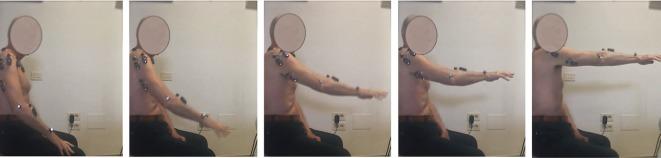
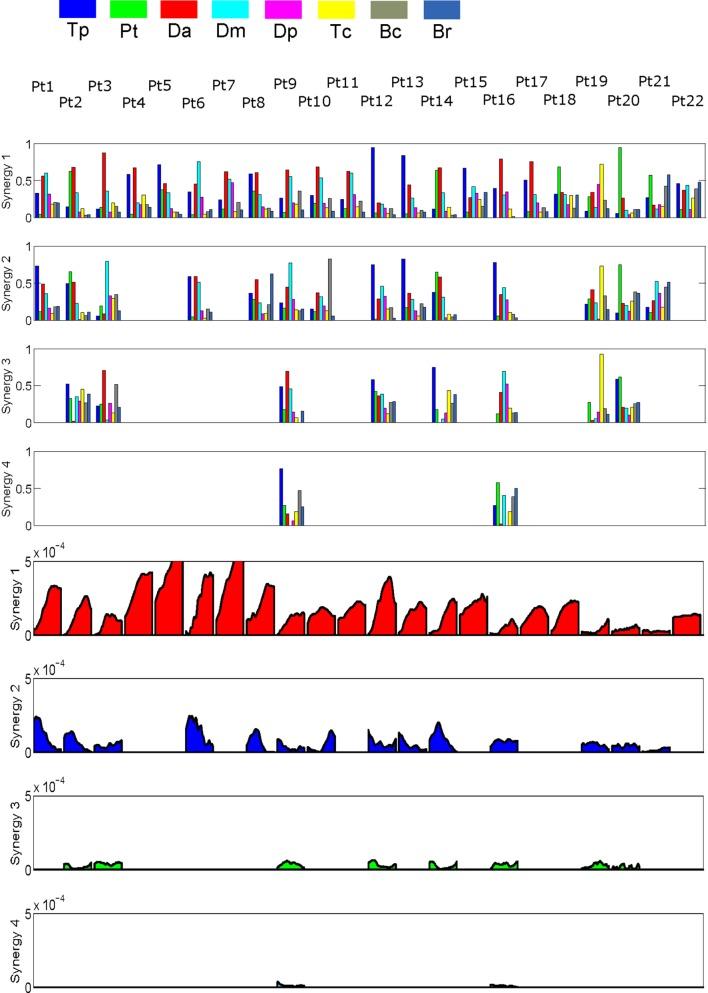
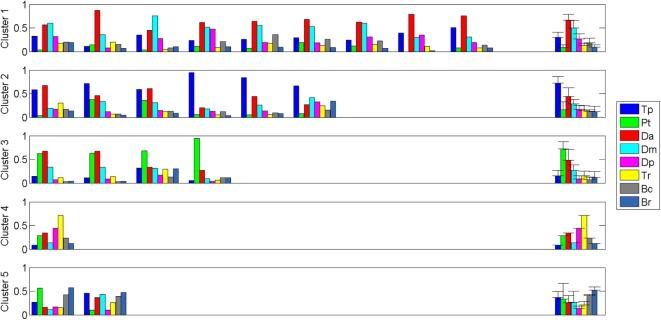
Twenty-two poststroke patients performed a session composed of a sequence of 3D reaching movements. They were assessed through an instrumental assessment, by recording kinematics and electromyography to extract muscle synergies and their activation commands. Patients' motor synergies were grouped by the means of cluster analysis. Consistency and characterization of each cluster was assessed and clinically profiled by comparison with standard motor assessments.
RESULTS
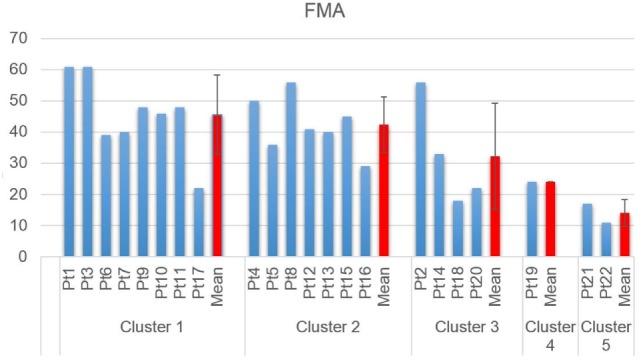
Motor synergies were successfully extracted on all 22 patients. Five basic clusters were identified as a trade-off between clustering precision and synthesis power, representing: healthy-like activations, two shoulder compensatory strategies, two elbow predominance patterns. Each cluster was provided with a deep characterization and correlation with clinical scales, range of motion, and smoothness.
CONCLUSION
The clustering of muscle synergies enabled a pretherapy characterization of patients. Such technique may affect several aspects of the therapy: prediction of outcomes, evaluation of the treatments, customization of doses, and therapies.
背景
对神经疾病患者进行深入的特征分析是详细了解病理情况以及最大程度利用和定制康复治疗的关键步骤。肌肉协同分析旨在研究在运动产生过程中肌肉如何共同激活以及它们的引发指令如何随时间变化。很少有研究在康复治疗之前探究肌肉协同对于神经疾病患者特征分析的价值。在本文中,协同分析被用于对一组慢性中风后偏瘫患者进行特征分析。
方法
22名中风后患者进行了一组由一系列三维伸手动作组成的测试。通过仪器评估对他们进行评估,记录运动学和肌电图以提取肌肉协同及其激活指令。通过聚类分析对患者的运动协同进行分组。通过与标准运动评估进行比较,评估每个聚类的一致性和特征,并进行临床分析。
结果
成功从所有22名患者中提取了运动协同。确定了五个基本聚类,作为聚类精度和综合能力之间的权衡,分别代表:类似健康人的激活模式、两种肩部代偿策略、两种肘部优势模式。每个聚类都有深入的特征描述,并与临床量表、活动范围和平滑度相关。
结论
肌肉协同的聚类实现了对患者治疗前的特征分析。这种技术可能会影响治疗的多个方面:结果预测、治疗评估、剂量定制和治疗方法。





 Zotero 插件