
全球伴 B 群链球菌的母体疾病及血清型分布:系统回顾和荟萃分析。
Maternal Disease With Group B Streptococcus and Serotype Distribution Worldwide: Systematic Review and Meta-analyses.
机构信息
Department of Reproductive Health Research, University College London Institute for Women's Health, United Kingdom.
School of Social and Community Medicine, University of Bristol, United Kingdom.
出版信息
Clin Infect Dis. 2017 Nov 6;65(suppl_2):S112-S124. doi: 10.1093/cid/cix660.
BACKGROUND
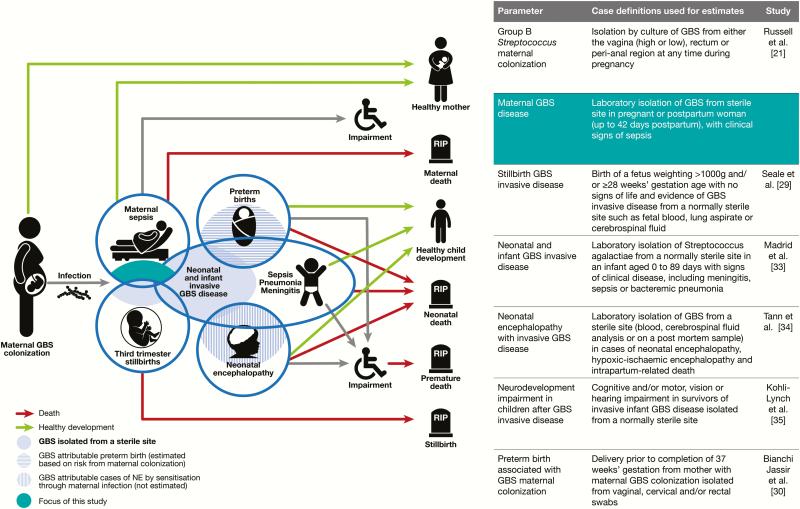
Infections such as group B Streptococcus (GBS) are an important cause of maternal sepsis, yet limited data on epidemiology exist. This article, the third of 11, estimates the incidence of maternal GBS disease worldwide.
METHODS
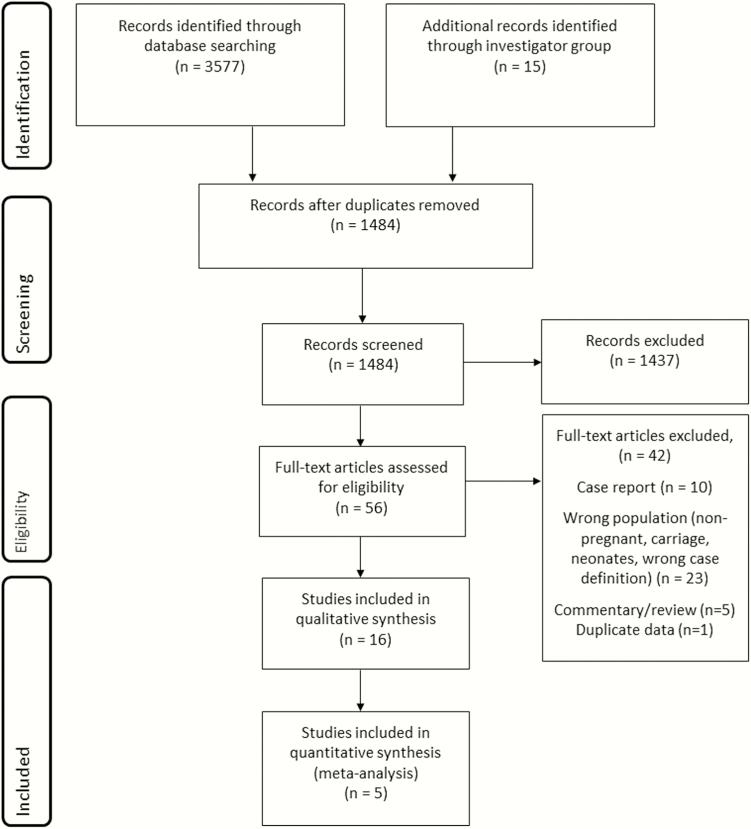
We conducted systematic literature reviews (PubMed/Medline, Embase, Latin American and Caribbean Health Sciences Literature [LILACS], World Health Organization Library Information System [WHOLIS], and Scopus) and sought unpublished data on invasive GBS disease in women pregnant or within 42 days postpartum. We undertook meta-analyses to derive pooled estimates of the incidence of maternal GBS disease. We examined maternal and perinatal outcomes and GBS serotypes.
RESULTS
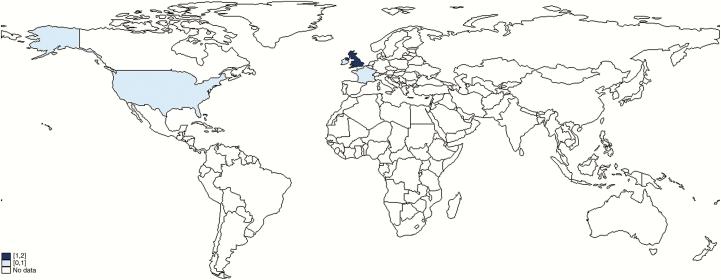
Fifteen studies and 1 unpublished dataset were identified, all from United Nations-defined developed regions. From a single study with pregnancies as the denominator, the incidence of maternal GBS disease was 0.38 (95% confidence interval [CI], .28-.48) per 1000 pregnancies. From 3 studies reporting cases by the number of maternities (pregnancies resulting in live/still birth), the incidence was 0.23 (95% CI, .09-.37). Five studies reported serotypes, with Ia being the most common (31%). Most maternal GBS disease was detected at or after delivery.
CONCLUSIONS
Incidence data on maternal GBS disease in developing regions are lacking. In developed regions the incidence is low, as are the sequelae for the mother, but the risk to the fetus and newborn is substantial. The timing of GBS disease suggests that a maternal vaccine given in the late second or early third trimester of pregnancy would prevent most maternal cases.
背景
B 群链球菌(GBS)等感染是产妇败血症的重要病因,但有关其流行病学的数据有限。本文是 11 篇系列文章中的第 3 篇,旨在估计全球范围内产妇 GBS 病的发病率。
方法
我们进行了系统文献回顾(PubMed/Medline、Embase、拉丁美洲和加勒比健康科学文献[LILACS]、世界卫生组织图书馆信息系统[WHOLIS]和 Scopus),并寻找了关于孕妇或产后 42 天内侵袭性 GBS 病的未发表数据。我们进行了荟萃分析,以得出产妇 GBS 病发病率的汇总估计值。我们检查了产妇和围产期结局以及 GBS 血清型。
结果
确定了 15 项研究和 1 项未发表的数据,均来自联合国定义的发达地区。从一项以妊娠为分母的单一研究中,产妇 GBS 病的发病率为每 1000 例妊娠 0.38(95%置信区间[CI],0.28-0.48)。有 3 项报告按分娩数量(活产/死产)报告病例的研究中,发病率为 0.23(95%CI,0.09-0.37)。有 5 项研究报告了血清型,其中 Ia 最为常见(31%)。大多数产妇 GBS 病是在分娩时或之后检测到的。
结论
发展中地区缺乏产妇 GBS 病发病率的数据。在发达地区,发病率较低,母亲的后遗症也较低,但对胎儿和新生儿的风险很大。GBS 病的发病时间提示,在妊娠晚期或妊娠中期早期给予母体疫苗可能会预防大多数产妇病例。



 Zotero 插件