
蛙毒中的抗菌肽构成了一种针对捕食者的分子毒素输送系统。
Antimicrobial peptides in frog poisons constitute a molecular toxin delivery system against predators.
机构信息
Amphibian Evolution Lab, Biology Department, Vrije Universiteit Brussel, Pleinlaan 2, 1050, Elsene, Belgium.
Department of Pathology, Bacteriology and Avian Diseases, Faculty of Veterinary Medicine, Ghent University, Salisburylaan 133, 9820, Merelbeke, Belgium.
出版信息
Nat Commun. 2017 Nov 14;8(1):1495. doi: 10.1038/s41467-017-01710-1.
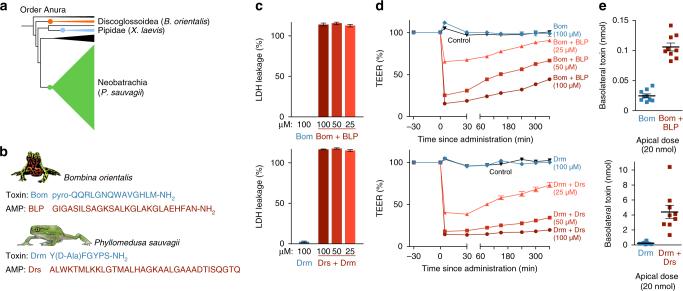
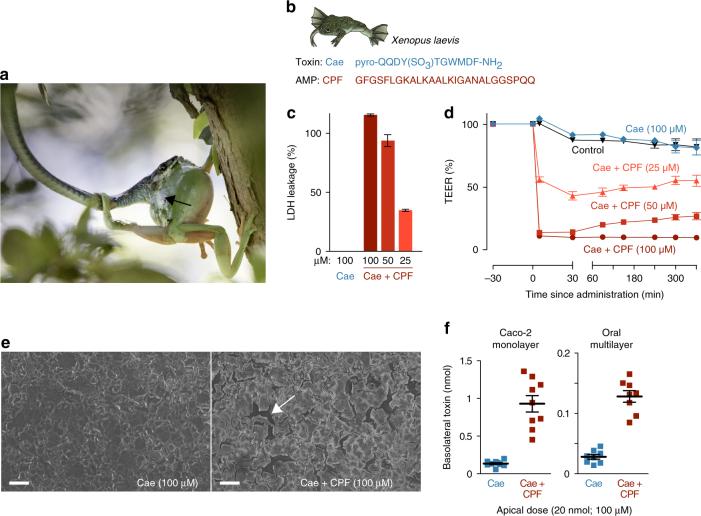
Animals using toxic peptides and proteins for predation or defense typically depend on specialized morphological structures, like fangs, spines, or a stinger, for effective intoxication. Here we show that amphibian poisons instead incorporate their own molecular system for toxin delivery to attacking predators. Skin-secreted peptides, generally considered part of the amphibian immune system, permeabilize oral epithelial tissue and enable fast access of cosecreted toxins to the predator's bloodstream and organs. This absorption-enhancing system exists in at least three distantly related frog lineages and is likely to be a widespread adaptation, determining the outcome of predator-prey encounters in hundreds of species.
动物在捕食或防御时通常会使用有毒的肽和蛋白质,这些物质需要依靠专门的形态结构,如毒牙、刺或毒刺,才能有效地使猎物中毒。在这里,我们发现,两栖动物的毒液反而包含了自身的分子系统,用于将毒素输送给攻击它们的捕食者。由皮肤分泌的肽通常被认为是两栖动物免疫系统的一部分,可使口腔上皮组织穿孔,使共同分泌的毒素能够快速进入捕食者的血液和器官。这种增强吸收的系统至少存在于三个亲缘关系较远的蛙类谱系中,很可能是一种广泛存在的适应性特征,决定了数百种物种中捕食者与猎物相遇的结果。

 Zotero 插件